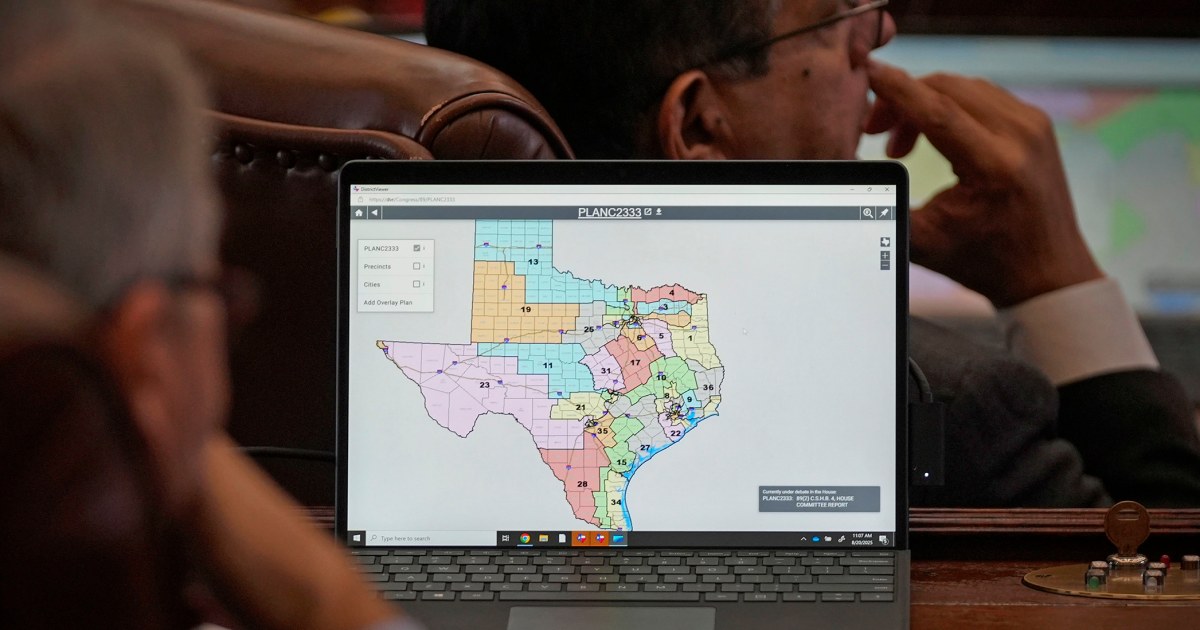
Supreme Court Upholds Texas Congressional Map

Supreme Court Upholds Texas Congressional Map
The U.S. Supreme Court has delivered a significant victory for Republicans by allowing Texas to implement its newly redrawn congressional map in the 2026 midterm elections.[1] This decision overturned a lower court ruling that found the map violated the Constitution's protections against racial gerrymandering.[3] The map was designed to provide Republicans with as many as five additional House seats, strengthening their majority in Congress.
National Implications and Political Battles
This ruling extends beyond Texas, signaling broader implications for redistricting battles nationwide.[1] The decision potentially paves the way for other states to pursue similar mid-decade redistricting efforts, while also suggesting the Court may uphold California's Democratic-leaning map.[1] The outcome reflects an ideological divide on the Court regarding partisan advantage and racial considerations in electoral mapping.
Looking Ahead to 2026
With the map now approved, candidates have clarity to campaign under the new district lines for next year's elections.[1] This development intensifies the partisan competition between Republican and Democratic states seeking electoral advantages ahead of the 2026 midterms.
```About the Organizations Mentioned
U.S. Supreme Court
The **U.S. Supreme Court** is the highest judicial authority in the United States, established by Article III of the U.S. Constitution and formally created under the Judiciary Act of 1789. It serves as the ultimate arbiter of constitutional and federal law, with the power to interpret the Constitution, review laws, and overturn those deemed unconstitutional, thus checking the legislative and executive branches of government[1][4][6]. The Court first convened in 1790 with six justices, including its first Chief Justice, John Jay. Over time, Congress adjusted the number of justices, settling at nine in 1869, comprising one Chief Justice and eight Associate Justices, all appointed by the President and confirmed by the Senate[1][3][6]. Justices hold lifetime appointments, ensuring judicial independence. The Court initially lacked prestige but gained significant authority under Chief Justice John Marshall (1801–1835), who established judicial review in *Marbury v. Madison* and solidified the Court as the definitive interpreter of the Constitution[10]. Key achievements of the Supreme Court include landmark rulings that shaped American federalism and civil rights, such as *McCulloch v. Maryland* (affirming federal power), *Gibbons v. Ogden* (regulating interstate commerce), and the establishment of judicial independence during the impeachment proceedings of Justice Samuel Chase. The Court also modernized its procedures by issuing unified majority opinions instead of individual ones[10]. Today, the Supreme Court sits in its dedicated building in Washington, D.C., completed in 1935, holding annual terms from October to late June or July. It exercises original jurisdiction in limited cases (e.g., disputes between states) and primarily appellate jurisdiction over federal and constitutional issues[4][6]. For readers interested in business and technology, the Court’s decisions profoundly impact regulatory frameworks, intellectual property law, and digital privacy rights, influencing the legal landscape in which modern enterprises operate. Its role in balancing governmental






:focal(0x563:2400x1601)/static.texastribune.org/media/files/faa250033ea336d8c086868d4e28a4a9/0818%20House%20Redistricting%20KG%2021.jpeg)