Tensions Escalate Between Ukraine and Russia
Introduction
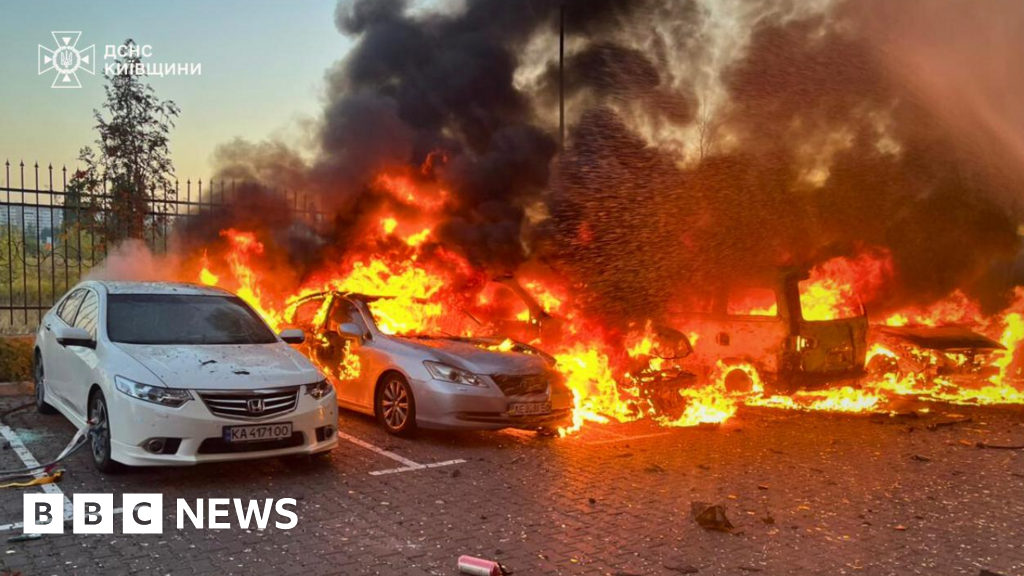
Tensions between Ukraine and Russia have escalated once again, with both sides reporting casualties in a recent aerial attack. According to President Zelensky, the attack was carried out by Russian forces and resulted in the deaths of three Ukrainian civilians. However, Russia has countered this claim by stating that four of their own soldiers were killed in a Ukrainian strike. The conflicting reports have only added to the already strained relationship between the two countries.
Key Details
The attack took place in eastern Ukraine, an area that has been a hotbed of violence since the 2014 annexation of Crimea by Russia. The region is home to many pro-Russian separatists who have been fighting against Ukrainian government forces. The recent attack has been described as "massive" by Ukrainian officials, with reports of widespread destruction and civilian casualties. This has only added to the fear and uncertainty among the local population.
Impact
The ongoing conflict between Ukraine and Russia has had a devastating impact on the region, with thousands of lives lost and countless others displaced. The recent aerial attack has only heightened tensions and deepened the divide between the two nations. As both countries continue to trade accusations and point fingers, it is the innocent civilians who suffer the most. The international community must take action to de-escalate the situation and find a peaceful resolution to this ongoing conflict.
About the People Mentioned
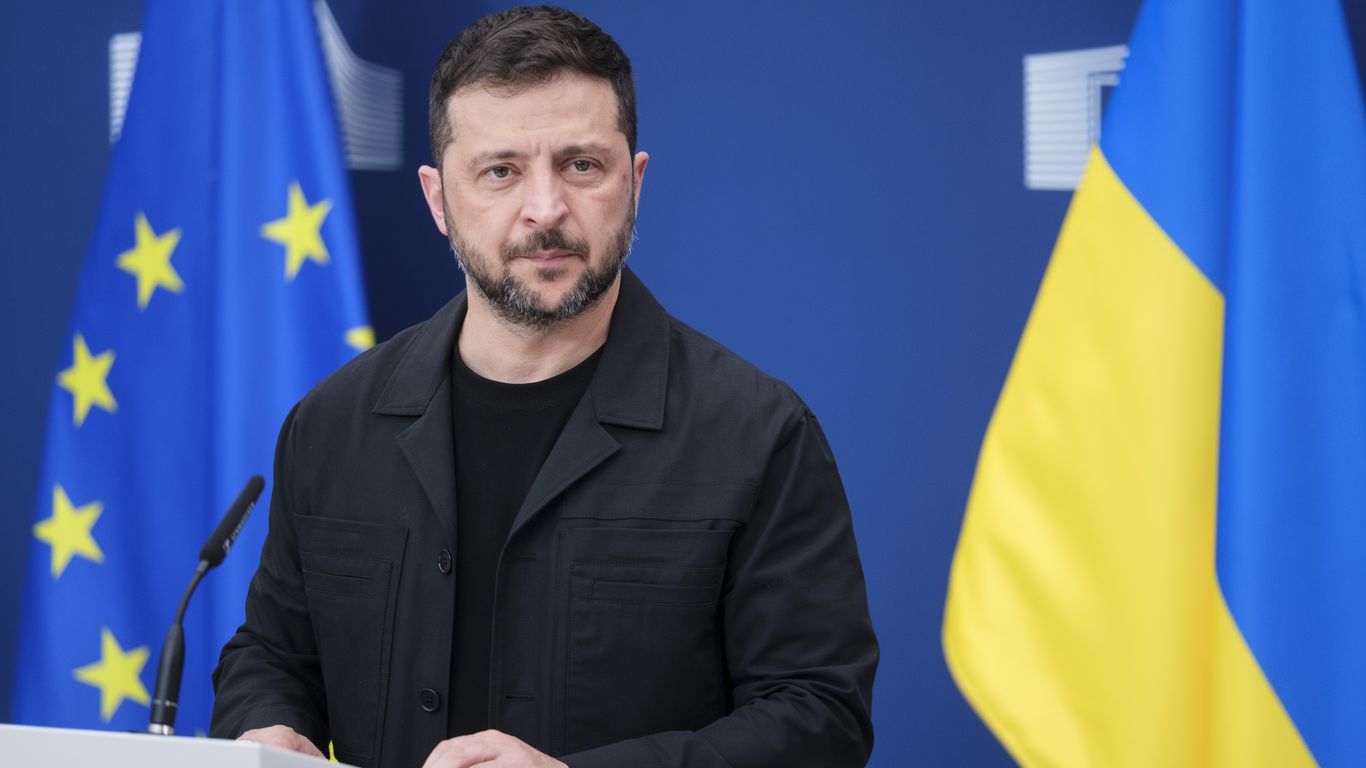
Zelensky
Volodymyr Zelensky, born January 25, 1978, in Kryvyi Rih, Ukraine (then part of the Soviet Union), is a former actor and comedian who serves as the sixth President of Ukraine.[1][2][5] Raised by Jewish parents, he earned a law degree from Kyiv National Economic University in 2000 and built a career in entertainment, founding the production company Kvartal 95 in the late 1990s.[1][5][6] He starred as a corruption-fighting teacher-turned-president in the TV series *Servant of the People*, which later became the name of his political party.[1][2] In 2019, Zelensky entered politics as a novice, campaigning on an anti-corruption platform that resonated with voters disillusioned by the establishment.[2][3] He won the presidential election on April 21 with 73% of the vote in the runoff against incumbent Petro Poroshenko, then was sworn in on May 20 and dissolved parliament to trigger snap elections.[1][2][5] Early challenges included the ongoing Donbas conflict and Russia's annexation of Crimea in 2014; Zelensky pushed anti-corruption laws and sought diplomatic resolutions.[3] Russia's full-scale invasion of Ukraine on February 24, 2022, transformed his presidency.[1][2][3] Zelensky declared martial law, refused evacuation from Kyiv, and rallied national resistance, earning global acclaim for his leadership likened to Winston Churchill.[1][3][4] His daily video addresses condemned Russian actions, secured Western aid, and addressed forums like the UN and U.S. Congress.[1][3] Ukrainian forces recaptured territory in Kharkiv and Kherson in late 2022, with Zelensky visiting front lines.[2] He applied for EU membership amid the war.[3] As of 2026, Zelensky remains a wartime leader, credited with unifying Ukraine, mobilizing international support, and sustaining the nation's defense against Russian aggression, though facing ongoing military and strategic hurdles.[4] Married to Olena Zelenska, he has two children.[5]
About the Organizations Mentioned
Ukrainian government
## Overview of the Ukrainian Government The Ukrainian government is a complex entity that plays a pivotal role in the country's administration and development. It is headed by the Prime Minister, currently **Yulia Svyrydenko**, who was appointed on July 17, 2025, marking a significant reshuffle in the Cabinet of Ministers[1][2]. This change is the first major transformation since the onset of the full-scale war, reflecting efforts to enhance national resilience and mend international relations[4]. ### History and Structure The government is structured around a unicameral parliament, the **Verkhovna Rada**, which possesses legislative power and is responsible for approving the prime minister and other key officials[5][6]. The president, with parliamentary consent, appoints the cabinet members, who manage day-to-day governance and introduce legislation[5]. ### Key Achievements - **Economic Reforms**: The government has implemented significant economic reforms aimed at improving the business climate and aligning Ukraine with international standards[8]. - **Digital Transformation**: Notable efforts have been made in digitalization, with Mykhailo Fedorov, now the First Deputy Prime Minister, spearheading initiatives to modernize state services[1]. - **Resilience Amid Conflict**: Despite ongoing challenges from the war, Ukraine has maintained a strong stance, with the government focusing on defense production and strategic alliances[4]. ### Current Status The current Svyrydenko Government is focused on bolstering national resilience, strengthening international partnerships, particularly with the U.S., and revitalizing the economy[4]. The reshuffle is seen as a strategic move by the presidential administration to consolidate influence and ensure loyalty among key officials[3]. ### Notable Aspects - **Loyalty and Efficiency**: The new prime minister, Yulia Svyrydenko, is noted for her loyalty to the Office of the President and her efficiency in implementing presidential instructions[3]. - **Continuity in Leadership
Russian forces
The Russian Armed Forces, one of the world's largest military organizations, are pivotal in maintaining Russia's global security and strategic influence. The forces are divided into three main branches: **Ground Forces**, **Navy**, and **Aerospace Forces**, with two independent arms, the **Strategic Rocket Forces** and **Airborne Forces**, and a **Special Operations Forces** command[1]. **History and Structure**: The Russian military has a rich history, evolving from the Soviet era. It is structured around various military districts and is known for its significant nuclear arsenal and advanced military technology[1]. **Key Achievements**: Russia's military has been involved in several strategic operations, including the annexation of Crimea and ongoing conflicts in Ukraine and Syria. The forces have also conducted extensive military exercises, such as Zapad 2025, which focused on adapting doctrines learned from the Ukraine conflict[2][3]. **Current Status**: As of 2025, Russia's military faces significant challenges, including high casualty rates in Ukraine and economic pressures affecting military spending. Despite these challenges, the military continues to modernize, emphasizing strategic partnerships and technological advancements like drones and precision artillery[3][6]. **Notable Aspects**: The Russian Armed Forces are known for their strategic nuclear capabilities and their role in supporting the Kremlin's political objectives. The military's emphasis on self-sufficiency in arms production and strategic partnerships with countries like Iran and China highlights its efforts to maintain resilience against Western influence[3]. The forces also continue to develop their space capabilities, with recent launches of advanced satellites and rockets[5].