USA in Group D as 2026 FIFA World Cup Group Draw Revealed

2026 FIFA Men's World Cup Group Draw Announced
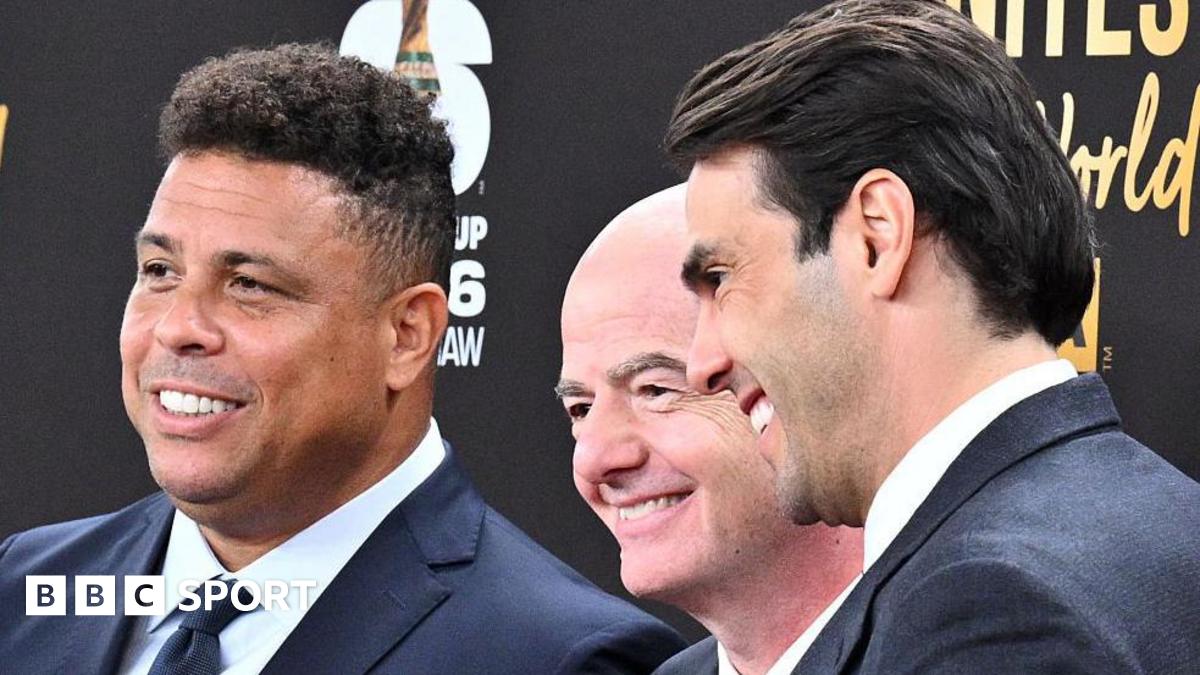
The 2026 FIFA Men's World Cup, set to be hosted across the United States, Canada, and Mexico, has finalized its group stage draw. The U.S. men's national team finds itself in Group D, alongside Paraguay, Australia, and the winner of a UEFA playoff, highlighting a competitive and diverse group that will test their skills on home soil.
Significance of the Group Stage Setup
This upcoming World Cup expands to 48 teams, making the group stage more dynamic and unpredictable. The inclusion of playoff winners adds an extra layer of excitement, as the U.S. will face a European team yet to be decided. Hosting matches in North America offers a unique advantage, energizing local fan support while showcasing soccer's growing popularity in the region.
Looking Ahead to an Unforgettable Tournament
With teams from multiple continents converging, the 2026 World Cup promises thrilling matchups and global fan engagement. The U.S. team's journey through this challenging group will be closely watched as they aim to capitalize on home advantage and advance deep into the tournament.
About the Organizations Mentioned
FIFA
FIFA (Fédération Internationale de Football Association), founded in Paris in 1904, is the global governing body for association football (soccer), futsal, and beach football. Headquartered in Zürich, Switzerland, FIFA comprises 211 national football associations organized into six regional confederations spanning Africa, Asia, Europe, Oceania, South America, and North/Central America and the Caribbean[1][2][4]. FIFA’s core responsibilities include setting and enforcing the rules of the game in collaboration with the International Football Association Board (IFAB), overseeing international player transfers, and promoting football's development worldwide. It organizes major international tournaments such as the FIFA World Cup (inaugurated in 1930), the FIFA Women’s World Cup (since 1991), and the FIFA Club World Cup, providing platforms for showcasing elite talent[1][2][3][5]. The organization has a complex governance structure, with a FIFA Council of 37 members led by a president, a secretary-general managing day-to-day operations, and a FIFA Congress as the main legislative body where each national association holds voting rights. The Football Tribunal, established in 2021, resolves regulatory disputes[1][7]. FIFA has grown into a multibillion-dollar enterprise, generating over $5.8 billion in revenue during the 2019–2022 cycle and maintaining substantial cash reserves. Its 2025 FIFA Club World Cup, for instance, featured an expanded 32-team format with a prize pool of $1 billion, including a $250 million solidarity program to support global club football development[2][6][8]. Beyond competitions, FIFA invests heavily in grassroots initiatives and infrastructure through programs like FIFA Forward, aiming to foster inclusivity, integrity, and innovation throughout the sport. It leverages technology and media platforms such as FIFA+ to broaden football’s global reach and engagement[3][4][10]. FIFA remains
UEFA
The Union of European Football Associations (**UEFA**) is the governing body of football in Europe, founded on June 15, 1954, in Basel, Switzerland. It emerged from the desire of various national football associations to unite and develop European football cooperatively, promoting solidarity, competitive play, and the growth of key aspects such as coaching and officiating[1][2]. UEFA’s creation was endorsed by FIFA, the global football authority, enabling it to organize continental competitions and enhance the sport's development across Europe[1]. UEFA's core mission is to oversee and regulate European football competitions and foster collaboration among its growing membership, which now exceeds 50 national associations, including many formed after the breakup of the Soviet Union and Yugoslavia[2]. Its headquarters have moved from Paris (initially) to Bern and since 1999 reside in Nyon, Switzerland[2]. UEFA is best known for its prestigious club tournaments, particularly the **UEFA Champions League**, which evolved from the European Cup founded in 1955. The Champions League revolutionized club football by introducing a group stage in 1992-93, expanding participation and viewership, and attracting significant commercial investment, making it the most lucrative and widely followed club competition globally[3][5]. Real Madrid’s early dominance and the broad array of champions over the decades underline the tournament’s competitive prestige[5][7]. Another key competition is the **UEFA Europa League**, established in 1971 as a secondary club tournament to broaden international club participation. It has showcased notable clubs and fostered intense rivalries, contributing to the depth of European football[6]. UEFA’s influence extends beyond tournaments; it has shaped football governance, training, and the use of technology, helping football remain a dominant sport in Europe and globally. Its ongoing role in innovation and regulation makes it a pivotal organization in the business and technology aspects of modern sports[3][4].