Breakthrough Genome Sequencing Uncovers Woolly Rhinoceros Genome From Wolf Stomach
#paleogenetics #genome_sequencing #ice_age #extinction #megafauna
Breakthrough Discovery in a Wolf's Stomach
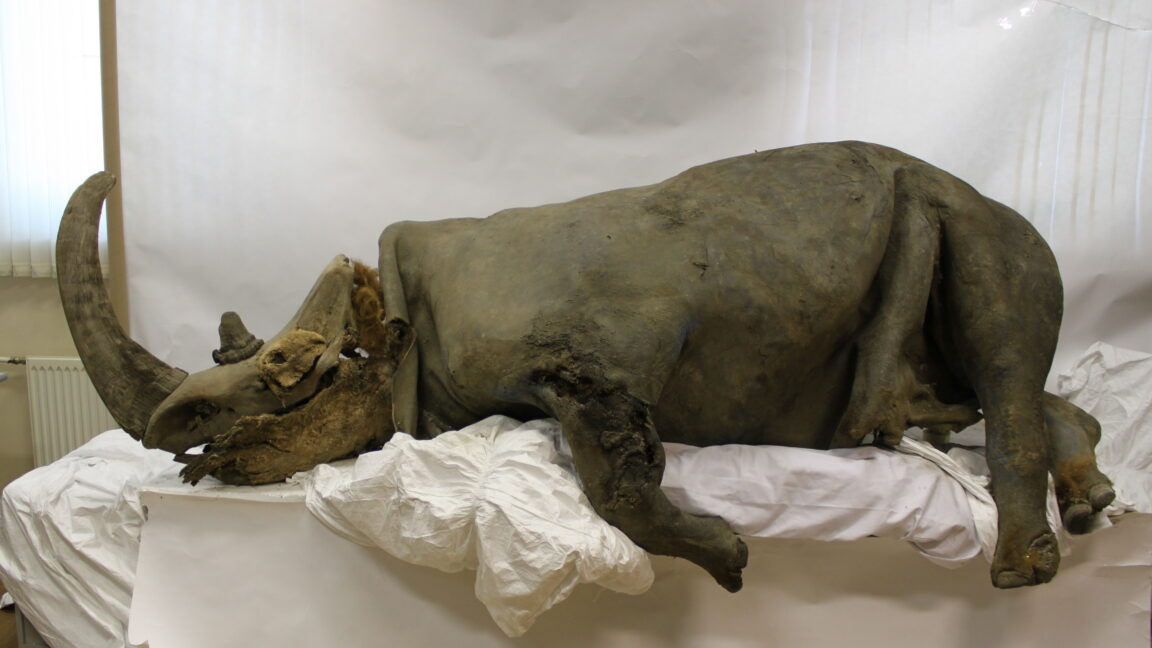
Scientists have achieved a groundbreaking feat by sequencing the complete genome of a 14,400-year-old woolly rhinoceros from muscle tissue preserved in the stomach of a frozen wolf puppy unearthed in Siberian permafrost. This rare find, one of the youngest known rhino remains, offers fresh insights into the Ice Age giant's final days. Unlike thoroughly chewed prey, the undigested flesh allowed high-coverage DNA extraction, a first in paleogenetics.[1][2]
Genetic Clues to Extinction
Comparing the new genome with older specimens from 18,400 and 48,500 years ago revealed no signs of recent inbreeding or declining genetic diversity. Woolly rhinos maintained stable populations in northeastern Siberia despite range contractions from western Europe due to harsh climates. This genetic health persisted until just before extinction around 14,000 years ago.[1][3]
Rapid Demise and Lasting Implications
The stable genome suggests a sudden population collapse, likely triggered by rapid warming during the Bølling-Allerød interstadial, rather than gradual decline or heavy human hunting. This challenges prior theories and highlights climate's role in megafauna loss. Such innovative sequencing from predator-preserved samples opens doors for studying other extinct species' final moments.[4]