Governors Pull Back from White House Dinner Over Democratic Snub
Governors Group Backs Out of White House Dinner Over Democratic Snub
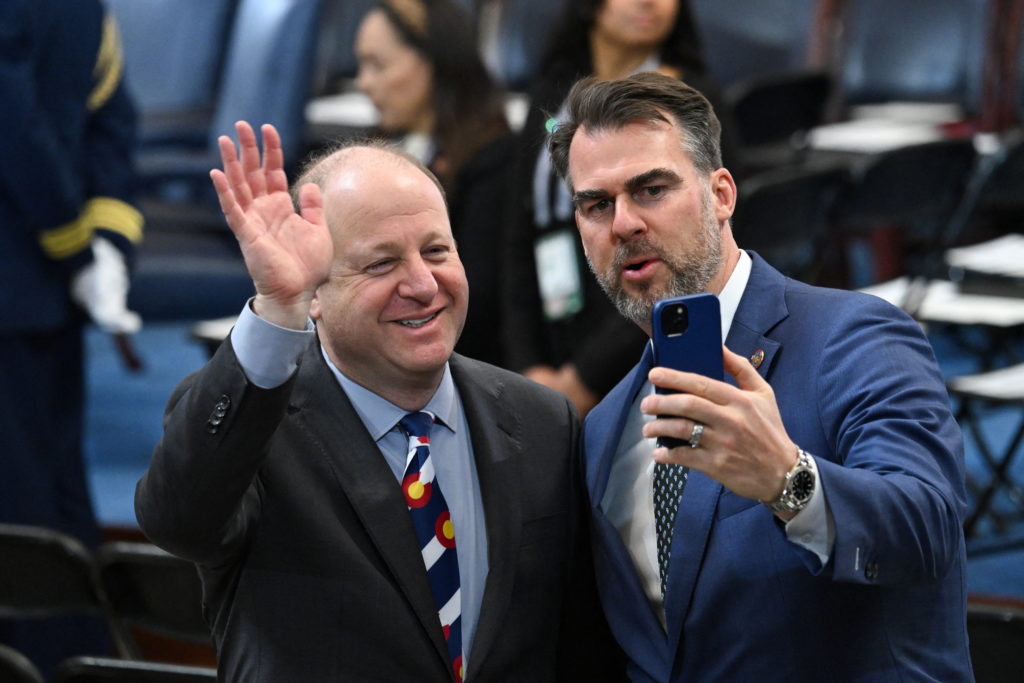
The National Governors Association has withdrawn from a traditional White House dinner after President Trump excluded Democratic governors Wes Moore of Maryland and Jared Polis of Colorado, calling them unworthy. This annual black-tie event, typically a symbol of bipartisan unity during the NGA's winter meeting, now hangs in doubt as remaining Democrats refused to attend without their peers.
Roots of the Rift and Bipartisan Pushback
Oklahoma Gov. Kevin Stitt, NGA chair, announced the group would no longer facilitate the dinner, reflecting heightened polarization. Veterans like former NGA director Raymond Scheppach note such disinvitations are unprecedented, recalling past boycotts by unified governors. Despite tensions, some governors proceeded with separate productive talks on affordability, infrastructure, and immigration.
Implications for Unity in Divided Times
This standoff underscores the NGA's fading influence amid partisan divides, yet highlights its commitment to solidarity. While individual Republicans visited the White House, the snub risks further eroding Washington's few cross-party forums, challenging leaders to prioritize common ground over exclusion.
About the People Mentioned
Wes Moore
Wes Moore is the 63rd Governor of Maryland, serving since January 2023. He is the first Black governor in the state’s 246-year history and one of only three African Americans elected governor in U.S. history. Born on October 15, 1978, in Takoma Park, Maryland, Moore attended Valley Forge Military Academy and College before earning a bachelor’s degree from Johns Hopkins University. He was the first Black Rhodes Scholar from Johns Hopkins and later earned a master’s degree in international relations from Oxford University. Moore’s career has spanned public service, business, and the military. He served as a captain in the U.S. Army, leading soldiers in combat during a deployment to Afghanistan with the 82nd Airborne Division. After returning, he was a White House Fellow, advising on national security and international relations. Moore is also a bestselling author, best known for his book “The Other Wes Moore,” which explores issues of opportunity and inequality in America. He founded BridgeEdU, a company supporting underserved students in their transition to college, and served as CEO of the Robin Hood Foundation, one of the nation’s largest anti-poverty organizations, from 2017 to 2021. Elected governor in 2022, Moore ran on a platform focused on economic opportunity, education, and equity. His administration has prioritized reducing child poverty, investing in public education, and supporting the middle class. Under his leadership, Maryland has seen record investments in schools, a reduction in child poverty, and a notable drop in unemployment. Moore has also taken steps to address public safety, with homicides in Baltimore reaching their lowest levels in decades. His administration responded swiftly to the collapse of the Francis Scott Key Bridge in 2024, reopening the Port of Baltimore ahead of schedule. Moore’s national profile has grown, with some Democrats considering him a potential future presidential contender. He continues to be recognized for his efforts to address inequality and expand opportunity in Maryland.
About the Organizations Mentioned
National Governors Association
The **National Governors Association (NGA)** is the bipartisan voice of America's governors, representing all 55 states, territories, and commonwealths.[2][4] Founded in 1908 after governors met with President Theodore Roosevelt to discuss conservation issues, the organization has evolved into one of Washington, D.C.'s most respected public policy organizations.[1][6] The NGA serves as a collaborative platform where governors identify priority issues and address matters of public policy and governance at state, national, and global levels.[4] The organization operates through several key divisions that enhance its effectiveness. Its **Office of Government Relations** advocates for governors' bipartisan policy priorities with Congress and federal agencies, ensuring state perspectives shape federal legislation.[2][4] The **Center for Best Practices**, established in 1997, functions as a research and development firm that fosters information sharing between states, helping governors develop and implement innovative solutions to public policy challenges.[2][3] The Center for Best Practices has demonstrated measurable impact through initiatives like supporting 15 states in developing childhood obesity prevention programs.[3] The organization is financed through state dues, federal and private foundation grants, and a Corporate Fellows Program that accepts $20,000 contributions from companies seeking to strengthen public-private sector dialogue.[3] The NGA facilitates peer-to-peer networking and thought leadership through flagship events including the Winter and Summer Meetings, where governors convene to address pressing issues collectively.[4] Currently, Oklahoma Governor Kevin Stitt serves as NGA Chair.[4] What distinguishes the NGA is its commitment to preserving state decision-making authority and fiscal health while promoting federalism principles.[1] By enabling governors to speak with a collective voice on national policy while sharing innovative state practices, the NGA bridges the gap between state and federal governance, making it essential for understanding contemporary American political structures and interstate
White House
The **White House Office** is a central organizational component within the Executive Office of the President of the United States (EOP), tasked with supporting the President in managing day-to-day operations, policy formulation, and political affairs. It is headed by the White House Chief of Staff and staffed by senior aides who report directly to the President, including those with titles such as Assistant to the President and Deputy Assistant to the President. These staff members are mostly political appointees without the need for Senate confirmation, allowing the President considerable discretion in shaping the office to suit each administration's priorities[1]. Historically, the White House Office was established in 1939 through Reorganization Plan 1 and Executive Order 8248 to provide immediate assistance to the President. It functions as the nerve center for presidential staff, physically located primarily in the West Wing, and plays a pivotal role in managing the President’s policy agenda, communications, and political strategy. Its flexible organization allows each President to tailor the staff composition and roles according to their governance style and objectives[1]. In the current context of 2025, the White House Office operates under the administration of President Donald J. Trump, who returned to office after the 2024 election. His administration emphasizes rejecting prior policies deemed extremist and focuses on enhancing quality of life, economic growth, and American energy dominance. The administration includes Vice President JD Vance and First Lady Melania Trump, among others, with a Cabinet advising on various governmental functions[4][6]. Recent initiatives linked to the White House’s operational sphere include the establishment of a new **Department of Government Efficiency (DOGE)** aimed at modernizing federal technology and software to boost government productivity. The DOGE agenda is implemented through the renamed United States DOGE Service within the Executive Office, reflecting a concerted push to leverage technology for administrative modernization[5]. Notably, the White House Office also coordinates national security and homeland security functions through the National Security Council staff, underscoring its central role