China's AI Momentum Accelerates: Investment Boom and Open-Source Innovation Reshape Global AI
#artificial_intelligence #markets #investments #open_source #china
China's AI Momentum Accelerates
China is rapidly closing the gap in artificial intelligence development, challenging American dominance in this critical sector. Recent market activity reveals significant investor confidence, with Chinese AI firms like MiniMax and Zhipu AI raising hundreds of millions through Hong Kong listings in early 2026. These companies demonstrate that China's tech ecosystem is producing competitive alternatives to Western solutions.
Market Performance and Forecasts
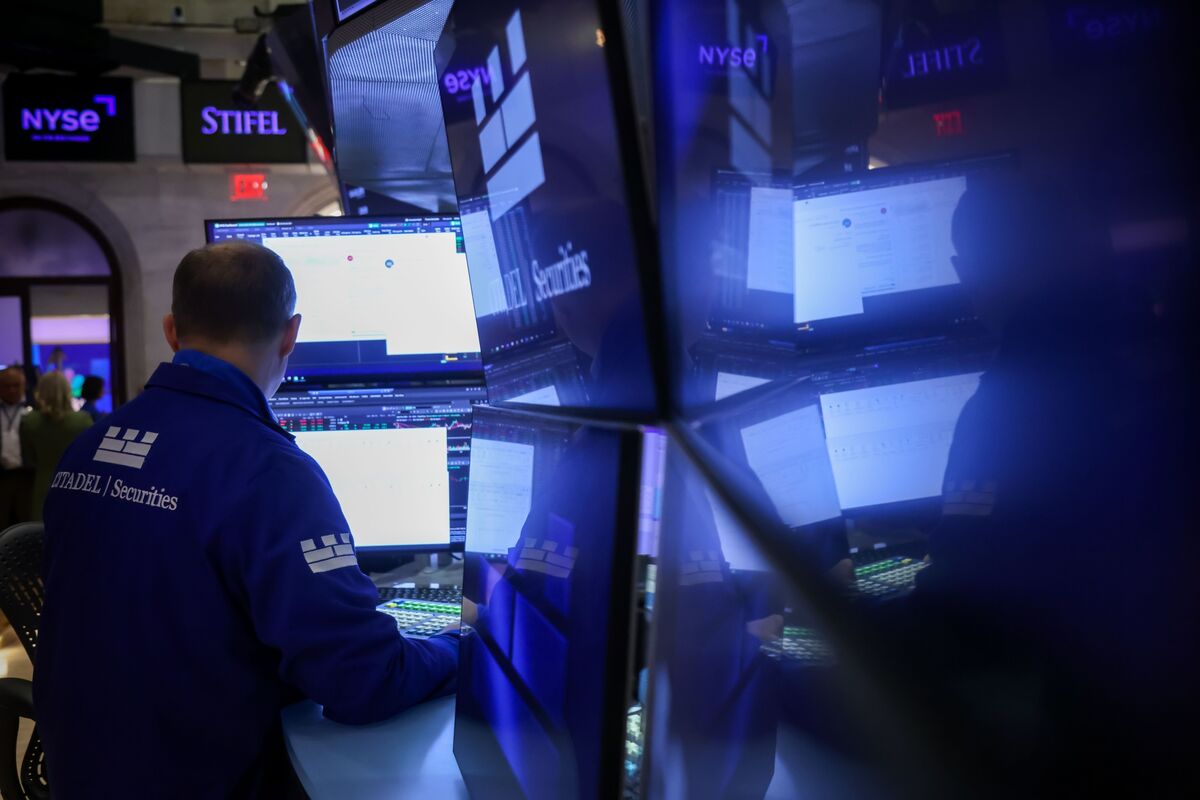
Chinese AI stocks are expected to drive Hong Kong and mainland market gains throughout 2026, though growth will moderate from 2025's impressive surge. Investment banks project the Hang Seng Index reaching 29,500 by year-end, representing 12.8 percent growth. Notably, China's tech earnings are poised to overtake America's Magnificent Seven for the first time since 2022, signaling a fundamental shift in global AI competitiveness and investor strategy.
Strategic Implications
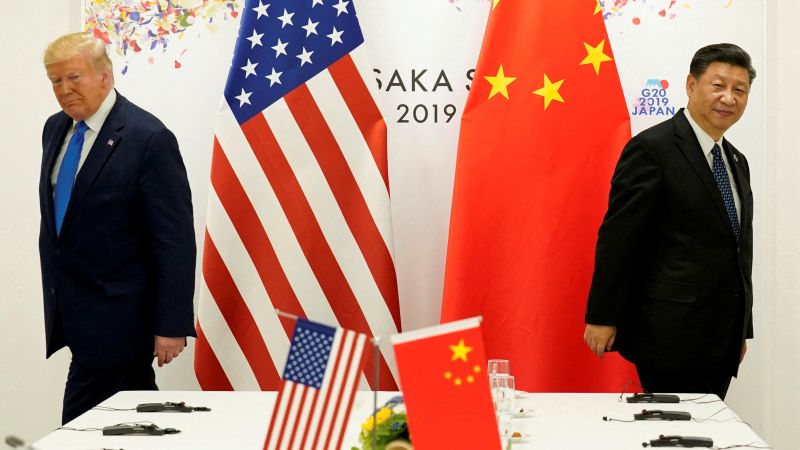
Despite hardware constraints from US chip restrictions, Chinese companies are innovating efficiently, developing open-source models that compete globally. Government-backed funding and private investment are accelerating AI development across fintech and advanced manufacturing sectors, positioning China as a formidable long-term competitor.
```About the Organizations Mentioned
MiniMax
**MiniMax** is a Shanghai-based artificial intelligence company pioneering multi-modal AI models and consumer applications, with over 200 million users worldwide.[3][5] Founded in December 2021 by SenseTime veterans Yan Junjie and Zhou Yucong—experts in deep learning and algorithms—MiniMax draws its name from the minimax algorithm in game theory, emphasizing optimized decision-making.[3][4] Backed initially by MiHoYo, it secured a landmark $600 million funding round in March 2024 led by Alibaba, valuing it at $2.5 billion; investors include Hillhouse, HongShan, IDG Capital, and Tencent.[3][4] Named one of China's "AI Tigers," the firm focuses on building foundational large language models alongside hit consumer products.[3][4] Its product lineup began with **Glow** in October 2022, an AI companion app for creating customizable virtual characters that exploded to 5 million users in four months before regulatory issues forced its delisting in 2023.[3][4] Successors include **Talkie**, a character-creation platform; **Hailuo AI** for video generation (with audio added January 2025 and noted for replicating TV logos); **MiniMax Agent**, a versatile PDF-to-slide AI analyst; **Speech-02** (April 2025, supporting 30+ languages); and **MiniMax-M1** (June 2025), the first open-weight hybrid-attention reasoning model with 1 million token context and 25% fewer FLOPs than rivals like DeepSeek R1.[3][4][5] Recent releases feature **MiniMax M2.1** text models for code, **Hailuo 2.3** video, **Speech 2.6** audio, and **Music 2.0**.[5] Key achievements include rapid scaling to global leadership in AI-native apps and developer tools like APIs for video
Zhipu AI
**Zhipu AI**, officially Beijing Zhipu Huazhang Technology Co., Ltd. and rebranded internationally as **Z.ai** in 2025, is China's leading independent large language model (LLM) provider, specializing in generative AI to advance toward artificial general intelligence (AGI).[1][2][3] Founded in 2019 as a Tsinghua University spinoff by professors Tang Jie and Li Juanzi from the Knowledge Engineering Group, it pivoted from knowledge graphs to LLMs amid the global AI boom.[3][4] The company develops the **GLM series** of bilingual (Chinese-English) models, powering applications like **ChatGLM** for customer support and education, **AutoGLM** for smartphone task automation, and advanced tools such as text-to-video **Ying** and speech models like **GLM-4.0**.[1][2][3] Its **Model-as-a-Service (MaaS)** platform offers high-performance APIs, fine-tuning, agentic workflows, and enterprise solutions like translation and presentation generators, emphasizing trustworthy, multimodal AI.[2] Key releases include **GLM-4.7** (top-ranked open-source flagship for coding and conversation), **GLM-4.6V** (leading 100B-class visual reasoning model), and **GLM-4.5V** (106B-parameter VLM), often built on domestic chips.[2][3] Zhipu has achieved massive funding: 2.5 billion yuan (~$350M USD) in 2023 from Alibaba, Tencent, and others; $400M in 2024 valuing it at ~$3B; and government deals like a 61.28M yuan Hangzhou project in 2025.[3] With 800 employees, it's China's largest AI startup by headcount and hit a $2.8B valuation in 2024, thoug