Elon Musk's Fortune Surges to a Record $788 Billion

Elon Musk’s Fortune Soars to Record $788 Billion
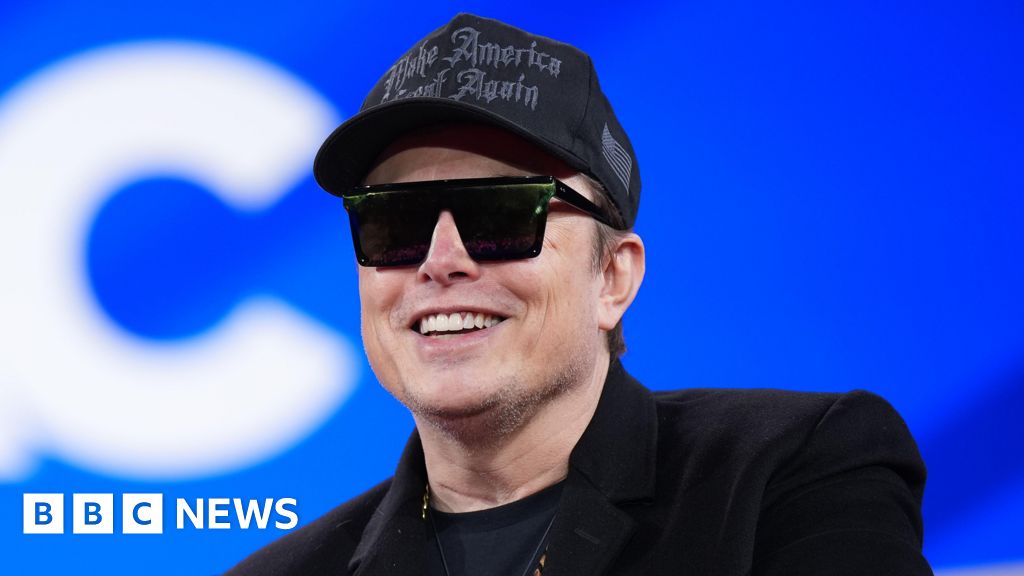
Elon Musk has shattered records once again, with his net worth surging to an unprecedented $788 billion following a 4% spike in Tesla shares. This milestone positions him tantalizingly close to the $800 billion mark, underscoring his dominance in global wealth rankings. As the world's richest individual, Musk's fortune reflects the explosive growth of his empire amid tech and AI advancements.[1]
Key Drivers Behind the Wealth Explosion
Musk's gains stem primarily from Tesla's robust performance and SpaceX's soaring valuations, even as stock movements remain modest this year. In 2026 alone, his wealth has ballooned by $24 billion in just days, outpacing rivals like Thomas Peterffy. Last year's $187 billion increase during the AI boom set the stage, with companies like xAI and Neuralink adding further momentum. Bloomberg's index adjustments highlight how minor tweaks yield massive shifts for centibillionaires.[2]
Implications for Tech and Markets
This record cements Musk's lead over peers like Larry Page, doubling their fortunes. It signals investor confidence in electric vehicles, space exploration, and AI innovations. As Musk eyes $800 billion, his trajectory influences markets, inspiring entrepreneurs while sparking debates on wealth inequality in the tech era.[3]
About the People Mentioned
Elon Musk
Elon Reeve Musk, born on June 28, 1971, in Pretoria, South Africa, is a prominent entrepreneur and business magnate known for founding and leading several transformative technology companies. He holds dual citizenship in Canada and the United States and earned bachelor's degrees in physics and economics from the University of Pennsylvania in 1997. Musk began his entrepreneurial career in the 1990s by co-founding Zip2, a software company, and later X.com, which evolved into PayPal, an online payment system acquired by eBay in 2002. In 2002, Musk founded SpaceX, a pioneering aerospace manufacturer and space transport services company, where he serves as CEO and chief engineer. SpaceX is notable for its advancements in reusable rocket technology and commercial spaceflight. In 2004, he joined Tesla Motors as an early investor and took on the roles of CEO and product architect in 2008, driving the company to the forefront of electric vehicle manufacturing. Musk also co-founded Neuralink in 2016, focusing on neurotechnology, and founded The Boring Company in 2017, which develops tunneling and infrastructure projects. In 2015, Musk co-founded OpenAI to promote artificial intelligence research but later left due to differences in vision, subsequently founding xAI. In 2022, he acquired the social media platform Twitter, rebranding it as X in 2023, and has been involved in various business and political activities, including a brief advisory role in the Trump administration's Department of Government Efficiency in early 2025. Musk is recognized as one of the wealthiest individuals globally, with an estimated net worth of $500 billion as of October 2025. His career is marked by significant influence across sectors including space exploration, electric vehicles, AI, social media, and infrastructure development, with ongoing legal and regulatory scrutiny related to his business practices and investments. He is also known for his complex personal life, including fathering 14 children[1][2][3].
About the Organizations Mentioned
Tesla
Tesla, Inc. is a pioneering American electric vehicle (EV) and clean energy company headquartered in Texas, with a mission to accelerate the world’s transition to sustainable energy[1]. Founded in 2003 by engineers Martin Eberhard and Marc Tarpenning, and later joined by Elon Musk, who became the company’s driving force and public face, Tesla has grown from a niche startup into a global leader in EVs, energy storage, and solar technology[1]. ## What Tesla Does Tesla designs, manufactures, and sells high-performance electric vehicles, including the Model S, Model 3, Model X, Model Y, Cybertruck, and the upcoming affordable model[4]. Beyond automobiles, Tesla produces large-scale battery storage systems (Powerwall, Powerpack, Megapack) and solar energy products (Solar Roof, Solar Panels), aiming to create a fully integrated sustainable energy ecosystem[1]. The company operates six massive, vertically integrated factories across three continents, employing over 100,000 people who handle everything from design to service in-house[1]. ## History and Key Achievements Tesla’s breakthrough came with the 2008 launch of the Roadster, the first highway-legal all-electric sports car. The company then disrupted the auto industry with the Model S sedan (2012), which set new standards for EV range and performance. The Model 3, introduced in 2017, became the world’s best-selling electric car, proving that EVs could be both desirable and mass-market[1]. Tesla’s Gigafactories, sprawling production facilities, have enabled rapid scaling and cost reductions, while its proprietary Supercharger network has addressed range anxiety for drivers. ## Current Status and Notable Aspects In 2025, Tesla continues to dominate the EV market, producing over 447,000 vehicles and delivering nearly 497,000 in Q3 alone[5]. The company has avoided over 20 million metric tons of CO₂
SpaceX
SpaceX is a private aerospace manufacturer and space transportation company founded in 2002 by Elon Musk with the mission to revolutionize space technology and enable human life to become multiplanetary[3]. It designs, manufactures, and launches advanced rockets and spacecraft, pioneering reusable rocket technology to dramatically reduce the cost of access to space. One of SpaceX’s key achievements includes the development and operational success of the Falcon 9 and Falcon Heavy rockets, both featuring reusable first-stage boosters. This reusability has significantly lowered launch costs and increased reliability, enabling frequent commercial, scientific, and government missions. SpaceX has launched over 95 national security missions with these rockets, demonstrating maturity and trust from the U.S. Space Force and other agencies[2]. Another major milestone is the Starlink satellite constellation, with nearly 6,900 satellites currently in orbit as of 2025. Starlink aims to provide global broadband internet service, especially in underserved regions, making it one of the largest satellite constellations in history[1]. This ambitious project also serves as a revenue stream to fund SpaceX’s broader goals. Looking ahead, SpaceX is developing Starship, a next-generation fully and rapidly reusable super heavy-lift launch system designed to carry large payloads and humans to the Moon, Mars, and beyond. Elon Musk envisions Starship enabling mass transport to Mars, with the potential to launch multiple times a day, dramatically increasing total mass sent to orbit annually, far surpassing all previous space launch capabilities combined[1][2]. Pending environmental reviews, Starship’s first launch from Florida’s LC-39A is planned for late 2025[2]. Despite these advances, SpaceX remains privately held, with limited public insight into its financial health. Questions persist around the profitability of Falcon launches, Starlink operations, and future Starship missions, especially given the enormous funding required for Mars colonization[1]. Nonetheless, SpaceX continues to inspire both enthusiasm and debate in the business and technology
xAI
xAI, officially known as X.AI Corp., is a leading American artificial intelligence company founded by Elon Musk and Christian Szegedy in March 2023[1][2]. Headquartered in the San Francisco Bay Area, xAI operates at the intersection of AI, social media, and advanced technology, with a mission to accelerate human scientific discovery and deepen our understanding of the universe[1][4]. The company quickly scaled to over 1,200 employees by 2025, drawing talent from top tech firms like Tesla and Google[1][3]. xAI’s flagship product is Grok, a generative AI chatbot integrated with the X platform (formerly Twitter). Grok is designed to offer advanced reasoning, real-time search integration, and native tool use, positioning itself as a competitor to OpenAI’s ChatGPT and Google’s Gemini[1][4]. The company has rapidly iterated its models, launching Grok 3 in early 2025 as its “most advanced model yet,” and following up with Grok 4, which it claims is the “most intelligent model in the world,” featuring enhanced capabilities for both consumer and enterprise users[4][5]. xAI also offers specialized products like Grok for Government, tailored for U.S. federal customers, and a SuperGrok Heavy tier for power users requiring maximum computational resources[4][5]. From its inception, xAI was structured as a public-benefit corporation aiming for a “material positive impact on society and the environment,” though it later dropped this status by mid-2024[2]. The leadership team includes industry veterans such as Chief Engineer Igor Babuschkin (formerly of DeepMind), alongside other former Tesla and Google engineers, reflecting a blend of technical expertise and bold, innovation-driven management[1][3]. Elon Musk serves as CEO, with a direct reporting line that includes key technologists and longtime aides[3]. xAI stands out for its rapid development cycle, culture of challenging conventiona
Neuralink
**Neuralink** is a neurotechnology company founded by Elon Musk in 2016, developing implantable brain-computer interfaces (BCIs) to restore autonomy for those with neurological conditions like paralysis while aiming to enhance human cognition long-term.[7][6] The N1 implant, featuring 1,024 electrodes across 64 threads, enables users to control computers, play games, browse the web, and manipulate tools via thoughts alone, bypassing physical limitations.[1][2][4] Initially rejected by the FDA in 2022 over safety concerns, Neuralink gained approval for human trials in 2024 after refinements, including threads penetrating the dura without removal—a key advancement.[1][3] Key achievements include implanting the first patient, quadriplegic Noland Arbaugh, in January 2024, who achieved over 9 bits-per-second data rates (doubling prior records) and demonstrated public feats like gaming and cursor control.[2][4] By September 2025, 12 patients worldwide used devices for digital and physical interactions.[1][2][3] The company raised $650 million in Series E funding in June 2025 (total $1.2 billion raised), hitting a $9.65 billion valuation with backers like ARK Invest and Sequoia.[2][3] FDA Breakthrough Device status supports vision (Blindsight) and speech restoration trials, plus the CONVOY trial for robotic arm control.[2] Currently, as of early 2026, Neuralink plans **high-volume production** and fully automated surgeries, targeting hundreds of implants amid Musk's ambitious roadmap.[1][2][3][4] Challenges persist: critics note tensions between medical aid for disabilities and transhumanist goals like AI symbiosis, potentially complicating FDA approvals and insurer reimbursements.[5] Poaching an FDA official underscores competitive edge but raises ethical questions.[5] Neuralink's trajectory blends breakthrough medicine with futuristic ambition, positionin
Bloomberg
Bloomberg is a global financial, software, data, and media company renowned for its comprehensive business and technology news coverage and market data services. Founded in 1981 by Michael Bloomberg, the organization initially launched with the Bloomberg Terminal, an innovative computer system delivering real-time financial data, analytics, and trading tools to financial professionals. This product revolutionized how investors and institutions access and analyze market information, establishing Bloomberg as a critical player in the financial services industry. Over the decades, Bloomberg expanded beyond terminals to include Bloomberg News, Bloomberg Television, Bloomberg Radio, and a suite of digital platforms providing up-to-the-minute business news, analysis, and insights. The company is recognized for its authoritative reporting, in-depth market analysis, and extensive coverage of global economic trends, technology advancements, and geopolitical events. Its media division is a trusted source for professionals seeking real-time updates on financial markets and economic policy. Key achievements include pioneering the integration of financial data with news and analytics, helping democratize access to complex market information. Bloomberg’s terminal remains an industry standard, widely used by investment banks, hedge funds, and corporations worldwide. The company has also invested heavily in technology infrastructure, including AI and data analytics, driving innovation in financial intelligence and decision-making tools. Currently, Bloomberg continues to lead in delivering robust market data and insightful business news, adapting to evolving digital landscapes while maintaining its core mission. Its influence spans finance, media, and technology, making it a vital resource for investors, policymakers, and business leaders globally. Notably, Bloomberg's commitment to transparency, data accuracy, and technological innovation cements its reputation as a cornerstone of modern financial information services.