Miami Confident in Moten Ahead of Ole Miss Clash: Fiesta Bowl Preview
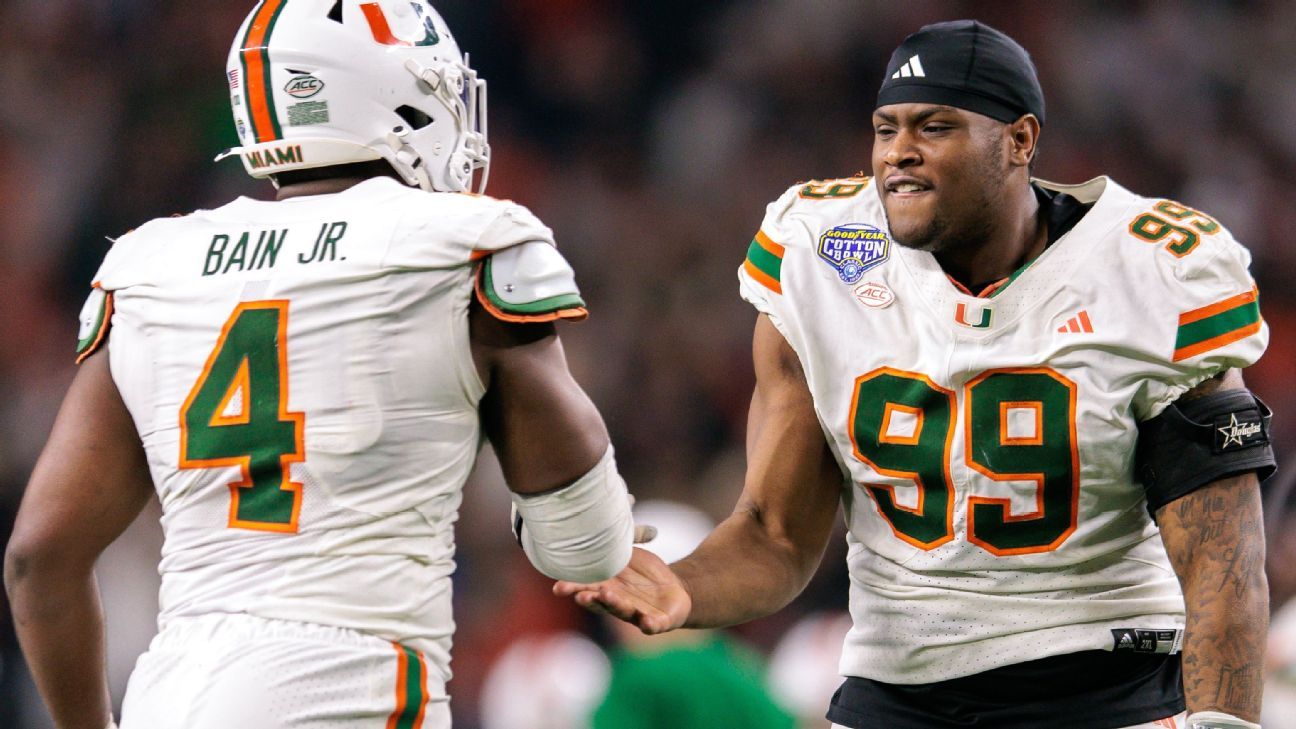
Miami Confident in Moten Ahead of Ole Miss Clash
Miami’s preparation for the Fiesta Bowl has centered on more than schemes; it hinges on the health of dominant defensive tackle Ahmad Moten Sr. Coaches expressed deep confidence that Moten, recovering from an ankle issue suffered in the quarterfinal, will anchor the interior when the Hurricanes face Ole Miss in their latest College Football Playoff test. His expected return reshapes Miami’s defensive outlook.
Why Moten’s Presence Matters Against Ole Miss
Moten’s strength, size, and leverage help Miami control the line, freeing edge rushers to pressure the quarterback and disrupt timing. Against Ole Miss’ balanced attack, his gap discipline and ability to absorb double teams could be decisive in limiting explosive runs and forcing long-yardage situations. For a program intent on rewriting its national reputation, having a trusted veteran available in this semifinal amplifies confidence, stabilizes the game plan, and provides leadership in the season’s biggest moment.
About the Organizations Mentioned
Miami
The **City of Miami** is a dynamic municipal organization focused on enhancing the quality of life for its diverse residents while positioning itself as a global leader in technology, innovation, and resiliency. As the administrative hub of Miami-Dade County’s most populous city, it operates with a robust workforce of approximately 5,031 employees and an operating budget nearing $1.8 billion for the fiscal year 2024-2025[7][3]. Established as the local government entity, Miami’s mission centers on improving public safety, housing, mobility, and community spaces, alongside fostering an efficient and transparent government[1]. The City actively pursues modernization and streamlining of its processes to deliver efficient services, strengthen public trust through excellent customer engagement, and maintain clear, timely communication with stakeholders[1]. It prioritizes enhancing shared civic spaces by maintaining and expanding parks and greenways that encourage outdoor activities, as well as improving mobility through safer pedestrian environments and affordable multi-modal transportation options[1]. Historically, Miami has evolved into a vibrant urban center, noted for its strategic downtown development initiatives led by agencies such as the Downtown Development Authority (DDA), which aims to make Downtown Miami the most livable urban center in the nation and the "Epicenter of the Americas" for commerce, culture, and tourism[8]. The City’s strategic plans emphasize resilience against climate challenges, especially hurricanes and rising sea levels, reflecting its commitment to sustainability and future-proofing urban infrastructure[1][7]. Key achievements include the successful implementation of multi-year capital plans that support infrastructure improvements, urban development, and community revitalization projects, notably in neighborhoods like Liberty City through partnerships focused on affordable housing, economic development, and safety[10]. Miami’s government structure, led by City Manager Arthur Noriega V since 2020, reflects a blend of operational expertise and community responsiveness[7]. Today, Miami remains a hub of business and technology innovation, underpinning its status as a globally connecte
Ole Miss
## Overview The University of Mississippi, affectionately known as Ole Miss, is Mississippi’s flagship public research university and a member of the elite R1: Doctoral Universities—Highest Research Activity group, reflecting its commitment to high-impact research and academic excellence[5][7]. Founded in 1848, Ole Miss has grown from a regional institution to a nationally recognized university with over 24,000 students, offering more than 90 majors across 15 academic divisions, including nationally ranked programs in business, accountancy, law, pharmacy, and medicine[3][5]. ## History Ole Miss has a rich and complex history. While it is celebrated for its traditions, Southern charm, and picturesque campus in Oxford, it also played a pivotal role in the Civil Rights Movement when James Meredith became its first African American student in 1962, marking a turbulent but ultimately transformative chapter in its journey toward inclusivity and diversity[2][4]. Today, the university is noted for its efforts to foster a welcoming environment for students from all backgrounds, both within Mississippi and internationally[2][4]. ## Key Achievements Ole Miss has a legacy of innovation, notably in medicine: surgeons at its medical center performed the world’s first human lung and heart transplants in the 1960s[2]. The university’s research enterprise continues to address critical challenges in health, technology, and society, with a strong focus on community engagement and economic development[3][7]. Its Honors College is recognized for blending rigorous academics with experiential learning and community action[1][5]. ## Current Status Today, Ole Miss is a vibrant, diverse community that balances academic rigor with a lively campus culture. It is renowned for its SEC athletics, premier tailgating in “The Grove,” and a student life that regularly earns top marks for school spirit, social scene, and sense of community[1][3][5]. The university has adapted well to the digital age, offering robus
Fiesta Bowl
The Fiesta Bowl is a nonprofit organization that stages one of college football’s premier postseason games and runs year‑round events and charitable programs that drive economic activity and community impact in Arizona. [2] The Fiesta Bowl began after the NCAA ratified it in April 1971; its inaugural game was played Dec. 27, 1971, when Arizona State defeated Florida State 45–38, and the event quickly became a marquee bowl thanks to strong local support and high-profile matchups. [1][6] Historically, the Fiesta Bowl grew from a regional effort—initiated by nine local visionaries and closely tied to Arizona State University—into a nationally recognized bowl that has hosted championship‑level contests and many memorable games over decades. [1][2][5] It established a reputation for hospitality in its early years and helped elevate the profile of Arizona football nationally. [1] Key achievements include becoming one of the major bowls included in national championship rotations (historically within the BCS system and later the College Football Playoff era), celebrating a 50th anniversary of NCAA charter recognition, and expanding beyond a single game into events such as the Fiesta Bowl Parade and year‑round community programming that support youth, sports, and education in Arizona. [2][4] The organization’s events generate significant economic impact for the Valley and serve as platforms for corporate partnerships and tourism. [2][4] The Fiesta Bowl has also faced governance controversies: investigations in the 2010s revealed improper practices, leading to leadership changes and reforms intended to strengthen oversight and restore public trust. [3] Today the Fiesta Bowl operates as a modern sports‑event and community organization that balances staging nationally televised athletic events with nonprofit charitable missions and local economic development. [2][4] Notable aspects for business and technology audiences include its role in large‑scale event operations, sponsorship and media partnerships, data and broadcast
College Football Playoff
The **College Football Playoff (CFP)** is an annual knockout tournament established in 2014 to determine the national champion of NCAA Division I Football Bowl Subdivision (FBS), the highest level of college football in the U.S.[1][2]. It replaced the Bowl Championship Series (BCS), which had been criticized for its selection process. Unlike the BCS’s reliance on polls and computer rankings, the CFP uses a 13-member selection committee composed of current and former athletic directors, coaches, and other professionals to rank and seed teams, emphasizing strength of schedule and overall performance[1][3]. From its inception through the 2023 season, the CFP featured a four-team single-elimination format culminating in the College Football Playoff National Championship game, which rotates its host city annually and draws significant national attention and tourism[1][2]. Ohio State won the inaugural championship in January 2015[2]. In 2024, the playoff expanded to a **12-team format**, allowing automatic bids to the five highest-ranked conference champions and additional at-large teams, increasing opportunities and generating greater competitive excitement[1][9]. This expansion reflects the evolving business landscape of college football, aiming to enhance fan engagement, broadcasting revenues, and the sport’s overall visibility[1][9]. The CFP is governed by a Board of Managers, including commissioners from the ten FBS conferences and Notre Dame’s athletic director, who oversee the organization’s operations, budgeting, and strategic direction[4][8]. The College Football Playoff Foundation, also established in 2014, leverages the platform to support charitable initiatives and community impact[4]. Notable aspects include the committee’s influential role in shaping the postseason landscape and ongoing debates about playoff expansion size and selection criteria[1][3]. The CFP stands as a significant business and sports technology model, combining data-driven decision-making with traditional sports management to deliver a premier championship experience. Overall, the CFP represents a transformative approac