David Blough Named Washington Commanders Offensive Coordinator
#david_blough #washington_commanders #offense #nfl #coaching
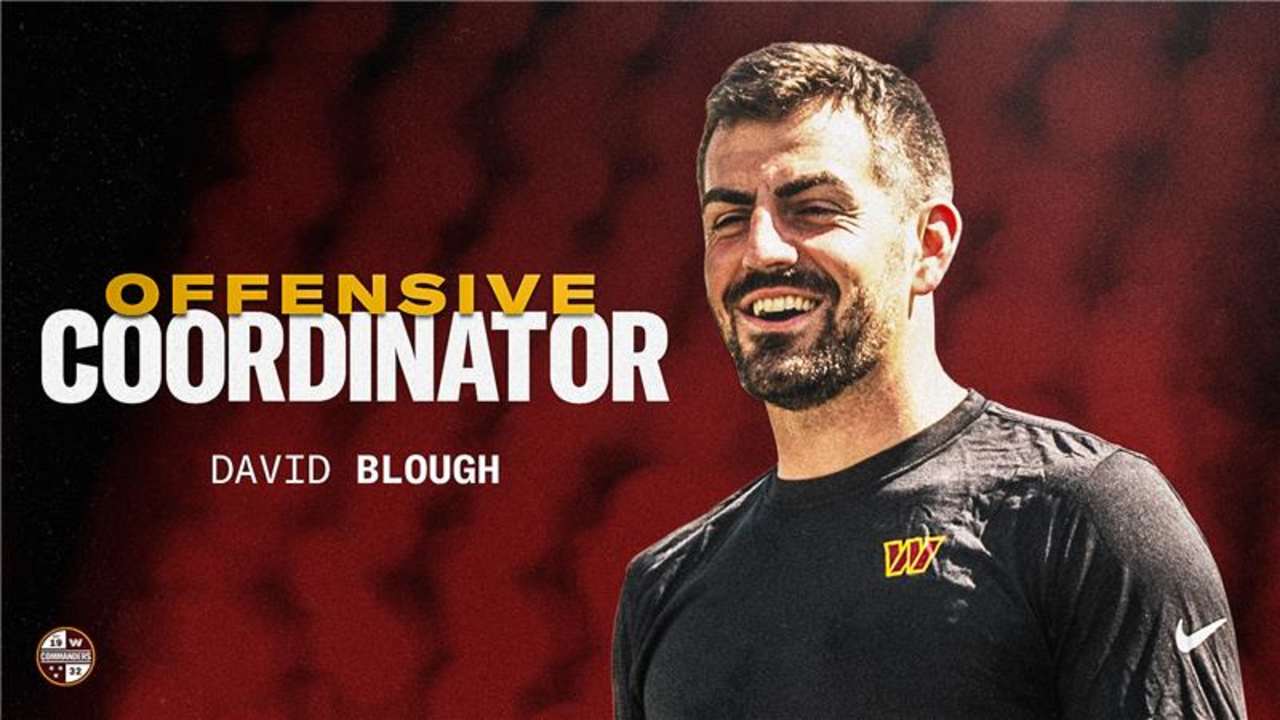
Commanders Name David Blough Offensive Coordinator
The Washington Commanders have promoted former NFL quarterback David Blough to offensive coordinator, signaling a bold new direction for their evolving offense. Entering his third season with the organization, Blough has quickly earned trust inside Ashburn thanks to his detailed preparation, relatable player perspective, and strong relationships in the quarterback room.
From Assistant Quarterbacks Coach To Play-Caller
Blough spent the 2024-25 seasons as assistant quarterbacks coach, quietly taking on expanded duties after Tavita Pritchard left for Stanford. In that role, he helped install weekly game plans, refine timing-based concepts, and mentor young passers adjusting to pro coverages and protections.
What Blough’s Promotion Means For Washington’s Offense
As offensive coordinator, Blough is expected to blend concepts he experienced under influential play-callers around the league with Washington’s existing personnel strengths. Fans should anticipate quarterback-friendly designs, motion, and play-action built to create cleaner reads, protect the pocket, and maximize the unit’s untapped upside.
About the Organizations Mentioned
Washington Commanders
The Washington Commanders are a storied National Football League (NFL) franchise based in Washington, D.C., competing in the National Football Conference (NFC) East division[2][3]. The organization’s core business is professional American football, operating as one of the league’s most valuable and historically significant teams, with a large fan base and extensive media presence[1][6]. ## History Founded in 1932 as the Boston Braves, the team relocated to Washington, D.C., in 1937 and became the Redskins—a name it retained for over 80 years before controversy over cultural sensitivity led to its retirement in 2020[1][2]. After two seasons as the Washington Football Team, the franchise rebranded as the Commanders in 2022, reflecting a modernized identity amid broader social changes[1][3]. In 2023, the team was acquired by new owner Josh Harris, signaling a new era in leadership and potential strategic direction[1]. ## Key Achievements The Commanders’ legacy includes two NFL championships (1937, 1942) and three Super Bowl victories (Super Bowl XVII in 1983, XXII in 1988, and XXVI in 1992)[2][4][5]. These triumphs, especially the dominant 1991 season culminating in Super Bowl XXVI, are celebrated highlights in franchise history[5]. The team has also won multiple division titles and boasts a roster of Hall of Fame players, including Sammy Baugh, John Riggins, and Darrell Green[2][4]. Notably, the Commanders were pioneers in sports media, launching the NFL’s first marching band (1937), first radio network (1944), and first fully televised season (1950)[6]. ## Current Status and Notable Aspects Despite past glories, the Commanders have faced challenges in recent decades, with limited playoff success since the late 1990s[
Stanford University
Stanford University, officially Leland Stanford Junior University, is a prestigious private research university located in Stanford, California, founded in 1885 and opened in 1891. It is widely recognized as a global leader in education, research, and innovation, especially influential in the fields of business and technology[1][2]. The university enrolls approximately 7,554 undergraduates and 9,915 graduate students, supported by a distinguished faculty of 2,345 members, including 20 Nobel laureates[1]. Stanford’s historical significance is deeply tied to the rise of Silicon Valley. Under President Wallace Sterling (1949–1968), it transformed from a regional institution into a top-tier university, earning the moniker "the Harvard of the West." Sterling’s administration was notable for relocating the Stanford Medical School to the main campus, establishing the Stanford Industrial Park (now Stanford Research Park), and fostering strong ties with government research programs. This synergy helped catalyze the development of Silicon Valley as a global technology hub[2]. Currently, Stanford manages an expansive 8,180-acre campus with over 600 buildings and supports more than 7,500 externally sponsored research projects, fueled by a $2.2 billion annual research budget. Its endowment, valued at $37.6 billion as of 2024, is one of the largest worldwide, with investment returns contributing nearly $2 billion annually to sustain academic programs, financial aid, and innovative research initiatives, including groundbreaking technologies and medical treatments[1][4]. Stanford is also at the forefront of educational innovation, exemplified by projects like Stanford 2025, which reimagines higher education to address evolving student needs in a changing global landscape. This initiative explores concepts such as lifetime learning and purpose-driven education, reflecting Stanford’s commitment to shaping future academic models[3]. Moreover, Stanford hosts the Stanford Institute for Human-Centered Artificial Intelligence (HAI), producing the influential AI Index report that tracks global AI development
National Football League
The **National Football League (NFL)** is the premier professional American football organization, founded in 1920 as the American Professional Football Association (APFA) before adopting its current name in 1922. It began with 14 teams mostly from Ohio, Illinois, Indiana, New York, and Michigan, with only two original franchises still active today—the Chicago Bears (formerly Decatur Staleys) and the Arizona Cardinals (originally the Chicago Cardinals)[1][2][3][6]. Throughout its history, the NFL faced competition from rival leagues, including various iterations of the American Football League (AFL) and the All-America Football Conference (AAFC). The most significant competition came from the AFL in the 1960s, which led to a landmark merger in 1970. This merger combined the two leagues into a single entity with two conferences: the National Football Conference (NFC) and the American Football Conference (AFC). The merger introduced the Super Bowl, a championship game that has become a cultural phenomenon and a major business and media event[1][2][3]. The NFL has grown substantially since its inception, expanding to 32 teams and becoming the dominant professional football league in the United States. It has a massive economic footprint, generating billions annually through broadcasting rights, sponsorships, merchandising, and ticket sales. The league is also notable for its strategic use of technology, including advanced data analytics for player performance, broadcast innovations, and fan engagement platforms, positioning it at the intersection of sports, media, and technology[1][2][3]. Key achievements include the establishment of the Super Bowl as one of the world’s most-watched sporting events and the NFL's successful navigation of multiple expansions and relocations of franchises, such as the addition of the Seattle Seahawks and Tampa Bay Buccaneers during the merger era. The Pro Football Hall of Fame in Canton, Ohio, commemorates the league’s rich history and iconic players[1][3][5][