France Summons US Ambassador Kushner over 'Unacceptable' Letter about Rising Antisemitism
#france #us ambassador #kushner #antisemitism #french government
France Summons US Ambassador Kushner over 'Unacceptable' Letter about Rising Antisemitism
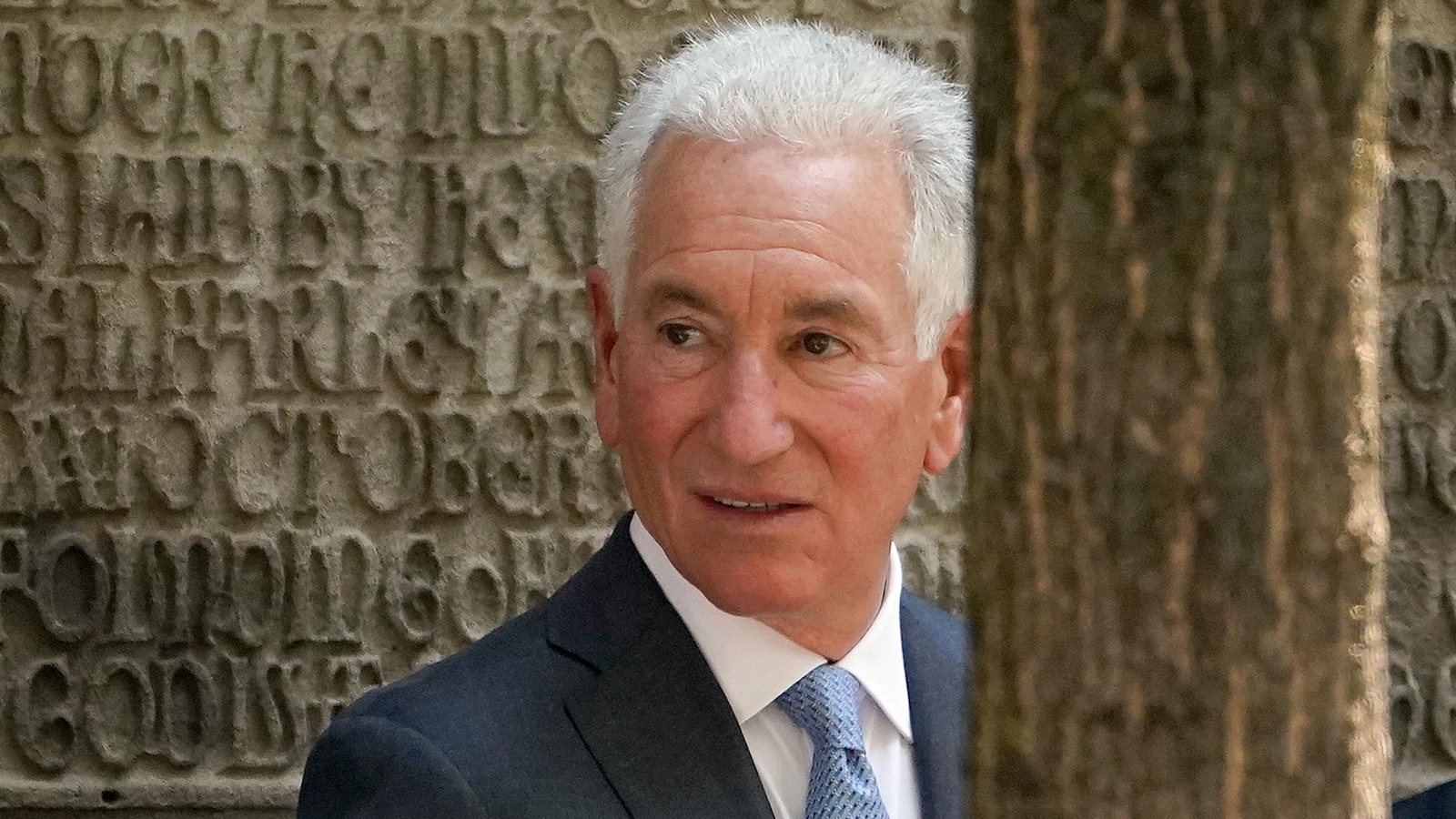
The recent letter sent by US Ambassador Jared Kushner to President Emmanuel Macron has caused quite a stir in France. The letter alleges that the French government has not done enough to combat rising antisemitism in the country. This has led to the French government summoning Kushner to explain his accusations. Macron has even gone as far as to call the letter "unacceptable" and "unfounded." However, this is not the first time the French government has faced accusations of not doing enough to combat antisemitism. In 2019, a survey found that nearly 20% of Jewish individuals in France had been a victim of at least one antisemitic incident in the past year.
Kushner's Letter
In his letter, Kushner specifically mentioned the recent killing of a Holocaust survivor in her own home, which has sparked outrage and fear among the Jewish community. He also pointed to the rise of anti-Israel sentiment and anti-Zionism in France, which often spills over into antisemitic actions. While the French government has taken steps to combat antisemitism, such as increasing security measures and implementing educational programs, Kushner believes more needs to be done. This letter has brought to light the ongoing struggle to combat antisemitism in France and the challenges that the government faces in addressing it.
About the People Mentioned
Jared Kushner
Jared Corey Kushner, born January 10, 1981, in Livingston, New Jersey, is an American businessman, investor, and former senior advisor to President Donald Trump. He is the son of real estate developer Charles Kushner and took over Kushner Companies after his father's legal troubles. Kushner built a notable career in real estate, including the 2007 purchase of 666 Fifth Avenue in Manhattan for $1.8 billion, and acquiring the New York Observer newspaper in 2006, where he served as publisher. Kushner married Ivanka Trump in 2009, linking him to the Trump family. He played a significant role in Donald Trump's 2016 presidential campaign, managing digital strategy and social media, and was instrumental in creating the campaign’s proprietary voter database. In January 2017, Kushner was appointed senior advisor to President Trump, leading initiatives such as criminal justice reform, notably helping pass the First Step Act in 2018, and spearheading efforts in the Middle East peace process, authoring the Trump peace plan and facilitating the Abraham Accords, which normalized relations between Israel and several Arab states in 2020. During his White House tenure, Kushner directed the Office of American Innovation, aiming to apply private-sector practices to government operations. His involvement in the 2016 campaign and subsequent contacts with Russian officials drew scrutiny during investigations into election interference, though he denied any wrongdoing. After leaving the White House in 2021, Kushner moved to Florida and began private equity ventures. In 2022, he published a memoir titled *Breaking History: A White House Memoir*. He and Ivanka Trump have since focused on their family and business interests, notably stepping back from active roles in Trump's 2024 presidential campaign. Kushner remains relevant as a figure blending political influence with business and diplomatic engagements, including recent involvement in Middle East-related initiatives[1][2][4][7].
Emmanuel Macron
Emmanuel Jean-Michel Frédéric Macron, born December 21, 1977, in Amiens, France, is the current President of France, a position he has held since May 2017. He is the youngest president in French history, elected at age 39. Macron founded the centrist political movement La République En Marche! in April 2016, which won a majority in the 2017 legislative elections. Before his presidency, he studied philosophy and graduated from the École Nationale d’Administration (ENA) in 2004, worked at the Inspectorate General of Finance, and served in the banking sector. He entered politics as Deputy General Secretary of the Presidency in 2012 and was Minister for Economy, Industry, and Digital Affairs from 2014 to 2016[1][2][3]. During his presidency, Macron has implemented significant reforms including changes to labor laws, taxation, and the pension system. He has also prioritized the transition to renewable energy. His policies sparked widespread protests, notably the "yellow vests" movement from 2018 to 2020 and strikes against pension reforms. Macron managed France’s response to the COVID-19 pandemic, overseeing vaccination efforts and economic measures to address the recession[1]. In foreign policy, Macron has been active in reforming the European Union, strengthening ties with Germany and Italy, negotiating trade agreements with China amid the US-China trade war, and confronting security challenges including the AUKUS pact dispute. He has maintained France’s military efforts against ISIS and condemned Russia’s invasion of Ukraine[1]. Macron was re-elected in April 2022, marking the first French president in 20 years to secure a second term. His leadership continues to shape France’s domestic and international policies as of 2025[2][3][5].
About the Organizations Mentioned
French Government
The French Government, officially known as the Government of the French Republic, is the executive authority responsible for implementing laws, managing public policy, and overseeing the administration of France. Rooted in the revolutionary ideals of 1789, the modern French government operates as a parliamentary democracy with a semi-presidential system, blending the powers of a president (head of state) and a prime minister (head of government). The president appoints the prime minister, who then forms a cabinet of ministers responsible for sectors such as economy, technology, education, and infrastructure. France’s government is structured around three branches: executive (president and government), legislative (bicameral Parliament), and judiciary. The Council of Ministers, chaired by the president, meets weekly to shape national policy. The government’s reach extends from national strategy to regional and local administration, with 18 regions, 96 departments, and thousands of municipalities ensuring decentralized governance. Historically, France has been a pioneer in democratic governance, notably establishing the concept of the separation of powers. Key achievements include the creation of a robust social welfare system, significant investments in public transport and digital infrastructure, and leadership in European Union policy-making. France is also a global leader in nuclear energy, aerospace, and digital innovation, with government initiatives supporting tech startups and green technologies. As of 2025, the French government continues to navigate complex challenges, including digital transformation, economic competitiveness, and public trust. Recent administrations have prioritized innovation, with policies aimed at boosting France’s tech sector and digital sovereignty. Despite occasional political instability—such as the record-short Lecornu government in September 2025—France remains a full democracy, ranking highly in civil society participation and policy influence. For business and technology leaders, the French government’s commitment to innovation, regulatory clarity, and public-private collaboration makes it a dynamic player in the global landscape.
🔗 Connected Events Overview
Discover related stories and their connections to this article
📊 Quick Insights
📅 Connected Events Timeline
Explore connected events with detailed insights and relationships



👥 People Involved in Connected Events
🏢 Organizations & Products
Key entities mentioned across connected events
🏢 Organizations
🛍️ Products
💡 Connected Events Insights
Discover patterns and trends across related stories
🔥 Trending Topics
Trending Blogs in Politics
Mamdani's Bold White House Pitch to Trump
Zohran Mamdani meets President Trump at the White House to discuss a $21B housing plan for Sunnyside Yard and bipartisan housing reform.

Missing FBI Records Spark Epstein Files Controversy
CNN review finds dozens of FBI witness interviews missing from Epstein files, fueling questions about transparency.

Casey Means Faces Uphill Battle as Surgeon General Nominee in Vaccine Scrutiny
Casey Means, Trump's surgeon general pick, faces uphill confirmation amid vaccine questions and Kennedy health policy ties.
Rubio's High-Stakes Israel Visit Amid US-Iran Tensions
U.S. Secretary of State Marco Rubio plans a March 2-3 visit to Israel as Iran tensions rise over nuclear talks and regional security.

Federal Crackdown on Medicaid Fraud: Minnesota First, Nationwide Expansion
Trump administration unveils an aggressive crackdown on healthcare fraud, freezing Minnesota funds and expanding Medicare/Medicaid integrity nationwide.