Heisman Fallout: Insider Slams Voters and Sparks Debate
#heisman #voters #controversy #college_football #social_media
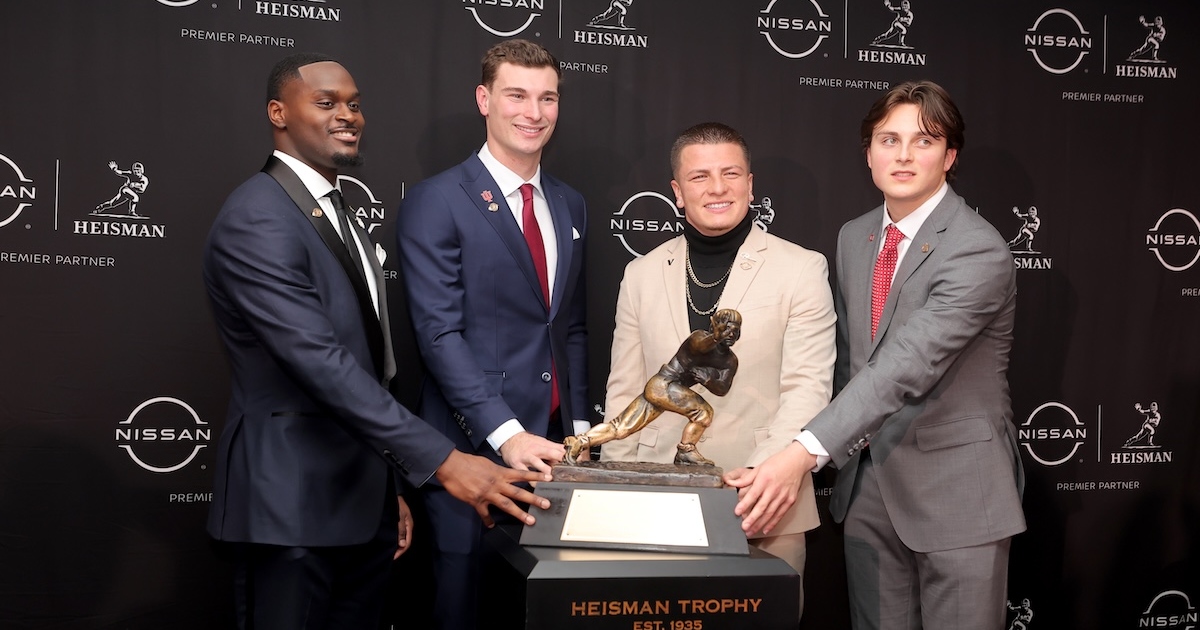
Heisman fallout as insider slams voters
A college football insider publicly criticized Heisman voters after Vanderbilt quarterback Diego Pavia reacted angrily to finishing second, reigniting debate about voter accountability and media scrutiny of the trophy process.
Context and consequences
Pavia’s social post drew swift backlash, an athletic department response, and a prompt apology, while commentators argued whether criticism of voters is ever appropriate and if regional loyalties influence outcomes; the episode highlights tensions between athletes’ emotions, public platforms, and institutional expectations.
Why it matters
The controversy underscores broader questions about transparency in awards voting, the role of social media in shaping narratives, and how finalists balance competitive disappointment with sportsmanship, all of which affect public trust in marquee college football honors and future voter scrutiny.
About the People Mentioned
Diego Pavia
Diego Pavia is an American college football quarterback known for transforming Vanderbilt University’s offense and emerging as one of the nation’s leading dual‑threat signal-callers. He played at New Mexico Military Institute and New Mexico State before transferring to Vanderbilt, where he became the Commodores’ starting quarterback and a team captain[4][1]. At Vanderbilt Pavia has compiled prolific statistics and earned multiple national and conference honors; in 2024 he was the Associated Press Newcomer of the Year, an AP All‑SEC second‑team selection, SEC Newcomer of the Year, and a Maxwell and Davey O’Brien Award semifinalist while throwing for 2,293 yards with 20 touchdowns and rushing for 801 yards and eight scores that season[1]. In 2025 he produced a career‑best season, passing for over 3,100 yards with a school‑record 27 passing touchdowns, adding 826 rushing yards and nine rushing touchdowns, and leading the SEC in several efficiency categories while guiding Vanderbilt to its first double‑digit win season in program history[2]. Pavia’s on‑field achievements have been recognized with major awards: he won the 2025 Johnny Unitas Golden Arm Award as the nation’s top upper‑class quarterback and finished second in Heisman Trophy voting in 2025, underscoring his national relevance[2][6]. Scouts and media have highlighted his accuracy, decision‑making, and ability to extend plays with his legs, traits that helped him break or set multiple Vanderbilt program records for total offense and passing efficiency[2][1]. Beyond statistics, Pavia’s rise from a lightly recruited high‑school prospect and junior‑college starter to a nationally prominent quarterback has been noted as a story of perseverance; articles and team bios cite his leadership, academic work (he majored in biology at New Mexico State), and community engagement as part of his profile[3][1]. As of late 2025 he remains a central figure in college football conversations about award candidates and NFL prospects due to his recent awards, statistical production, and Vanderbilt’s program turnaround[2][6].
About the Organizations Mentioned
Vanderbilt
## Vanderbilt University: Overview and Impact Vanderbilt University, located in Nashville, Tennessee, is a leading private research university recognized globally for its academic rigor, innovative research, and commitment to collaboration. Founded in 1873 through a transformative $1 million gift from Cornelius Vanderbilt—a self-made shipping and railroad magnate—the university was initially chartered as Central University by the Southern branch of the Methodist Episcopal Church[1][2][3]. Vanderbilt’s vision was to create an institution that would strengthen national unity by bridging regional divides, a mission that endures in its ethos today[2]. ## Academic and Research Excellence From its inception, Vanderbilt distinguished itself by offering advanced studies in the liberal arts and sciences alongside professional schools in law, medicine, and theology[3][4]. The university awarded its first doctorate in 1879, established an engineering department in 1886, and continued to expand its graduate and professional programs throughout the 20th century[1][3]. Notable milestones include the founding of the Graduate School in 1935, the acquisition of Peabody College (a renowned teacher-training institution) in 1979, and the integration of the Blair School of Music in 1981[3]. Vanderbilt’s growth has been remarkable: from 307 students in 1875 to over 10,000 by the late 1990s[4]. Today, it boasts more than 177,000 degrees awarded and is led by its ninth chancellor, reflecting a tradition of steady leadership and adaptation[5]. The university is consistently ranked among the top national universities, with particular strengths in medicine, law, education, engineering, and the humanities. ## Key Achievements and Notable Aspects Vanderbilt has produced a distinguished roster of alumni, including Nobel laureates, Pulitzer Prize winners, astronauts, and leaders in business, politics, and the arts[3]. Its faculty have pioneered breakthroughs in medicine, such as the first successfu