Home Depot Cuts 800 Corporate Jobs and Enforces Five-Day In-Office Policy
#home_depot #layoffs #return_to_office #artificial_intelligence #retail
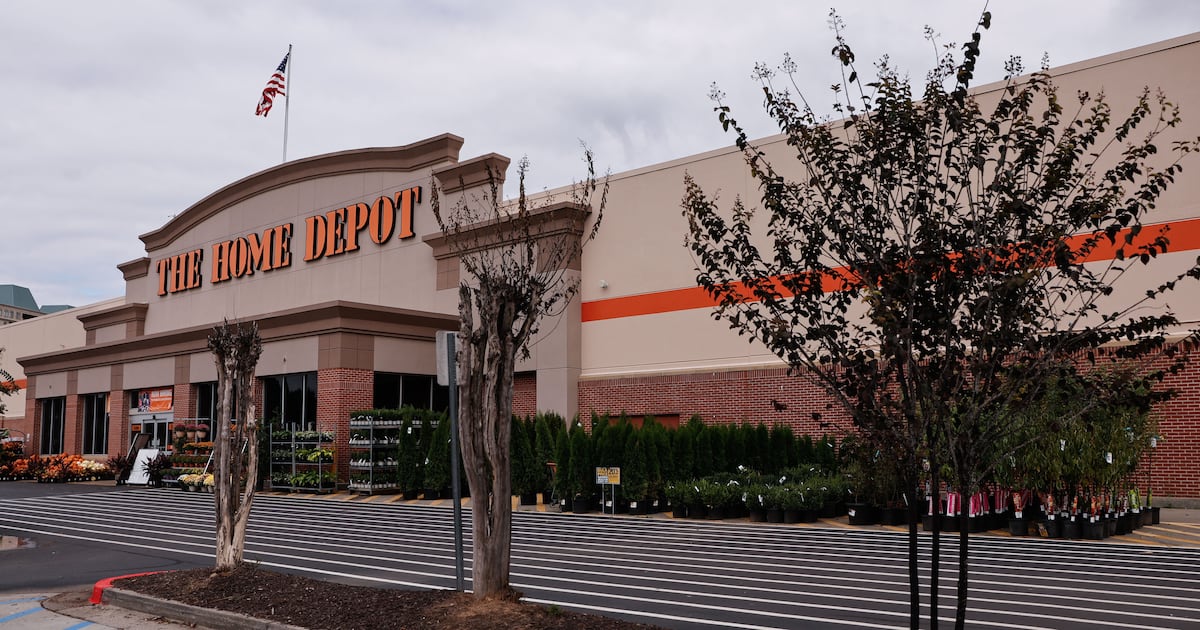
Home Depot Slashes 800 Corporate Jobs Amid Restructuring
Home Depot has announced the elimination of approximately 800 corporate positions linked to its Atlanta store support center, primarily affecting remote workers and technology roles. This move, detailed in a state filing for 797 layoffs, includes 146 jobs at the Vinings headquarters.[2][1]
Return-to-Office Mandate and Company Rationale
In tandem with the cuts, the retailer is enforcing a full five-day in-office policy for remaining corporate staff starting April, up from four days currently. CEO Ted Decker emphasized these changes aim to boost agility, simplify operations, and better align with frontline associates and customers amid a sluggish housing market and profit pressures.[1][2][3]
Broader Implications for Retail Workers
Affected employees receive separation packages, benefits, and job support. This follows Home Depot's recent earnings miss and joins widespread 2026 layoffs at Amazon, UPS, and Nike, signaling retail's push to streamline amid economic uncertainty and AI integration, heightening anxiety for white-collar roles.[3][4][5]
About the Organizations Mentioned
Home Depot
The Home Depot is the world’s largest home improvement retailer and the fourth-largest retailer in the United States, operating over 2,300 stores across North America with approximately 475,000 employees[1][6]. It offers an extensive range of products and services for do-it-yourself (DIY) customers, professional contractors, and installation services, combining large warehouse-style stores averaging 105,000 square feet with a robust e-commerce platform featuring over one million products[6]. Founded in 1978 in Atlanta by Bernie Marcus and Arthur Blank, former executives fired from Handy Dan Home Improvement Centers, The Home Depot was born out of their vision to create superstores much larger than competitors, stocked with a vast product assortment and staffed by knowledgeable customer-service experts[1][2][7]. After incorporating in Delaware in June 1978 and securing venture capital, the first two stores opened in June 1979 in Atlanta[1][2][5]. The company quickly expanded beyond Georgia, entering Florida in 1981 and California by 1985, and went public the same year raising over $4 million in its IPO[2][3][4]. By 1990, The Home Depot surpassed Lowe’s to become the largest home improvement retailer in the U.S., and in 1994 it expanded into Canada by acquiring Aikenhead’s Hardware[3][4]. The company innovated by launching tool rental centers in the mid-1990s and developing a comprehensive e-commerce presence by 2000[3]. It also demonstrated corporate social responsibility through initiatives like Team Depot, its associate volunteer program started in 1993, and disaster relief efforts after 9/11[3][5]. The Home Depot’s success stems from its strategic focus on customer experience, product authority, and interconnected retail, leveraging technology and capital efficiency to maintain growth[6]. Its founders’ legacy of resilience and visionary leadership transformed a simple idea into a retail giant that shaped the home improvement industry, continuousl
Amazon
Amazon.com, Inc. is a leading American multinational technology company specializing in **e-commerce, cloud computing, digital streaming, online advertising, and artificial intelligence**. Founded in 1994 by Jeff Bezos in Bellevue, Washington, Amazon initially launched as an online bookstore but rapidly expanded into a vast online marketplace known as "The Everything Store," selling a wide array of products across numerous categories[1]. Today, it stands as the **world's largest online retailer and marketplace**. Amazon operates multiple key business segments: Amazon Marketplace for retail sales, Amazon Web Services (AWS) for cloud computing, and Amazon Prime for subscription services, all contributing substantial revenue streams and synergistic benefits[3]. AWS is a powerhouse in scalable cloud infrastructure, serving businesses globally, while Amazon Prime offers fast delivery, streaming video, music, and exclusive deals to millions of subscribers[1][3]. The company’s growth strategy focuses heavily on technological innovation, particularly in **artificial intelligence and robotics**. Its AI-powered products include Alexa, the voice assistant embedded in Echo devices. Amazon’s warehouses employ over 45,000 robots, reflecting its commitment to automation and efficiency in logistics[4]. Capital expenditures for 2025 are projected at $118 billion, emphasizing AI and cloud expansion[4]. Amazon’s notable acquisitions have broadened its market reach and diversified offerings. Key acquisitions include **Whole Foods Market (2017), MGM Studios (2022), Twitch, Ring, and IMDb**, which have enhanced its physical retail presence, media content, and smart home technology portfolio[1][3]. These moves have helped Amazon maintain market dominance with over $574 billion in annual revenue and a market capitalization exceeding $2 trillion[3]. Despite strong retail and advertising performance, Amazon faces challenges such as narrowing AWS margins and increased AI infrastructure competition. However, its Q2 2025 financials showed robust revenue growth, with net sales rising 9% to $155.7 billion, underscoring its resilience and adap
UPS
United Parcel Service (UPS), founded in 1907, is a leading American multinational package delivery and supply chain management company headquartered in Atlanta, Georgia. It operates globally, delivering approximately 22.4 million packages daily to over 10 million customers across more than 200 countries and territories. UPS provides an extensive range of services, including domestic and international letter and package delivery, air and ocean freight forwarding, customs brokerage, supply chain solutions, and financial and insurance services. Its operations are divided mainly into two segments: U.S. Domestic Package and International Package, offering time-definite shipping options worldwide through a vast fleet of about 121,000 vehicles and aircraft containers[1][4]. Historically, UPS began as the American Messenger Company, evolving from local telegraph delivery to becoming the largest courier company by revenue globally, surpassing DHL and FedEx with revenues reaching $91.1 billion in 2024. The company operates one of the world’s largest airlines and is known for its major international hub, UPS Worldport in Louisville, Kentucky, which ranks among the busiest cargo airports worldwide. UPS is also a significant private employer in the U.S., with around 490,000 employees[3][4]. Key achievements include consistent revenue growth and strategic transformation efforts aimed at boosting efficiency and reducing costs. In Q2 2025, UPS reported $21.2 billion in revenue and $1.8 billion in operating profit, along with $3.5 billion in targeted cost savings for the year. CEO Carol B. Tome highlights the company's progress in adapting to complex economic and trade environments while positioning UPS for stronger long-term financial performance and competitive advantage[2]. Notably, UPS emphasizes sustainability and innovation, operating a large fleet of alternative fuel vehicles and integrating cutting-edge shipping, visibility, and billing technologies. Its purpose, “Moving our world forward by delivering what matters,” underscores its commitment to customer-centric service, technological advancement, and environmental responsibility[4][5].
Nike
Nike, Inc. is a global leader in sportswear and athletic equipment, founded in 1964 as Blue Ribbon Sports by University of Oregon track athlete Phil Knight and his coach Bill Bowerman. Initially, the company operated as a distributor for Japanese brand Onitsuka Tiger, selling shoes at track meets from Knight’s car. Tensions over shoe designs, especially the Tiger Cortez, led to a split in 1971, when Blue Ribbon Sports rebranded as Nike, named after the Greek goddess of victory, and launched its own line of footwear along with the iconic “Swoosh” logo designed by Carolyn Davidson[1][2][3][4]. Nike revolutionized the sports industry through innovative product design and strategic celebrity endorsements. Bill Bowerman’s innovative approach to footwear, including developing the first Nike shoe using his wife’s waffle iron for sole patterns, exemplifies the company’s commitment to performance enhancement[8]. A landmark moment was signing basketball legend Michael Jordan in 1984, which birthed the Jordan Brand—one of the most successful and culturally influential sneaker lines ever, with over 35 signature models[5]. Nike also pioneered visible Air technology with the 1987 release of the Air Max 1, designed by Tinker Hatfield, marking a shift in sneaker aesthetics and performance that remains influential today[5]. Beyond footwear, Nike offers sportswear, fitness trackers, and accessories, continually integrating technology to enhance athletic performance and customer experience[1][7]. Headquartered in Beaverton, Oregon, Nike operates subsidiaries including Jordan Brand and Converse. Current leadership includes CEO John Donahoe and Executive Chairman Mark Parker. The company emphasizes innovation, sustainability, and social responsibility, investing in employee wellbeing and community programs like the N7 Fund supporting Indigenous youth[1][7]. Nike’s blend of cutting-edge technology, cultural relevance, and athletic excellence secures its position as a dominant force in the global sports industry and a trendsetter i



:max_bytes(150000):strip_icc()/GettyImages-2230322558-c5011b39512d4f6e9142e5d9cfbf2483.jpg)