I-5 Freeway Reopens After Gas Line Rupture Near Los Angeles
#gas #infrastructure #emergency_response #california #transportation

California's I-5 Freeway Reopens After Gas Line Rupture
A major gas line rupture near Castaic, north of Los Angeles, forced the closure of Interstate 5 in both directions on December 27, disrupting a vital artery connecting Southern and Northern California. The incident involved a 34-inch gas main line just east of the southbound lanes, reported around 4:20 p.m. local time by the L.A. County Fire Department. No explosions or injuries occurred, but clouds of natural gas drifted visibly, prompting swift action from authorities.[1]
Emergency Response and Shelter-in-Place
Hazmat crews and SoCalGas teams responded rapidly, identifying the damaged pipeline that night amid significant land movement nearby, though the cause remains under investigation. A shelter-in-place order affected 14,900 residents, lifted hours later with assurances of no public danger despite lingering gas odors. Governor Gavin Newsom was briefed, and the California Office of Emergency Services coordinated efforts, ensuring safety protocols were followed meticulously.[1]
Traffic Chaos and Quick Resolution
California Highway Patrol closed the freeway, stranding post-holiday drivers in miles-long backups with rivers of brake lights visible in aerial footage. Trapped motorists expressed fear of escalation, unsure of the unfolding crisis. All lanes reopened after several hours once the leak was contained, restoring normal flow and highlighting infrastructure vulnerabilities in high-traffic zones.[1][2]
About the People Mentioned
Gavin Newsom
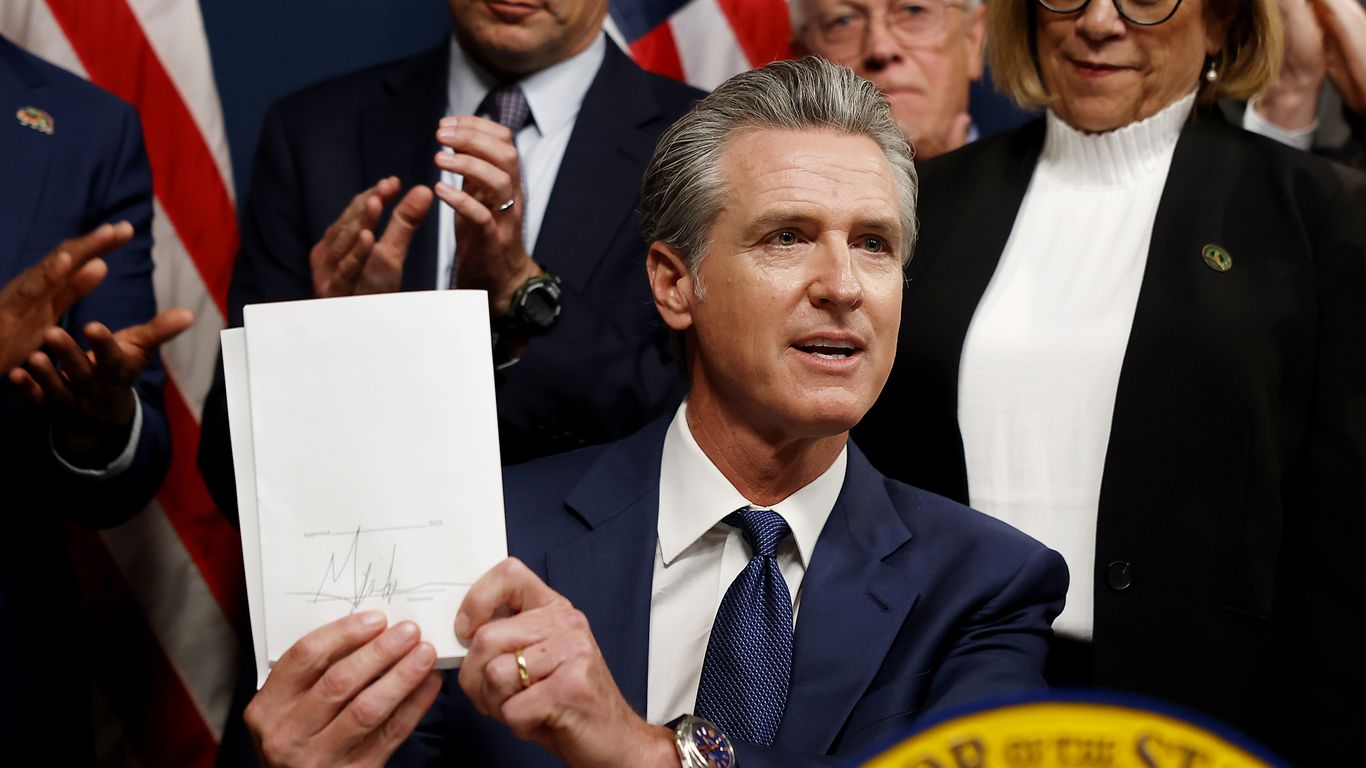
Gavin Christopher Newsom, born October 10, 1967, in San Francisco, California, is an American politician and businessman currently serving as the 40th governor of California since January 2019. Raised in an established San Francisco family and educated at Santa Clara University, where he studied political science, Newsom began his political career in 1996 with an appointment to the San Francisco Board of Supervisors, after serving briefly on the city’s Parking and Traffic Commission. Newsom was elected mayor of San Francisco in 2004, becoming the youngest mayor in over a century. His tenure was notable for progressive initiatives, including directing the city to issue marriage licenses to same-sex couples in 2004, a pioneering move in the national movement for marriage equality. He also launched the Healthy San Francisco program, expanding access to healthcare for uninsured residents. After serving as mayor until 2011, Newsom was elected lieutenant governor of California, holding that office from 2011 to 2019. As governor, Newsom has focused on progressive policy areas such as gun control, criminal justice reform, environmental protection, affordable housing, and universal healthcare access. His administration has prioritized tackling homelessness, improving public safety, and expanding educational opportunities. Notably, he imposed an early moratorium on executions in California and led the state's response to the COVID-19 pandemic, implementing some of the strictest health measures in the country. Newsom survived a recall election in 2021 and was re-elected in 2022, maintaining significant political influence in California. Newsom is also known for his entrepreneurial background, founding the PlumpJack Group, which grew into a substantial hospitality and wine business. He is married to Jennifer Siebel Newsom, and they have four children. Diagnosed with dyslexia in childhood, Newsom has spoken publicly about overcoming learning challenges while pursuing a career in public service[1][2][3][5][6][7].
About the Organizations Mentioned
L.A. County Fire Department
The **Los Angeles County Fire Department (LACoFD)** provides fire suppression, emergency medical services, rescue operations, and wildfire management across 4,083 square miles of unincorporated areas and 60+ contract cities in Los Angeles County, serving over 10 million residents.[1][3][4] Established in **1923** through visionary leadership of Chief J.F. Flintham, the department overcame legal and political hurdles to form the first fire protection districts, starting with Belvedere and Miramonte-Florence-Graham in 1921 precursors.[1][2] The **1949 Consolidated Fire Protection District** unified dozens of earlier districts, followed by full integration of the Forester and Fire Warden in 1992, streamlining operations while optimizing tax structures.[3][4] LACoFD's **key achievements** showcase pioneering innovation: it implemented the U.S.'s earliest inhalators (1926), created a Fire Captain’s College for leadership training, and launched the "Lakewood Plan" for city contracts.[1] In the 1960s-70s, it designed the **9-1-1 system**, graduated the nation's first fire-based paramedics (1970s, backed by Supervisor Kenneth Hahn), and formed hazardous materials squads, critical incident stress teams, and the Urban Search and Rescue (USAR) program in the 1980s—setting global standards.[4][6][7][8] Handling **403,924 calls annually (2021)** with ~3,000 personnel and a **$1.44 billion budget**, it excels in high-rise fires, homeland security, and public education.[4] Today, LACoFD remains a **leader in technology-driven firefighting**, integrating advanced tactics for urban wildfires and disasters, benefiting national and international fire services. Its centennial celebrations highlight a legacy of bold progress, from strategic station builds without debt to paramedi
California Office of Emergency Services
The **California Governor's Office of Emergency Services (Cal OES)** serves as the state's cabinet-level powerhouse for emergency management, coordinating preparedness, response, recovery, and homeland security against threats like wildfires, earthquakes, droughts, and pandemics.[1][2][6] With a mission to protect 38 million residents, it acts as California's "defensive line," stockpiling supplies, managing public safety communications, and orchestrating mutual aid across 58 counties.[2] Established by AB 38 in 2008, Cal OES merged the prior Office of Emergency Services and Office of Homeland Security, building on decades of expertise—its Law Enforcement Division has supported sheriffs and police since 1960, coordinating nearly 600 search-and-rescue missions annually.[1] Key achievements shine in crisis scaling: during 2008's 6,200 wildfires (burning 1.6 million acres), 2018's Camp and Woolsey Fires, and 2020's record 8,000 blazes (3.6 million acres plus COVID-19 across all counties), it fulfilled thousands of resource requests daily.[2] Innovations include adopting scalable tech like Salesforce for intuitive disaster interactions, earning praise as a "trailblazer" in government efficiency.[2] Today, Cal OES thrives under divisions like Fiscal Services (budgeting and payments), Law Enforcement (mutual aid for SAR and mass fatalities), and Response Operations, which uphold the Standardized Emergency Management System (SEMS).[1][6] It leads 18 California Emergency Support Functions (CA-ESFs), from mass care to hazardous materials, partnering with local, federal, and private sectors via regional maps and plans like the State Emergency Plan.[5][6] Notably tech-forward, Cal OES blends business smarts—streamlining fiscal ops and recovery—with cutting-edge tools, ensuring resilient supply chains amid climate volatility. As wildfires intensify and tech evolves, its adaptive model position
SoCalGas
**SoCalGas**, the nation's largest natural gas distribution utility, delivers clean, safe, and reliable energy to approximately **21.8 million consumers** across **more than 500 communities** in Central and Southern California, spanning **24,000 square miles** from Visalia to the Mexican border.[1][4][5] Founded over **150 years ago**, SoCalGas has evolved into a regulated subsidiary of **Sempra** (NYSE: SRE), a San Diego-based Fortune 500 energy holding company, while maintaining operations under oversight from the California Public Utilities Commission (CPUC) and federal agencies.[1][5] It operates a vast **101,000-mile pipeline network** and four key storage facilities—Aliso Canyon, Honor Rancho, La Goleta, and Playa del Rey—to transport about **2.8 billion cubic feet of natural gas daily** from sources in New Mexico, Texas, Oklahoma, the Rockies, Canada, and local fields.[2][3] This integrated system ensures supply reliability, as storage bridges gaps when out-of-state pipelines fall short due to natural gas's slow travel speed of 20-30 mph.[2] Key achievements include pioneering **ASPIRE 2045**, a bold strategy targeting **net-zero greenhouse gas emissions** by 2045 through decarbonization, renewable natural gas, and hydrogen innovation at its Innovation Center.[4][6][8] The company invests over **$2.37 billion annually** with **2,345 vendors**, fostering a diverse workforce and community ties via charitable giving and volunteering.[1][4] Safety remains paramount, with advanced monitoring like remote pressure systems at Playa del Rey, daily patrols, and compliance with environmental regulators.[7] Today, SoCalGas powers homes, businesses, and electric generation while championing values of **doing the right thing, championing people, and shaping the future**.[6] Amid California's climate ambitions, it leads the shift to a resilien
California Highway Patrol
The **California Highway Patrol (CHP)** is the nation's largest state police agency, dedicated to delivering the highest level of **Safety, Service, and Security** through traffic management, law enforcement, and emergency response across California's vast highway network.[3][5][7] Established on August 14, 1929, by legislative act, the CHP originated to enforce uniform traffic laws on state and county highways amid booming automobile use, initially as part of the Department of Motor Vehicles before becoming an independent entity in 1947.[1][3][6] From a force of 730 officers in its first decade, it evolved post-World War II into a multifaceted department, absorbing responsibilities like truck inspections, air operations with airplanes and helicopters, vehicle theft prevention, and—following the 1995 merger with the California State Police—protection of state property, employees, and dignitaries including the Governor.[1][4] Key achievements include pioneering traffic safety techniques, reducing collision and fatality rates via targeted programs, and operating the world-renowned CHP Academy in West Sacramento, which trains cadets in advanced skills like accident reconstruction, tactical operations, EMT services, and emergency vehicle handling—also serving external agencies.[1][7] Specialized units, such as cliff rescue teams, dignitary protection, mounted patrols for crowd control, and the Multi-Disciplinary Accident Investigation Team (MAIT), underscore its paramilitary structure and versatility in handling fatal crashes, disasters, and complex events without deferring to locals.[4] Today, under Commissioner Sean Duryee (appointed 2023), the CHP boasts nearly **11,000 employees**, a **$3.2 billion budget**, and patrols ~380,000 lane miles via eight geographical divisions from Sacramento headquarters, with over 125 stations.[2][5] Officers, uniformed in tan or blue BDUs, manage freeways, assist motorists, enforce statewide laws (primarily Vehicle Code), and leverage tec