Indiana House Approves Controversial GOP Map Aiming to Gain Two Congressional Seats
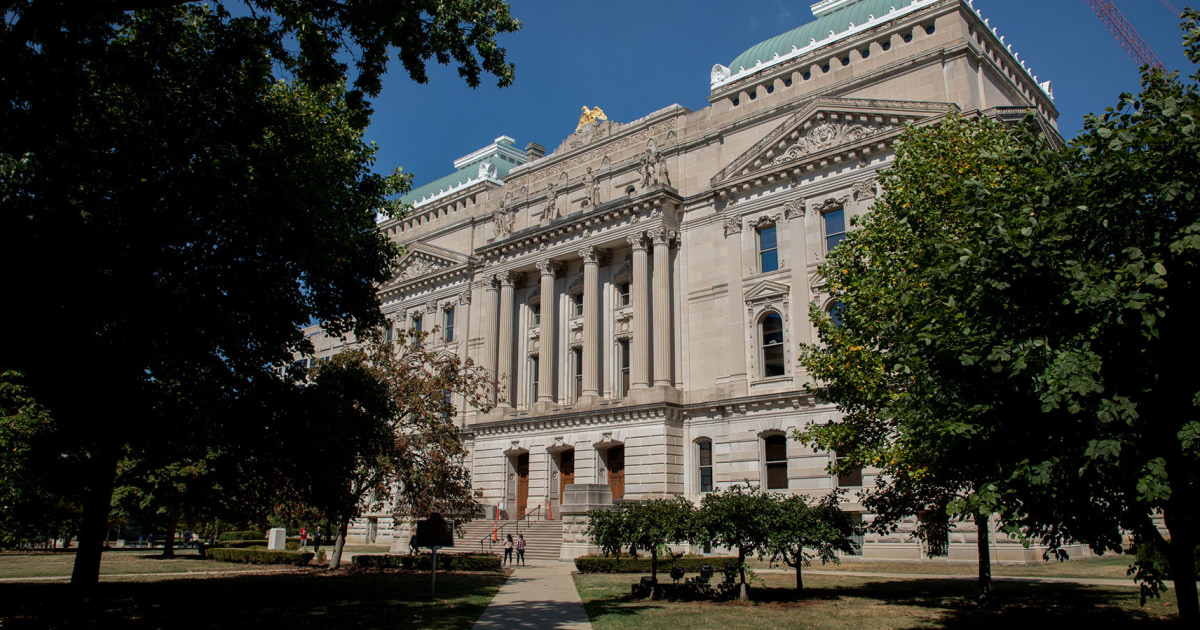
Indiana House Approves Controversial Congressional Map
The Indiana House passed a new Republican-drawn congressional map on Friday, aiming to gain two additional seats in the U.S. House. The vote was 57 to 41, reflecting a strong but not unanimous Republican backing. This redistricting effort primarily targets Indiana’s two Democratic districts, seeking to shift them in favor of Republicans ahead of the 2026 midterm elections.
Political Reactions and Senate Challenges
President Donald Trump praised the Indiana House for approving the map and urged the state Senate to follow suit quickly, calling it a “gigantic Victory for Republicans.” However, the map faces uncertainty in the Senate, where some Republicans have expressed opposition, citing concerns over fairness and electoral competitiveness. Senate leaders have indicated there may not be enough votes for passage, highlighting internal GOP divisions on the issue.
Broader Implications for Indiana and Beyond
This redistricting is part of a wider national trend where both parties redraw boundaries to maximize their electoral advantages. Indiana’s new map could reshape political representation in the state, affecting not only local communities but also the balance of power in Congress. The ongoing debate underscores the contentious nature of redistricting in American politics.
About the People Mentioned
Donald Trump
Donald John Trump, born June 14, 1946, in Queens, New York, is an American businessman, media personality, and politician. He graduated from the University of Pennsylvania’s Wharton School in 1968 with a degree in economics. In 1971, he took over his family’s real estate business, renaming it the Trump Organization, through which he expanded into building and managing skyscrapers, hotels, casinos, and golf courses. Trump gained widespread fame as the host of the reality TV show *The Apprentice* from 2004 to 2015, which helped establish his public persona as a successful entrepreneur. Trump entered politics as a Republican and was elected the 45th president of the United States, serving from 2017 to 2021. His presidency was marked by significant policy actions including tax cuts, deregulation, the appointment of three Supreme Court justices, renegotiation of trade agreements (notably replacing NAFTA with the USMCA), and a focus on immigration control including border wall expansion. He withdrew the U.S. from international agreements such as the Paris Climate Accord and the Iran nuclear deal, and engaged in a trade war with China. His administration’s response to the COVID-19 pandemic was criticized for downplaying the virus’s severity. Trump was impeached twice by the House of Representatives—first in 2019 for abuse of power and obstruction, and again in 2021 for incitement of insurrection—but was acquitted by the Senate both times. After losing the 2020 election to Joe Biden, Trump challenged the results, culminating in the January 6, 2021, Capitol riot. He remains a central figure in American politics, having won the 2024 presidential election and returned as the 47th president in 2025, continuing to promote policies aimed at economic growth, border security, and military strength[1][2][3][4].
About the Organizations Mentioned
Indiana House
The **Indiana House of Representatives** is the lower chamber of the Indiana General Assembly, the state legislature of Indiana. It consists of 100 members, each representing a distinct district with an average population of about 64,838 people. Members serve two-year terms without term limits, with eligibility requiring U.S. citizenship, a minimum age of 21, and residency in Indiana and the represented district[1][2]. Established as part of Indiana’s state government framework, the Indiana House operates as a part-time legislature meeting annually in the Indiana Statehouse in Indianapolis. The assembly convenes early January and typically adjourns by April 30 in odd-numbered years. Legislative work in the House involves committee review, debate, and voting on bills affecting diverse policy areas. Committees, chaired by senior majority party members, play a critical role in shaping legislation before it reaches the full chamber[1][2][6]. The Indiana House is currently dominated by the Republican Party, holding 70 of the 100 seats, with the Democrats occupying 30. The House’s leadership is headed by Speaker Todd Huston. The Republican majority has influenced recent legislative priorities, including redistricting efforts aimed at reinforcing their political control, which has sparked debate over fairness and representation[1][4][5][8]. Key achievements of the Indiana House include passing balanced state budgets, tax reforms since 2013, and legislation focused on education, public safety, and government efficiency. The House also addresses constituent issues directly, seeking to improve community life statewide. Democratic members emphasize constituent advocacy and raising awareness of state government activities to empower Hoosier participation[3][8]. Notably, the Indiana House combines traditional legislative functions with modern communication efforts, such as podcasts and digital engagement, to inform and involve the public. Its role as a co-equal branch of state government underscores its importance in shaping Indiana’s laws and policies in business, technology, and beyond[7][8][9].
U.S. House
The **U.S. House of Representatives** is one of the two chambers of the United States Congress, the federal legislature responsible for creating laws and representing the American people. It consists of 435 voting members elected every two years from congressional districts across all states. The House plays a crucial role in initiating legislation, particularly revenue-related bills, overseeing the executive branch, and serving constituents through committees and floor debates[1][7]. Historically, the House was established in 1789 as part of the original U.S. Constitution, designed to provide proportional representation based on population. Over time, it has evolved into a powerful legislative body central to American governance, balancing executive power and reflecting the electorate's will through frequent elections. The current 119th Congress, which began in January 2025, features a narrowly divided House, with Republicans holding a slim majority of 220 seats to 213 held by Democrats, and two vacant seats pending special elections. This slim majority is the tightest for any party since the early 1930s, emphasizing the heightened importance of bipartisan cooperation and strategic coalition-building to pass legislation. Notably, the 119th Congress includes the first openly transgender member, Representative Sarah McBride (D-DE), marking a historic milestone in congressional diversity[1][2]. Key achievements of the House often involve passing significant legislation, shaping national policy through committee work, and overseeing government operations. For example, early in the 119th Congress, members were elected to standing committees critical for advancing the legislative agenda[3]. The House also plays a pivotal role in responding to special circumstances, such as filling vacancies through special elections, though some, like the canceled New York 21st district election in 2025, have been affected by political dynamics[5]. In the context of business and technology, the House influences regulatory frameworks, funding for innovation, and national tech policy, making it a vital institution for stakeholders monitoring legislative impacts on industry and technology sectors. Its committee structure and legislativ
Senate
The **United States Senate** includes several key committees critical to business and technology policy, notably the *Senate Committee on Small Business and Entrepreneurship* and the *Senate Committee on Commerce, Science, and Transportation*. These committees play pivotal roles in shaping legislation that impacts small businesses, innovation, technology development, and commerce nationwide. The **Senate Committee on Small Business and Entrepreneurship** advocates for small businesses by overseeing the Small Business Administration (SBA), which provides capital access, education, technical assistance, and federal contracting opportunities to small enterprises. This committee’s historical role has been to ensure the vitality of small businesses, which are essential to the American economy. Recent efforts include bipartisan reforms targeting SBA program efficiency, fraud prevention related to pandemic aid, and support for entrepreneurship in underserved communities. They also focus on programs like the Small Business Innovation Research (SBIR) and Small Business Technology Transfer (STTR), which connect federal agencies with private entrepreneurs to accelerate research and development in critical tech areas, thereby maintaining U.S. technological leadership[1][4][5][8]. The **Senate Committee on Commerce, Science, and Transportation** is one of the largest Senate committees, overseeing broad sectors including consumer protection, economic development, manufacturing, trade, science, and transportation infrastructure. It addresses emerging technologies, environmental issues like climate change, and space exploration, both government-funded and private. This committee significantly influences national business practices, product safety, competitiveness, and innovation ecosystems, affecting industries from maritime to digital technology[2][7]. Notable recent activities include Senate hearings on Big Tech antitrust and competition policies, emphasizing the need to regulate dominant technology firms to foster innovation and protect consumers and workers. This aligns with broader legislative efforts addressing artificial intelligence and technological competitiveness in 2025[6][10]. In summary, the Senate’s organizational structure and committees serve as crucial instruments in shaping U.S. business and technology landscapes. Through oversight, legislation, and reform initiatives, they support small businesses, promote innovation