Trump's Influence in Honduras' Tight Presidential Race

Trump’s Influence in Honduras’ Tight Presidential Race
The 2025 Honduran presidential election has sparked intense debate as former Tegucigalpa Mayor Nasry Asfura, backed by Donald Trump, and Liberal Party candidate Salvador Nasralla remain nearly tied in preliminary vote counts. Both conservatives have secured roughly 40% of the vote, with less than 1,000 votes separating them as counting continues amid technical issues with the electoral website.
Election Dynamics and Controversies
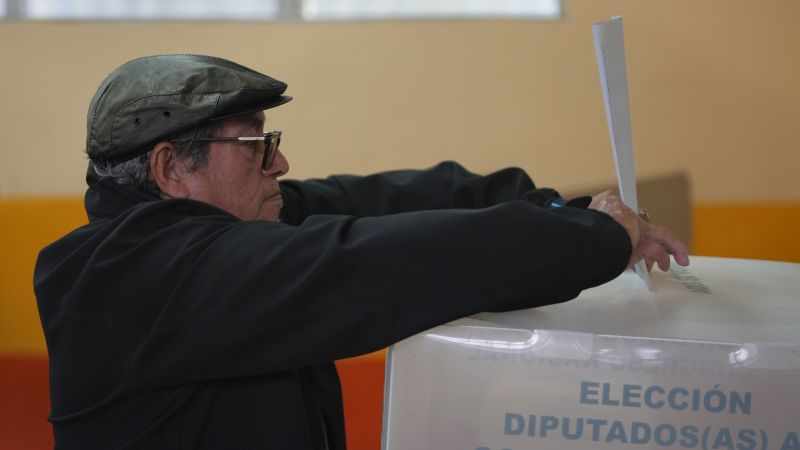
The election has been marked by allegations of vote manipulation and external interference, leading to heightened tensions. Audio leaks hinting at electoral tampering were dismissed by opposition leaders as fabricated. Despite this, Hondurans have prioritized security and economic concerns over political controversies, emphasizing these as key factors in their voting decisions.
Looking Ahead
As thousands of observers monitor the ongoing count, the final outcome remains uncertain. The close race between Asfura and Nasralla underscores the polarized political landscape in Honduras, with Trump's support adding a complex international dimension to the local electoral process.
About the People Mentioned
Nasry Asfura
Nasry Juan Asfura Zablah, nicknamed "Tito," is a Honduran politician and businessman of Palestinian descent who was elected president of Honduras in late 2025.[1][2][3] Born in Honduras, he studied civil engineering but did not complete his degree, instead entering public service in the 1990s through operational and managerial roles in the Central District Mayor's Office in Tegucigalpa.[1] Asfura built a reputation for pragmatic governance focused on project execution during his early local government tenure, while establishing a successful career in the construction sector.[1] He first gained prominence in the 2005 National Party primaries for mayor of the Central District, where he popularized the catchphrase "¡Papi, a la orden!" ("Daddy at your service"), symbolizing accessibility and service to citizens—a slogan he revived in his 2025 presidential campaign.[1] From 2014 to 2022, Asfura served as mayor of Tegucigalpa, Honduras's capital, emphasizing practical problem-solving.[1] In 2022, he ran as the National Party's presidential candidate, finishing second to Xiomara Castro amid allegations of fraud and corruption.[1] As a conservative, he pledged to boost job creation, attract foreign investment, enhance police capabilities to combat Central America's highest homicide rate, and align Honduras with the United States over China.[1] His 2025 presidential victory, announced by the National Electoral Council, came after weeks of delays and was backed by U.S. President Donald Trump, who warned of reduced aid if Asfura lost.[1][2][3] If implemented, his administration may shift toward a pro-Israel stance, similar to that of former president Juan Orlando Hernández.[1] Asfura's win marks a significant political shift in Honduras, bolstering his current role as president-elect or incoming leader.[2][3]
Donald Trump
Donald John Trump, born June 14, 1946, in Queens, New York, is an American businessman, media personality, and politician. He graduated from the University of Pennsylvania’s Wharton School in 1968 with a degree in economics. In 1971, he took over his family’s real estate business, renaming it the Trump Organization, through which he expanded into building and managing skyscrapers, hotels, casinos, and golf courses. Trump gained widespread fame as the host of the reality TV show *The Apprentice* from 2004 to 2015, which helped establish his public persona as a successful entrepreneur. Trump entered politics as a Republican and was elected the 45th president of the United States, serving from 2017 to 2021. His presidency was marked by significant policy actions including tax cuts, deregulation, the appointment of three Supreme Court justices, renegotiation of trade agreements (notably replacing NAFTA with the USMCA), and a focus on immigration control including border wall expansion. He withdrew the U.S. from international agreements such as the Paris Climate Accord and the Iran nuclear deal, and engaged in a trade war with China. His administration’s response to the COVID-19 pandemic was criticized for downplaying the virus’s severity. Trump was impeached twice by the House of Representatives—first in 2019 for abuse of power and obstruction, and again in 2021 for incitement of insurrection—but was acquitted by the Senate both times. After losing the 2020 election to Joe Biden, Trump challenged the results, culminating in the January 6, 2021, Capitol riot. He remains a central figure in American politics, having won the 2024 presidential election and returned as the 47th president in 2025, continuing to promote policies aimed at economic growth, border security, and military strength[1][2][3][4].
About the Organizations Mentioned
Liberal Party
The **Liberal Party** is a political organization dedicated to advancing a liberal society where individual liberty, property rights, and security are paramount, and no citizen is oppressed by poverty, ignorance, or conformity[1]. Its core mission centers on protecting individual freedoms and ensuring equal opportunities through policies shaped democratically by its members at annual assemblies[1]. The party places strong emphasis on civil rights, privacy, and data protection, adhering strictly to regulations like the GDPR to safeguard personal information of members and supporters[1]. Historically, the Liberal Party concept has manifested in various forms globally. In the United States, the Liberal Party of New York was founded in 1944 by moderate former members of the American Labor Party reacting against communist influences[2][4]. This party maintained a pragmatic alliance with labor unions and intellectuals, supporting progressive candidates often aligned with the Democratic Party[4]. It was notable for mobilizing immigrant and working-class voters, though over time it lost influence as internal leadership became more centralized and less ideologically driven[4]. Internationally, the Liberal Party ideals are represented in organizations like **Liberal International**, a federation of liberal and progressive democratic parties worldwide, formed in 1946 to promote liberal democracy and human rights globally[5][7]. The Liberal Party emphasizes a balance of liberty, equality, democracy, community, human rights, internationalism, and environmentalism, reflecting values that resonate strongly in business and technology sectors seeking innovation underpinned by freedom and ethical governance[3]. Its policies advocate for decentralization, support for diverse communities, and international cooperation, aligning with global trends in open markets and digital privacy[3]. Currently, the Liberal Party remains active in advocating liberal values through political engagement, policy development, and public discourse, often encouraging debate via internal platforms and external communications[1]. Its commitment to safeguarding rights and promoting a free society continues to influence political landscapes where liberal democratic principles are valued.