Israel Receives Hostage Remains from Gaza: Update Amid Negotiations

Israel Receives Hostage Remains from Gaza
Israel has received a coffin believed to contain the remains of a hostage held by Hamas in northern Gaza. The Palestinian Islamic Jihad and Hamas announced the discovery of the body, which will be transported to Tel Aviv for forensic examination. Israeli officials confirmed preparations to conduct thorough tests at the National Institute of Forensic Medicine to identify the deceased and gather crucial information about the circumstances.
Context of the Hostage Situation
This development comes amid ongoing tensions and negotiations related to hostages still held in Gaza. Israeli Prime Minister Netanyahu emphasized the government’s commitment to securing the return of all captives, noting that only two hostages remain in captivity. Efforts continue intensively to locate and safely recover them, with intelligence suggesting Hamas is aware of their whereabouts.
Broader Implications
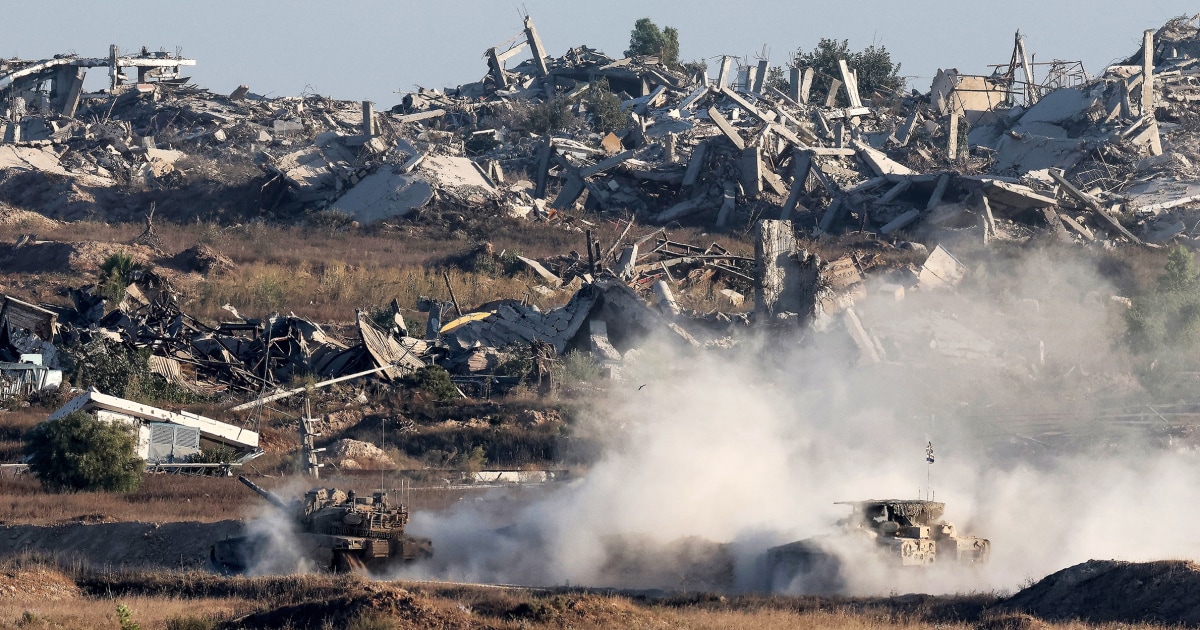
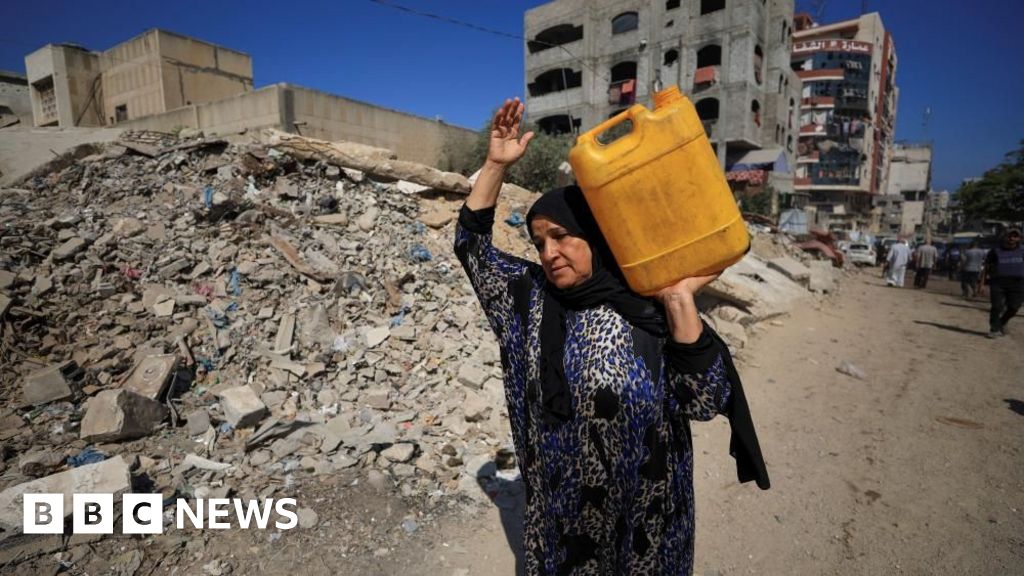
The handover of remains marks a significant moment in the conflict, coinciding with plans to reopen the Rafah border crossing for Palestinians wishing to leave Gaza. Coordination between Israel, Egypt, and international mediators aims to facilitate humanitarian relief and movement, highlighting the complex dynamics of the ongoing crisis.
About the People Mentioned
Benjamin Netanyahu
Benjamin Netanyahu, born on October 21, 1949, in Tel Aviv, Israel, is a prominent Israeli politician and diplomat who has served as Prime Minister of Israel three times (1996–1999, 2009–2021, and from 2022 onwards). He began his career in the Israeli military's special operations and later transitioned into politics in the late 1980s, joining the Likud party[1][2]. Netanyahu first became prime minister in 1996, during which time he signed the Hebron and Wye Accords, advancing peace efforts with the Palestinians. His administration focused on economic reforms such as government privatization, liberalizing currency regulations, and reducing deficits. After losing the 1999 election, he served as foreign minister and finance minister before reclaiming the Likud leadership in 2005[1][3][4]. Returning as prime minister in 2009, Netanyahu formed a national unity government and proposed a demilitarized Palestinian state recognizing Israel as the Jewish state, emphasizing security concerns. His tenure was marked by fluctuating peace negotiations with the Palestinians and contentious policies including settlement expansions. He also maintained a hawkish stance on Iran and supported the Iraq war[1][3][5]. In 2022, Netanyahu made a political comeback as prime minister, leading a coalition that included far-right parties. His leadership during this period has been pivotal amid the 2023–2024 Israel-Hamas conflict, with significant domestic and international implications[2]. Netanyahu is Israel’s longest-serving prime minister and remains a central figure in Israeli politics, known for his strong security policies, economic reforms, and complex role in the Israeli-Palestinian conflict. His career has been marked by both political resilience and controversy, reflecting his enduring influence on Israel’s domestic and foreign affairs[2][3][5].
About the Organizations Mentioned
Hamas
**Hamas** is a Sunni Islamist Palestinian nationalist organization that functions both as a political party and a militant group, primarily operating in the Gaza Strip, which it has governed since 2007. Founded in 1987 by Ahmed Yassin amid the First Intifada, Hamas emerged from the Muslim Brotherhood and initially had covert Israeli support as a counterweight to the secular Palestinian Liberation Organization (PLO)[3][1]. It combines political governance with an armed wing, the al-Qassam Brigades, committed to armed resistance against Israel, which it refuses to recognize as a legitimate state[1][3]. Hamas’s political rise culminated in a 2006 electoral victory in the Palestinian Legislative Council, campaigning on anti-corruption and resistance platforms. After violently seizing Gaza from the rival Fatah faction in 2007, Hamas has maintained de facto control there despite international isolation and blockades imposed by Israel and Egypt[3]. Its governance has been marked by repeated conflicts with Israel, including major wars in 2008–09, 2012, 2014, 2021, and the ongoing intense conflict triggered by Hamas’s surprise October 2023 attack killing nearly 1,200 Israelis and taking hostages[1][2][3]. Hamas benefits from regional support, especially from Iran, which supplies funding and weapons, as well as financial and political backing from Turkey and Qatar. These alliances form part of a broader "axis of resistance" against Israel, which includes groups like Hezbollah and Palestinian Islamic Jihad[2]. Hamas also operates fundraising networks globally, sometimes using charities as fronts to support its military activities[4]. The group is designated a terrorist organization by many countries, including the United States, which has increased military aid to Israel following recent escalations[2][6]. Despite modifying its 1988 charter in 2017 to soften some language, Hamas continues to reject Israel’s legitimacy and pursues all forms of resistance[1]. Its enduring political
Palestinian Islamic Jihad
**Palestinian Islamic Jihad (PIJ): An Overview** The Palestinian Islamic Jihad (PIJ), also known as Harakat al-Jihad al-Islami fi Filistin, is a Sunni Islamist militant group founded in the late 1970s by Fathi Shikaki and Abd al-Aziz Awda. Initially part of the Egyptian Muslim Brotherhood, they broke away due to the Brotherhood's perceived moderation on Palestinian issues[1][2]. The group's primary goal is to establish an Islamic Palestinian state, which involves the destruction of Israel and the reclamation of historic Palestine[2]. **History and Development** PIJ was forced to move from Egypt to Gaza in the early 1980s due to its radical stance. The group's military wing, the al-Quds Brigades, has been responsible for numerous attacks on Israeli targets, including suicide bombings and rocket launches[1][5]. In 1997, PIJ was designated as a Foreign Terrorist Organization by the United States[1]. Over the years, PIJ has received significant support from Iran, which has helped the group strengthen its capabilities[3]. **Key Achievements and Current Status** PIJ has maintained a strong presence in the Gaza Strip, often launching rockets into Israel in response to Israeli actions. Notable recent incidents include the firing of over 4,000 rockets alongside Hamas in May 2021 and approximately 1,100 rockets in August 2022[5]. Despite being overshadowed by Hamas, PIJ continues to be a key player in Palestinian militant politics, particularly because it is not encumbered by governance responsibilities[3]. The group's influence has grown, especially after Hamas's break with Syria in 2012, which led to increased Iranian funding for PIJ[3]. **Notable Aspects** PIJ's refusal to engage in the political process sets it apart from other Palestinian groups like Hamas and Fatah[2]. The organization's ideology is deeply rooted in
National Institute of Forensic Medicine
The **National Institute of Forensic Medicine (NIFM)** is a specialized organization focused on forensic medicine and medicolegal death investigations, playing a crucial role in the criminal justice system by providing expert forensic pathology services. It conducts postmortem examinations to determine causes of death in cases involving homicide, suicide, accidents, and unexplained deaths, thus aiding legal and investigative processes. The institute typically combines medical expertise with legal frameworks to ensure scientifically robust and legally admissible forensic evidence. Historically, institutes like the NIFM have evolved to meet growing demands for high-quality forensic investigations. One notable example is the National Institute of Forensic Medicine "Mina Minovici" in Bucharest, established as a pioneering forensic medicine institution[7]. Such institutes set standards for forensic pathology, contributing significantly to public health, safety, and justice. Key achievements of institutes under the NIFM umbrella include advancing forensic pathology practices, integrating medico-legal education, and improving death investigation protocols. Additionally, they often collaborate with national forensic science programs, enhancing forensic workforce capacity and training prosecutors, judges, and law enforcement in forensic science applications, as seen in related initiatives funded by national justice departments and universities[1][3]. Currently, organizations like the NIFM operate in close synergy with broader forensic science entities, including forensic research centers, legal policy offices, and forensic standards bodies such as the Organization of Scientific Area Committees for Forensic Science (OSAC)[2][3]. This integration ensures continuous improvement of forensic methods and standards, contributing to reliable and reproducible forensic analyses. Notably, forensic medicine institutes emphasize ethical practices, equity, and inclusivity, reflecting their commitment to public health and justice. Professional bodies such as the National Association of Medical Examiners promote high standards and condemn discrimination, underscoring the social responsibility integral to forensic medicine[5]. In summary, the National Institute of Forensic Medicine constitutes a vital part of the forensic science ecosystem, combining medical expertise, legal collaboration, scientific research