Israel Strikes Lebanon-Syria Border, Killing Four Escalates Regional Tensions

Israel Strikes Lebanon-Syria Border, Killing Four
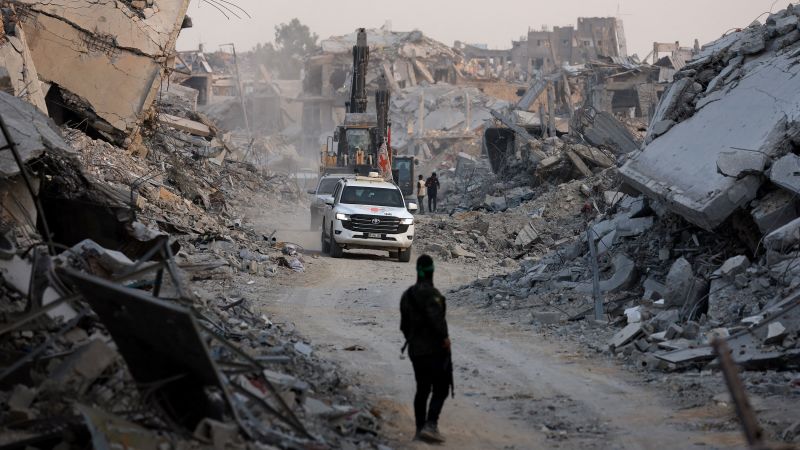
Israeli forces launched a drone strike on a vehicle near the Lebanon-Syria border in Majdal Anjar, killing four people, according to Lebanon's National News Agency. The attack ignited a fire in the car, with civil defense teams extinguishing flames to recover the bodies amid reports of explosions in nearby towns. This incident heightens tensions despite a November 2024 truce aimed at ending over a year of Israel-Hezbollah conflict.
Israel's Justification and Broader Context
The Israeli Defense Forces claimed the strike targeted Palestinian Islamic Jihad operatives, marking the first such acknowledged action against the group since the ceasefire. Israel has conducted hundreds of operations in Lebanon post-truce, eliminating over 400 militants, dismantling Hezbollah infrastructure, and raiding weapon sites. These moves counter attempts to rebuild terror networks, amid pressures on Lebanon to disarm non-state groups like Hezbollah and its allies.
Implications for Regional Stability
With more than 370 deaths from Israeli strikes since the ceasefire, southern Lebanon remains a volatile zone. Palestinian factions have partially disarmed, but Hamas and Islamic Jihad resist, fueling fears of escalation. As Israel holds strategic border posts and deploys drones, residents face ongoing displacement, underscoring fragile peace and persistent proxy threats in the Middle East.
About the Organizations Mentioned
Lebanon's National News Agency
```html <!DOCTYPE html> <html lang="en"> <head> <meta charset="UTF-8"> <meta name="viewport" content="width=device-width, initial-scale=1.0"> <title>Lebanon's National News Agency: A Pillar of Reliable Reporting</title> <style> body { font-family: Arial, sans-serif; line-height: 1.6; max-width: 800px; margin: 0 auto; padding: 20px; } h1 { color: #333; } h2 { color: #555; } p { margin-bottom: 1em; } </style> </head> <body> <h1>Lebanon's National News Agency: The Backbone of Credible News</h1> <p>In the vibrant media landscape of Lebanon, the <strong>National News Agency (NNA)</strong> stands as the premier state-owned source for accurate, objective news, serving as the official reference for public authorities and media outlets nationwide[1][2].</p> <h2>Foundational History</h2> <p>Established in 1961 via legislative decree No. 7276, NNA—initially the Directorate of National News Agency—began operations on March 19, 1962[1][2][4]. Housed in the Ministry of Information, it has evolved with the times, embracing digital media in 2004 and social platforms like Facebook and Twitter. Its website remains Lebanon's top news portal by traffic and speed[2].</p> <h2>Operations and Reach</h2> <p>NNA deploys about 120 correspondents across Lebanese districts and abroad (Italy, Australia, Syria), publishing in Arabic, French, and English around the clock—from 6 AM to midnight, seven days a week[
Israeli Defense Forces
The **Israel Defense Forces (IDF)** is the national military of Israel, established in May 1948 shortly after the country’s founding. It comprises three main branches: the Israeli Ground Forces, the Israeli Air Force (IAF), and the Israeli Navy, all operating under a unified command led by the Chief of Staff who reports to the Minister of Defense[1][2][3]. The IDF's primary mission is to safeguard the State of Israel and protect its citizens from diverse and persistent security threats[8]. The IDF is known for its **defensive strategic doctrine combined with offensive tactical execution**, reflecting Israel’s geographical vulnerabilities and security environment. It maintains a small but highly trained standing army supported by a large reserve force, with rapid mobilization capabilities[1]. The quality and professionalism of its soldiers are considered the IDF’s greatest asset, supported by advanced domestically developed weapons and technologies tailored to Israel’s specific defense needs[1][3]. Historically, the IDF has played a crucial role in Israel’s survival and regional conflicts, participating in multiple wars and counterterrorism operations. Notable achievements include Operation Entebbe in 1976, a daring hostage rescue by elite special forces such as Sayeret Matkal, and continuous innovations in urban warfare and subterranean combat against tunnel networks used by adversaries like Hamas[4][5]. The IDF’s special forces units are internationally recognized for their rigorous training and operational excellence in intelligence, counterterrorism, and unconventional warfare[4]. Currently, the IDF is undergoing significant technological and structural modernization. This includes upgrading infantry weapons (e.g., replacing M-16 rifles with the IMI Tavor series), armored vehicles (e.g., Namer and Eitan APCs), and future combat systems like next-generation tanks equipped with lasers, electromagnetic pulse weaponry, and hybrid engines. There is also a focus on enhancing joint training across air, land, and sea branches and improving reserve force readiness by streamlining
Palestinian Islamic Jihad
**Palestinian Islamic Jihad (PIJ): An Overview** The Palestinian Islamic Jihad (PIJ), also known as Harakat al-Jihad al-Islami fi Filistin, is a Sunni Islamist militant group founded in the late 1970s by Fathi Shikaki and Abd al-Aziz Awda. Initially part of the Egyptian Muslim Brotherhood, they broke away due to the Brotherhood's perceived moderation on Palestinian issues[1][2]. The group's primary goal is to establish an Islamic Palestinian state, which involves the destruction of Israel and the reclamation of historic Palestine[2]. **History and Development** PIJ was forced to move from Egypt to Gaza in the early 1980s due to its radical stance. The group's military wing, the al-Quds Brigades, has been responsible for numerous attacks on Israeli targets, including suicide bombings and rocket launches[1][5]. In 1997, PIJ was designated as a Foreign Terrorist Organization by the United States[1]. Over the years, PIJ has received significant support from Iran, which has helped the group strengthen its capabilities[3]. **Key Achievements and Current Status** PIJ has maintained a strong presence in the Gaza Strip, often launching rockets into Israel in response to Israeli actions. Notable recent incidents include the firing of over 4,000 rockets alongside Hamas in May 2021 and approximately 1,100 rockets in August 2022[5]. Despite being overshadowed by Hamas, PIJ continues to be a key player in Palestinian militant politics, particularly because it is not encumbered by governance responsibilities[3]. The group's influence has grown, especially after Hamas's break with Syria in 2012, which led to increased Iranian funding for PIJ[3]. **Notable Aspects** PIJ's refusal to engage in the political process sets it apart from other Palestinian groups like Hamas and Fatah[2]. The organization's ideology is deeply rooted in
Hezbollah
**Hezbollah** is a Lebanese Shia Islamist political party and paramilitary organization founded in 1982 during the Israeli invasion of Lebanon. It emerged under the influence of Iran’s 1979 Islamic Revolution and has maintained close ties with Iran, which provides significant military and financial support. Hezbollah operates a dual structure: a political wing known as the Loyalty to the Resistance Bloc in Lebanon’s Parliament, and a powerful paramilitary wing called the Jihad Council, with an armed force comparable to a medium-sized army[1][2]. Historically, Hezbollah’s key mission has been resisting Israeli presence and influence in Lebanon and the broader Middle East. It fought Israeli forces and their local proxies during the 1980s and 1990s, contributing to Israel’s 2000 withdrawal from southern Lebanon. The group gained further prominence in the 2006 Lebanon War, where it effectively challenged the Israeli military, and it later became actively involved in the Syrian civil war, supporting the Assad regime[1][4]. Hezbollah also supports Palestinian militant factions and aligns closely with Iranian regional goals[4]. Hezbollah is designated as a terrorist organization by the United States and over 60 countries and international bodies, reflecting its involvement in attacks beyond Lebanon, including against U.S. and Israeli interests worldwide. It possesses advanced military capabilities such as precision-guided missiles, air defense systems, and unmanned aircraft, although its capabilities suffered degradation in conflicts from 2023 to 2024[3]. The group’s charismatic longtime leader, Hassan Nasrallah, was killed by Israel in 2024, delivering a significant blow to Hezbollah’s leadership[2][3]. Currently, Hezbollah remains a dominant political force in Lebanon with extensive social services but prioritizes its “resistance” military identity. Despite suffering setbacks in recent conflicts, it continues to receive Iranian backing and plays a strategic role as a regional proxy, balancing local Lebanese politics with broader geopolitical ambitions[5][6]. Its complex role as both a political actor and
Hamas
**Hamas** is a Sunni Islamist Palestinian nationalist organization that functions both as a political party and a militant group, primarily operating in the Gaza Strip, which it has governed since 2007. Founded in 1987 by Ahmed Yassin amid the First Intifada, Hamas emerged from the Muslim Brotherhood and initially had covert Israeli support as a counterweight to the secular Palestinian Liberation Organization (PLO)[3][1]. It combines political governance with an armed wing, the al-Qassam Brigades, committed to armed resistance against Israel, which it refuses to recognize as a legitimate state[1][3]. Hamas’s political rise culminated in a 2006 electoral victory in the Palestinian Legislative Council, campaigning on anti-corruption and resistance platforms. After violently seizing Gaza from the rival Fatah faction in 2007, Hamas has maintained de facto control there despite international isolation and blockades imposed by Israel and Egypt[3]. Its governance has been marked by repeated conflicts with Israel, including major wars in 2008–09, 2012, 2014, 2021, and the ongoing intense conflict triggered by Hamas’s surprise October 2023 attack killing nearly 1,200 Israelis and taking hostages[1][2][3]. Hamas benefits from regional support, especially from Iran, which supplies funding and weapons, as well as financial and political backing from Turkey and Qatar. These alliances form part of a broader "axis of resistance" against Israel, which includes groups like Hezbollah and Palestinian Islamic Jihad[2]. Hamas also operates fundraising networks globally, sometimes using charities as fronts to support its military activities[4]. The group is designated a terrorist organization by many countries, including the United States, which has increased military aid to Israel following recent escalations[2][6]. Despite modifying its 1988 charter in 2017 to soften some language, Hamas continues to reject Israel’s legitimacy and pursues all forms of resistance[1]. Its enduring political