Kaitlan Collins Faces Unfair Criticism From Trump: Measured Response and Press Freedom

Kaitlan Collins Faces Unfair Criticism from Trump
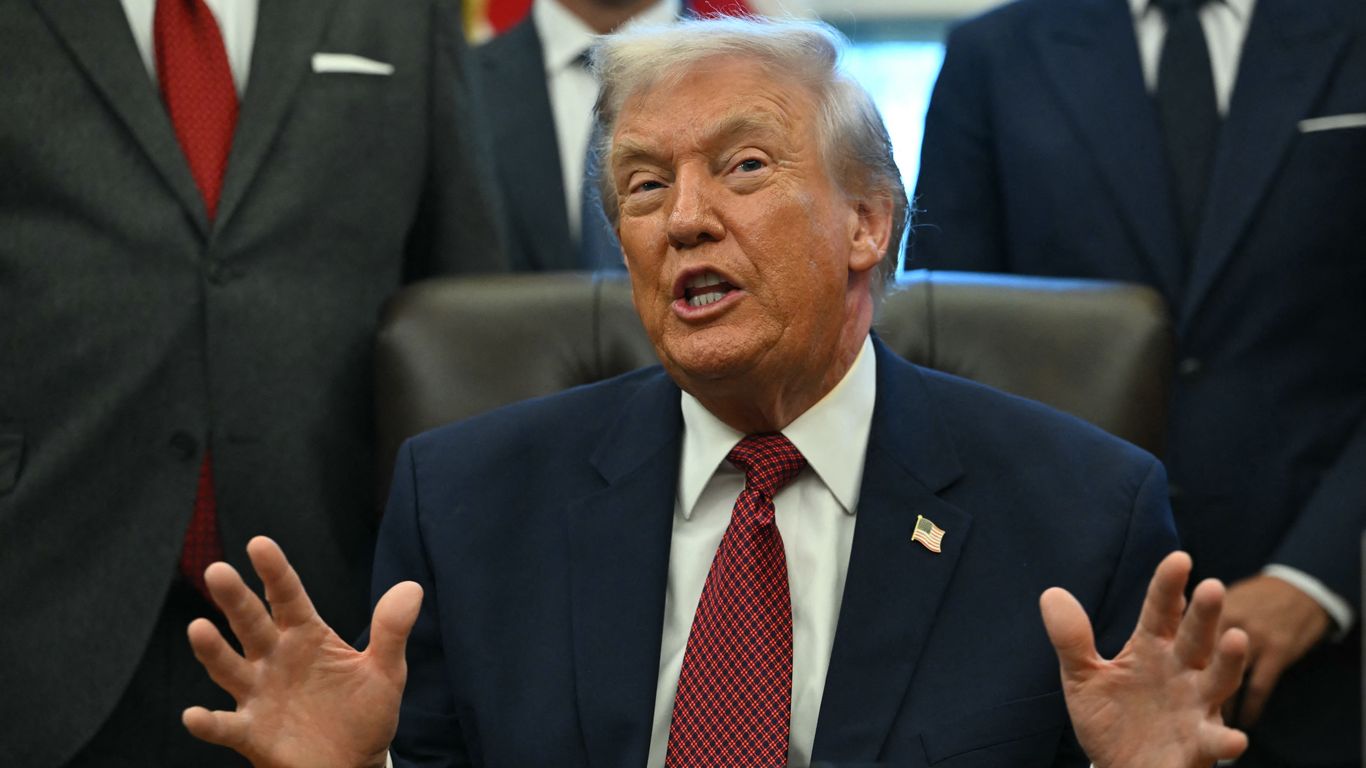
CNN’s Chief White House Correspondent Kaitlan Collins recently responded to harsh remarks from former President Donald Trump, who called her “stupid and nasty” while also misspelling her name. This public rebuke came amid ongoing tensions between Trump and the press, highlighting the adversarial relationship between the former president and journalists covering his administration.
Collins’ Measured Response
Despite the personal insult, Collins maintained professionalism, addressing the criticism without escalating the conflict. Her reaction underscores the challenges reporters face when navigating political hostility while upholding journalistic integrity. Support from peers like CNN’s Jake Tapper, who defended her, emphasizes solidarity within the press community in response to such attacks.
Broader Implications for Press Freedom
This incident reflects wider concerns about the treatment of journalists by public figures and the importance of protecting press freedom. Collins’ experience serves as a reminder of the vital role reporters play in holding power accountable, even when confronted with personal attacks.
About the People Mentioned
Donald Trump
Donald John Trump, born June 14, 1946, in Queens, New York, is an American businessman, media personality, and politician. He graduated from the University of Pennsylvania’s Wharton School in 1968 with a degree in economics. In 1971, he took over his family’s real estate business, renaming it the Trump Organization, through which he expanded into building and managing skyscrapers, hotels, casinos, and golf courses. Trump gained widespread fame as the host of the reality TV show *The Apprentice* from 2004 to 2015, which helped establish his public persona as a successful entrepreneur. Trump entered politics as a Republican and was elected the 45th president of the United States, serving from 2017 to 2021. His presidency was marked by significant policy actions including tax cuts, deregulation, the appointment of three Supreme Court justices, renegotiation of trade agreements (notably replacing NAFTA with the USMCA), and a focus on immigration control including border wall expansion. He withdrew the U.S. from international agreements such as the Paris Climate Accord and the Iran nuclear deal, and engaged in a trade war with China. His administration’s response to the COVID-19 pandemic was criticized for downplaying the virus’s severity. Trump was impeached twice by the House of Representatives—first in 2019 for abuse of power and obstruction, and again in 2021 for incitement of insurrection—but was acquitted by the Senate both times. After losing the 2020 election to Joe Biden, Trump challenged the results, culminating in the January 6, 2021, Capitol riot. He remains a central figure in American politics, having won the 2024 presidential election and returned as the 47th president in 2025, continuing to promote policies aimed at economic growth, border security, and military strength[1][2][3][4].
About the Organizations Mentioned
CNN
**CNN (Cable News Network)** is a pioneering 24-hour cable news channel founded by media mogul Ted Turner and launched on June 1, 1980. It revolutionized television news by providing continuous, live news coverage worldwide, breaking from the traditional scheduled news broadcasts prevalent at the time[1][3][4][5]. CNN's headquarters are in Atlanta, Georgia, where it remains a major hub for news production. **History and Growth:** CNN was born from Ted Turner’s vision to create the first all-news channel, despite skepticism from industry professionals. Starting with a modest team and resources, it grew rapidly, expanding its reach through cable, satellite, and digital platforms. In 1982, CNN introduced CNN2 (later HLN), the first news channel to use a "wheel" schedule, and in 1985 launched CNN International to serve global audiences[1][4][6]. The network gained significant prominence during events like the 1991 Persian Gulf War, offering real-time battlefield coverage that established CNN as a trusted news source[3][6]. CNN’s website, CNN.com, launched in 1995, was among the first major news websites, marking its early embrace of digital news delivery[6]. **Ownership and Business Evolution:** In 1996, CNN became part of Time Warner (later WarnerMedia), and subsequently Warner Bros. Discovery, reflecting its integration into a major media conglomerate[1][2][6]. The network has adapted to changing media landscapes, including cost-cutting measures announced in 2022 but maintaining a commitment to longform and investigative content[1]. **Key Achievements:** CNN is credited with shaping modern journalism through its live, around-the-clock news coverage and global bureaus. It has earned numerous awards for its reporting and has influenced the creation of similar 24-hour news channels. Its notable anchors and correspondents, such as Bernard Shaw and Christiane Amanpour, have contributed to its authoritative reputation[1]