Nvidia's Alpamayo Breakthrough: Reasoning AI for Level 4 Self-Driving Cars
Nvidia's Breakthrough in Reasoning AI for Self-Driving Cars
Nvidia has unveiled the Alpamayo family of open-source AI models, revolutionizing autonomous vehicle development with advanced reasoning capabilities. Partnering with Mercedes-Benz for initial 2026 deployments, this technology targets Level 4 autonomy, enabling cars to perceive, reason, and act with human-like judgment in complex scenarios.[1][2][3]
Alpamayo's Core Innovations
At the heart is Alpamayo 1, a 10-billion-parameter vision-language-action model that tackles long-tail challenges—rare events like unpredictable traffic or weather. It employs chain-of-thought reasoning to explain decisions, boosting transparency and safety. Complemented by AlpaSim simulation tools and over 1,700 hours of diverse driving data from 25 countries, developers can fine-tune models, test in closed-loop environments, and accelerate validation without extensive real-world miles.[1][2][4]
Transforming the Autonomous Driving Landscape
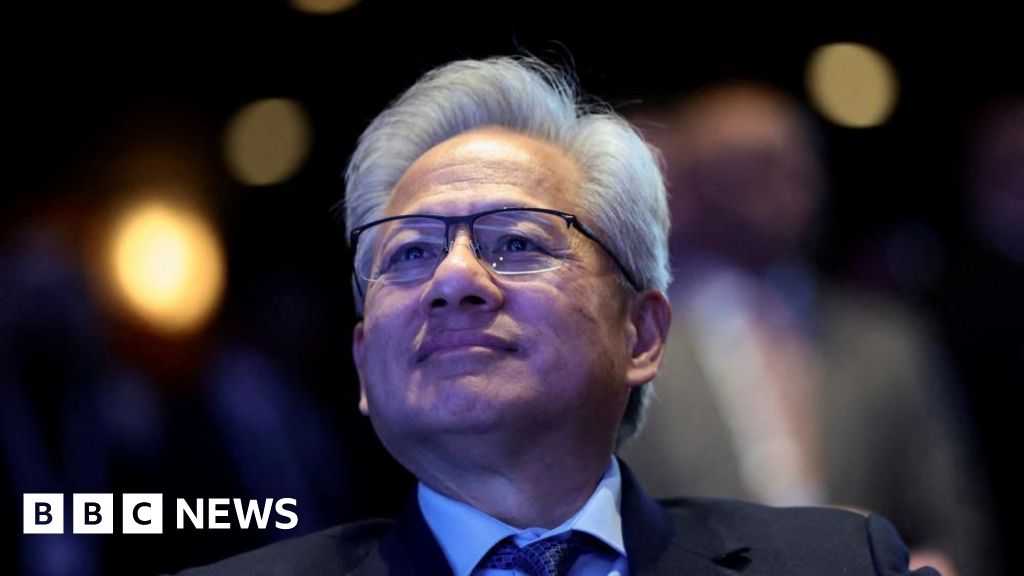
Nvidia CEO Jensen Huang dubs it the "ChatGPT moment for physical AI," paving the way for safer robotaxis and scalable deployments. Open-source on platforms like Hugging Face, Alpamayo fosters industry collaboration, outpacing rivals like Tesla's FSD by emphasizing explainable, robust autonomy.[3]
About the People Mentioned
Jensen Huang
Jensen Huang is a Taiwanese-born American entrepreneur and electrical engineer best known as the co-founder, president, and CEO of NVIDIA Corporation, a leading technology company specializing in graphics processing units (GPUs) and accelerated computing. Born on February 17, 1963, in Tainan, Taiwan, Huang moved to the United States at age nine. He holds a Bachelor’s degree in Electrical Engineering from Oregon State University and a Master’s degree from Stanford University. Before founding NVIDIA in 1993 with Chris Malachowsky and Curtis Priem, he worked at LSI Logic and Advanced Micro Devices (AMD). Under Huang’s leadership, NVIDIA pioneered the development of the GPU in 1999, which revolutionized computer graphics and gaming. This innovation laid the foundation for NVIDIA’s expansion into diverse fields such as artificial intelligence (AI), autonomous vehicles, mobile computing, and scientific research. Huang foresaw the potential of GPUs beyond gaming, particularly for AI and machine learning workloads, which has positioned NVIDIA as a central player in the AI boom of the 2020s. NVIDIA’s GPUs power many of today’s major AI data centers and applications, including large language models like GPT. The company’s market capitalization briefly surpassed $4 trillion in 2024, making it the most valuable public company globally and cementing Huang’s reputation as a visionary CEO. His contributions to the semiconductor industry have earned him prestigious honors such as election to the National Academy of Engineering and the Semiconductor Industry Association’s Robert N. Noyce Award. He has also been recognized by Fortune, The Economist, and TIME magazine as one of the most influential CEOs worldwide. Huang remains deeply involved in NVIDIA’s strategic direction, product innovation, and corporate culture, maintaining a hands-on leadership style that has driven the company’s growth from a startup to a trillion-dollar technology giant.
About the Organizations Mentioned
Nvidia
Nvidia Corporation, founded in 1993 by Jensen Huang, Chris Malachowsky, and Curtis Priem and headquartered in Santa Clara, California, is a pioneering American technology company best known for inventing the graphics processing unit (GPU) in 1999[1][2][4]. Initially focused on GPUs for video gaming, Nvidia has expanded its scope to serve diverse markets, including artificial intelligence (AI), high-performance computing (HPC), professional visualization, automotive technology, and mobile devices[1][3]. Nvidia’s GPUs, such as the GeForce series for gamers and the RTX series for professional applications, are central to its dominance, controlling over 90% of the discrete GPU market as of early 2025[1][4]. The company’s investment in CUDA, a parallel computing platform and API launched in the early 2000s, revolutionized GPU computing by enabling GPUs to accelerate a wide range of compute-intensive tasks, particularly in AI and scientific research[1][4]. By 2025, Nvidia commanded over 80% of the GPU market for AI training and inference and supplied chips to more than 75% of the world’s top 500 supercomputers[1]. Nvidia’s influence extends beyond hardware. It offers a comprehensive ecosystem including software platforms like Omniverse for 3D simulation and digital twins, AI frameworks such as MONAI for medical imaging, and Jetson for robotics and edge AI[2][3]. Its technologies power autonomous vehicle data centers, AI factories, and cloud gaming services like GeForce Now[2][7]. Financially, Nvidia achieved record full-year revenue of $130.5 billion in fiscal 2025, with a workforce of over 36,000 employees worldwide and a robust patent portfolio exceeding 8,700 applications[2]. The company is recognized for innovation and workplace excellence, topping Forbes’ "America’s Best Companies 2025" and Fast Company’s "World’s Most Innovative Companies"
Mercedes-Benz
## Overview Mercedes-Benz Group AG is a German multinational automotive giant headquartered in Stuttgart, known globally for its luxury vehicles, technological innovation, and engineering excellence[1]. The company is a leader in the premium car and van segments, offering models under the Mercedes-Benz, Mercedes-AMG, and Mercedes-Maybach brands, and has strategic investments in companies such as Daimler Truck, BAIC Motor, and Aston Martin[1]. Additionally, through Mercedes-Benz Mobility, the Group provides a comprehensive suite of financial and mobility services, including leasing, insurance, and digital payment solutions[5]. ## History The company traces its roots to the 1926 merger of Benz & Cie. (the world’s oldest car company) and Daimler Motoren Gesellschaft, forming Daimler-Benz[1]. Over the decades, it underwent several transformations: the acquisition of Chrysler in 1998 led to the creation of DaimlerChrysler, which reverted to Daimler after the Chrysler divestiture in 2007[1]. In February 2022, the company was renamed Mercedes-Benz Group AG, following the spin-off of its commercial vehicle business as Daimler Truck[1]. This rebranding underscored a renewed focus on luxury passenger vehicles and mobility services. ## Key Achievements Mercedes-Benz has long been synonymous with automotive innovation, introducing groundbreaking technologies such as the crumple zone, anti-lock braking systems (ABS), and advanced driver assistance systems. The company has consistently ranked among the world’s top car manufacturers by revenue and brand value[1]. In 2023, it was the seventh-largest car manufacturer by revenue and ranked 42nd on the Forbes Global 2000 list[1]. Its vehicles are celebrated for their performance, safety, and luxury, maintaining a strong presence in key markets like China, the US, and Europe. ## Current Status Despite a challenging global automotive landscape marked by tariffs, market pressures,
Hugging Face
Hugging Face is an American technology company founded in 2016 by French entrepreneurs Clément Delangue, Julien Chaumond, and Thomas Wolf in New York City. Initially created as a chatbot app for teenagers, the company quickly pivoted to focus on developing and open-sourcing state-of-the-art natural language processing (NLP) models, becoming a pivotal platform for machine learning and AI tools[2][4]. The company's name is inspired by the hugging face emoji (🤗), reflecting its mission to make AI friendly and accessible[4]. Hugging Face is renowned for its **Transformers library**, a widely adopted open-source toolkit that provides pretrained models for NLP tasks such as text classification, translation, and question answering. In 2020, it launched the **Hugging Face Hub**, a platform for sharing machine learning models and datasets, fostering a collaborative AI community. Subsequent innovations include the **Datasets library** and **Spaces**, which enable users to share datasets and deploy interactive AI demos easily[2]. In 2022, Hugging Face acquired **Gradio**, an open-source AI library that simplifies building machine learning applications in Python[2][4]. The company’s **mission centers on democratizing AI** by breaking barriers to adoption through user-friendly tools and open collaboration. Their platform supports diverse AI models, including large language models (LLMs), multimodal models, diffusion models, and reinforcement learning frameworks. Hugging Face also offers enterprise services like the **Inference API** and **Autotrain**, which automate model training and deployment for businesses[1][3]. Hugging Face has secured significant funding, totaling around $400 million with a valuation of $4.5 billion as of early 2025. It employs over 350 people and operates with a remote-first culture, emphasizing global talent collaboration[1]. Its technology powers AI initiatives across 7,700+ companies worldwide, spanning industries from finance to manufacturing, and ha
Tesla
Tesla, Inc. is a pioneering American electric vehicle (EV) and clean energy company headquartered in Texas, with a mission to accelerate the world’s transition to sustainable energy[1]. Founded in 2003 by engineers Martin Eberhard and Marc Tarpenning, and later joined by Elon Musk, who became the company’s driving force and public face, Tesla has grown from a niche startup into a global leader in EVs, energy storage, and solar technology[1]. ## What Tesla Does Tesla designs, manufactures, and sells high-performance electric vehicles, including the Model S, Model 3, Model X, Model Y, Cybertruck, and the upcoming affordable model[4]. Beyond automobiles, Tesla produces large-scale battery storage systems (Powerwall, Powerpack, Megapack) and solar energy products (Solar Roof, Solar Panels), aiming to create a fully integrated sustainable energy ecosystem[1]. The company operates six massive, vertically integrated factories across three continents, employing over 100,000 people who handle everything from design to service in-house[1]. ## History and Key Achievements Tesla’s breakthrough came with the 2008 launch of the Roadster, the first highway-legal all-electric sports car. The company then disrupted the auto industry with the Model S sedan (2012), which set new standards for EV range and performance. The Model 3, introduced in 2017, became the world’s best-selling electric car, proving that EVs could be both desirable and mass-market[1]. Tesla’s Gigafactories, sprawling production facilities, have enabled rapid scaling and cost reductions, while its proprietary Supercharger network has addressed range anxiety for drivers. ## Current Status and Notable Aspects In 2025, Tesla continues to dominate the EV market, producing over 447,000 vehicles and delivering nearly 497,000 in Q3 alone[5]. The company has avoided over 20 million metric tons of CO₂