Russell Brand Faces Fresh Rape and Sexual Assault Charges
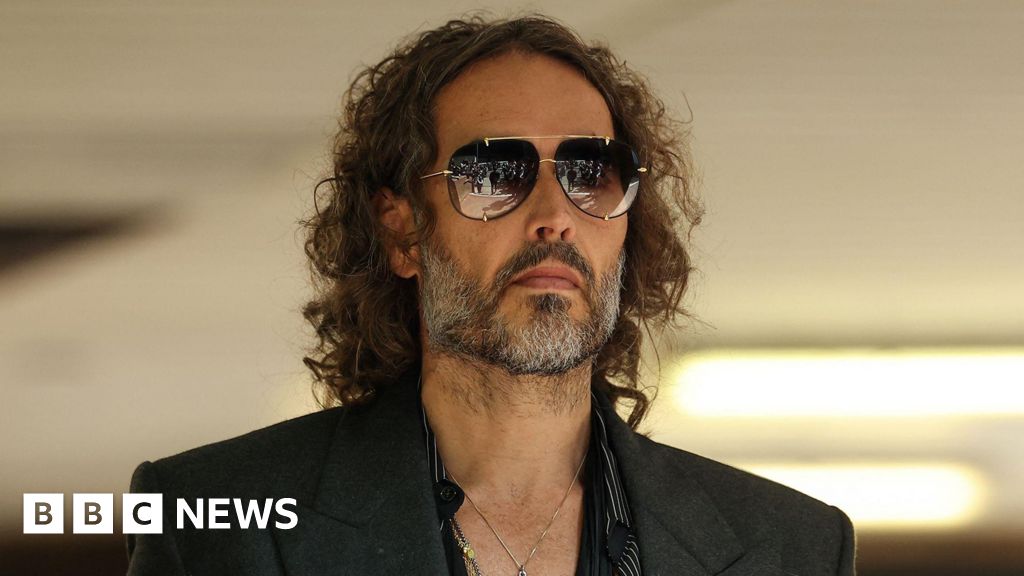
Russell Brand Faces New Rape and Sexual Assault Charges
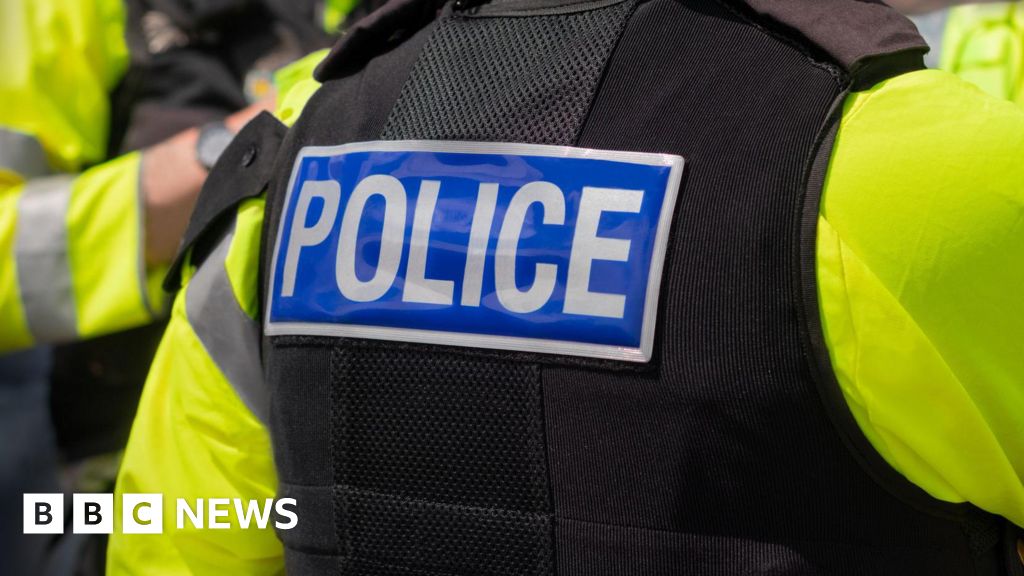
British comedian and actor Russell Brand, aged 50, has been hit with fresh legal troubles as the Metropolitan Police announce two additional charges: one count of rape and one of sexual assault, involving two more women. This development, authorized by the Crown Prosecution Service, stems from an ongoing investigation launched in September 2023 after media exposés by Channel 4’s Dispatches and The Times newspapers.[1][2]
Details of the Allegations and Court Dates
The new rape charge relates to an incident between February 7 and March 1, 2009, while the sexual assault occurred between August 31 and December 1, 2009. Brand previously pleaded not guilty to five earlier charges—two rapes, two sexual assaults, and one indecent assault—concerning four women, with a trial set for June 16, 2026, at Southwark Crown Court. He must appear at Westminster Magistrates’ Court on January 20, 2026, for these latest accusations.[1][2]
Ongoing Investigation and Broader Implications
Detective Chief Inspector Tariq Farooqi emphasizes continued support for victims and urges others to come forward via CIT@met.police.uk. The probe remains active, highlighting serious accountability issues in entertainment. As Brand’s career hangs in balance, this case underscores the #MeToo movement’s lasting impact on high-profile figures.[1][2]
About the People Mentioned
Russell Brand
Russell Brand is a British comedian, actor, writer, and media personality known for his flamboyant style, sharp wit, and distinctive, often provocative public persona. Born on June 4, 1975, in Grays, Essex, Brand’s early life was marked by instability—his father was frequently absent, and his mother battled cancer, while Brand himself struggled with mental health issues and substance abuse from a young age[2]. Despite these challenges, he pursued performance, attending the Italia Conti Academy and later the Royal Academy of Dramatic Art (RADA), though he dropped out of the latter to focus on comedy[2]. Brand’s career began in stand-up comedy in the early 2000s, with notable appearances at the Edinburgh Fringe and the Hackney Empire New Act of the Year competition[5]. He gained wider recognition as a presenter on MTV and later as the host of E4’s "Big Brother’s Big Mouth," where his irreverent humor and penchant for controversy made him a tabloid favorite[2]. His big break in the United States came with the role of Aldous Snow in the 2008 film "Forgetting Sarah Marshall," reprising the character in the spin-off "Get Him to the Greek" (2010)[3][6]. Other film credits include "Arthur" (2011), "Rock of Ages" (2012), and "Death on the Nile" (2022)[3]. Beyond acting, Brand is an accomplished author. His memoir "My Booky Wook: A Memoir of Sex, Drugs, and Stand-Up" was a bestseller in both the UK and the US, followed by a sequel, "My Booky Wook 2"[1][3]. His work in comedy earned him the British Comedy Award for Outstanding Contribution to Comedy in 2010 and the ShoWest Award for Comedy Star of the Year in 2011[1][3]. Brand has also hosted his own late-night talk show, "Brand X," and maintained a presence in political and social commentary through YouTube and other platforms, often discussing addiction, mental health, and social justice[6]. Brand’s personal life has been equally publicized. He married pop star Katy Perry in 2010; the couple divorced in 2012[1][3]. He later married Laura Gallacher in 2017, with whom he has three children[1]. Brand has been open about his struggles with addiction and recovery, crediting therapy and Twelve-Step programs with his sobriety[4]. In September 2023, Brand faced serious allegations of rape, sexual assault, and emotional abuse by four women, reported by The Times and a Channel 4 documentary, spanning 2006 to 2013[5]. Brand has denied the allegations. These events have significantly impacted his public standing and career trajectory, drawing widespread media attention and scrutiny. As of late 2025, his current relevance remains tied to these allegations and their ongoing legal and social ramifications.
About the Organizations Mentioned
Metropolitan Police
The **Metropolitan Police Service (MPS)**, commonly called the **Met Police** or simply the **Met**, is the primary territorial police force responsible for law enforcement and crime prevention within Greater London, excluding the City of London which is policed separately. Established in the 19th century, the Met is historically known as "Scotland Yard," referencing its original headquarters location. Today, it is headquartered at New Scotland Yard on the Victoria Embankment[1]. The Met's remit extends beyond conventional policing to specialised national roles including **counter-terrorism**, **protection of the monarch**, royal family, government officials, and high-profile figures across the UK. It also handles security for 164 foreign embassies, London’s major airports (Heathrow and London City), and oversees policing for thousands of public events and protests annually, reflecting London's status as a global city[1]. As the largest police force in the UK by officer numbers, the Met balances a relatively small geographic area—the Metropolitan Police District—with enormous complexity and high visibility operations. It operates under the leadership of the Commissioner of Police of the Metropolis, currently Sir Mark Rowley (since July 2022), who is directly accountable to the Mayor of London through the Mayor's Office for Policing and Crime (MOPAC), and also to the Home Office at the national level[1][2]. Organisationally, the Met is divided into five main directorates, each led by an Assistant Commissioner, covering Frontline Policing, Met Operations, Specialist Operations, and Professionalism, supported by civilian-led departments for digital technology, communications, and finance, emphasizing its integration of business and technology in modern policing[2]. Key achievements include pioneering counter-terrorism strategies, managing high-profile security operations, and implementing advanced digital and data technologies to enhance crime detection and prevention. The current Mayor’s Police and Crime Plan (2025-2029) prioritizes reducing violence, building safer communities, reforming
Crown Prosecution Service
The **Crown Prosecution Service (CPS)** is the principal public agency responsible for prosecuting criminal cases investigated by the police and other investigative bodies in England and Wales. Established by the Prosecution of Offences Act 1985 and operational since 1986, the CPS functions independently from the police and government, making objective decisions on whether to prosecute based on the sufficiency of evidence and the public interest, as guided by the Code for Crown Prosecutors[1][4][6]. The CPS’s core duties include deciding which cases should proceed to prosecution, determining appropriate charges in complex cases, advising police during investigations, preparing cases, and presenting them in court. It also supports victims and witnesses throughout the legal process[1][3]. The organization is structured into 14 regional teams led by Chief Crown Prosecutors, alongside specialized divisions such as the Specialist Fraud Division, Special Crime and Counter-Terrorism Division, and the Proceeds of Crime Division, enabling it to handle a broad spectrum of criminal cases, including high-profile and corporate manslaughter prosecutions[2][4]. Historically, the CPS was created to bridge the gap between police investigations and courts, ensuring prosecutorial independence and fairness. Despite initial challenges like understaffing and strained police relations, the CPS evolved through reorganizations and now operates as an integral part of the criminal justice system[6]. Key achievements include establishing clear national prosecution frameworks and delivering justice in serious and complex cases, maintaining public safety by ensuring the right person is prosecuted for the right offence[1][7]. With a workforce exceeding 7,000 employees, the CPS emphasizes professionalism, respect, and commitment to public service, continuously striving for excellence in prosecuting offenders and upholding justice[3]. Notably, the CPS’s independent decision-making power ensures prosecutions are fair and legally sound, free from political or external influence except in rare national security cases overseen by the Attorney General[4]. This independence is vital to maintaining public trust in the criminal
Channel 4
**Channel 4**, officially the Channel Four Television Corporation, is a British state-owned, commercially funded public-service broadcaster that operates 12 television channels, the UK's largest free streaming service, and film/TV production arms like Film4.[1][2] Launched on November 2, 1982, as the UK's fourth national TV service, it complemented the BBC's license-funded channels and ITV's commercial network. Unlike the BBC, Channel 4 receives no public funding, relying entirely on advertising and commercial revenues to maintain independence.[1] Headquartered in London with a national base in Leeds and creative hubs elsewhere, it functions as a publisher-broadcaster, commissioning content from around 300 independent UK producers annually.[2][4] Its remit emphasizes championing unheard voices, bold risks, diversity, and reinventing entertainment to spark national conversations.[1][2] Key achievements include pioneering on-demand TV with 4oD (later All 4) in 2006—the first UK broadcaster to do so—now boasting 28 million monthly video views and 7.6 million unique users.[3] E4, launched in 2001 for 16-34-year-olds, boosted its youth appeal with US imports and extended shows like *Big Brother*.[1] Film4 has earned 43 Oscars and 97 BAFTAs, backing British filmmakers.[2] Channel 4 News holds a fixed 7pm weekday slot, delivering daily bulletins.[1] Currently, it runs channels like Channel 4 (main public-service network), E4, More4, and others via The Box Plus Network, plus streaming and radio ventures.[1][2] It claims the youngest-skewing public-service audience, outpacing commercial rivals among 16-34s across TV and streaming.[2] Technologically, a 2020s network upgrade with Exponential-e enabled resilient, low-latency multi-platform delivery, ditching tapes for automated workflows an
Dispatches
**Dispatch** is a versatile term encompassing software platforms and processes for optimizing logistics, crisis response, and field operations, primarily in business and technology sectors like delivery, fleet management, and incident handling[1][4][3]. In logistics and delivery, Dispatch functions as an all-in-one fleet management solution that streamlines order processing, resource allocation, route optimization, real-time tracking, and customer updates. Dispatchers receive orders, assign vehicles and drivers based on availability and capacity, plan efficient routes factoring in traffic and weather, monitor progress via GPS, and ensure compliance through documentation. This boosts efficiency, cuts fuel costs, and enhances customer satisfaction for businesses in e-commerce, field services, and transportation[1][4][5][6]. Historically, dispatch evolved from manual methods—using paper, spreadsheets, and human judgment—to automated systems leveraging AI-driven algorithms for dynamic rerouting and task assignment. Modern tools like Dispatch's web app serve as central hubs for dashboards, multi-branch organization views, and API integrations, phasing out outdated browsers like Internet Explorer[4][6]. Key achievements include Netflix's internal **Dispatch** tool, which automates the full crisis management lifecycle: from incident reporting and resource creation to participant assembly, task tracking, tactical/executive reports, and post-incident reviews. Built by the Security Incident Response Team (SIRT), it accelerates resolutions from hours to seconds by programmatically generating collaboration channels and context, enabling small teams to handle organization-wide security incidents effectively[3]. Currently, Dispatch thrives as cloud-based software emphasizing real-time visibility and scalability, with features for overflow driver networks and branch-level operations. In emergency contexts, it supports dispatching agencies like police or fire departments, creating trackable tasks[2][8][10]. Notable aspects include its adaptability across industries, reliance on dispatcher expertise for real-time problem-solving, and trend toward integrated tech stacks that turn chaotic operations into precise, data-driven symphonies—ideal fo
The Times
The Times is a British daily national newspaper founded on January 1, 1785, originally as The Daily Universal Register by John Walter, who aimed to create a comprehensive and impartial record of events across politics, trade, and society. It was renamed The Times on January 1, 1788, and quickly became Britain’s leading national newspaper, known for its high standards of accuracy and independent reporting, earning the nickname "The Thunderer"[1][3]. Throughout the 19th century, under successive leadership from the Walter family and editors like Thomas Barnes, The Times established itself as a significant historical record and a respected voice in British media. It expanded its content and page count, reflecting its growing influence[1]. In 1981, The Times was acquired by Rupert Murdoch’s News Corporation, marking a new era of modernization. The paper transitioned from broadsheet to tabloid format in 2004, introduced color photographs, launched its first websites, and became a pioneer in digital media by implementing a paywall for online content in 2010. It also introduced the Sudoku puzzle to the British public in 2004. More recently, The Times expanded into audio streaming services, becoming the first British newspaper to offer radio content via streaming in 2020[2]. Today, The Times has a combined print and digital subscription base of over 539,000, with a daily print circulation near 495,000. It is recognized for its centre-right political alignment and is widely regarded as one of the UK’s most trusted newspapers, having won the Newspaper of the Year at the London Press Club Awards in 2023 and being named Britain’s most trusted paper in 2018 by the Reuters Institute[4][2]. The Times is headquartered in London and operates under the ownership of News UK, a subsidiary of News Corp. It continues to influence business, politics, and technology discourse, maintaining a reputation for intelligent, analytical journalism that appeals to a broad readership interested in comprehensiv