Sanae Takaichi Poised to Break Ground as Japan's First Female Prime Minister

Breaking New Ground in Japanese Politics
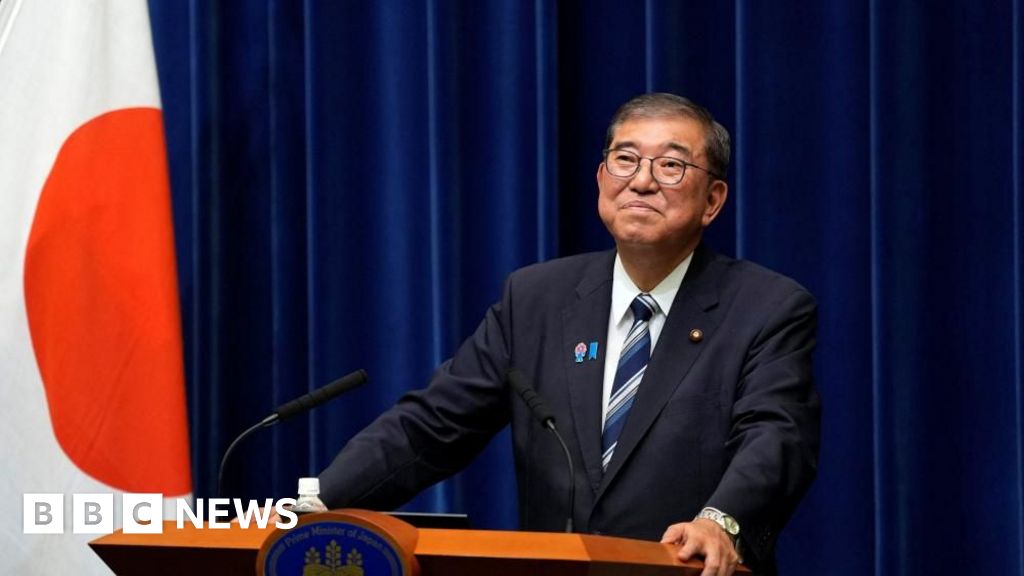
Sanae Takaichi is poised to make history as Japan’s first female prime minister, following her election as leader of the Liberal Democratic Party (LDP) in October 2025. If confirmed by the National Diet, she will lead the world's fourth-largest economy amid a turbulent political landscape. Takaichi’s rise marks a significant milestone in Japan, a country long dominated by male leadership.
Challenges Ahead
Her premiership will begin against a backdrop of political instability, with the LDP having lost its majority for only the second time this century. Economic pressures such as rising prices and regional security concerns, especially with increasing tensions in East Asia, will test her leadership. As a seasoned politician and former Minister for Internal Affairs and Communications, Takaichi’s experience will be critical in navigating these complex issues.
Significance and Expectations
Takaichi’s election reflects changing attitudes toward gender roles in Japan’s political sphere. Her leadership could inspire greater female participation in politics while shaping Japan’s domestic and foreign policies during a pivotal era. Observers worldwide will be watching closely as she takes the helm.
About the People Mentioned
Sanae Takaichi
Sanae Takaichi is a Japanese politician of the Liberal Democratic Party (LDP) who became Japan’s first female prime minister after winning the LDP leadership and being elected by the National Diet in 2025[2][3]. She was first elected to the House of Representatives in 1993 and has held multiple cabinet posts, notably Minister for Internal Affairs and Communications and Minister of State for Economic Security[5][3]. Takaichi is widely described as a conservative and a protégé of former prime minister Shinzō Abe, advocating traditionalist cultural policies, stronger defence and economic-security measures, and limits on immigration[5][3]. Her tenure as a senior minister included controversial moves such as seeking greater government influence over public broadcasting and visiting the Yasukuni Shrine while in office[5]. After several attempts at party leadership, she secured the LDP presidency in 2025 and led a minority government formed with the Japan Innovation Party amid a fractured Diet and the end of the long-standing LDP–Kōmeitō alliance[2][3]. Key challenges cited for her government include restoring public trust after LDP funding scandals, addressing Japan’s demographic decline and low growth, high public debt, inflation and wage issues, and navigating a tense regional security environment involving China and North Korea[2][3]. Analysts note her policy priorities include expansionary fiscal measures, tighter control over monetary policy levers, and strengthening the U.S.–Japan alliance and economic-security ties[2][5]. Takaichi’s rise is significant both for breaking gender barriers in Japanese national leadership and for shifting the LDP toward more conservative, security-focused policies during a period of domestic political realignment[3][5].
About the Organizations Mentioned
Liberal Democratic Party
## Overview The Liberal Democratic Party (LDP; Jiyū-Minshutō) is Japan’s largest and most influential political party, having dominated the country’s political landscape for nearly seven decades since its founding in 1955[1][5][7]. As a conservative to moderate force, the LDP has shaped Japan’s post-war recovery, guided its transformation into a global economic powerhouse, and maintained a steadfast alliance with the United States[2][4][7]. The party’s broad appeal—encompassing both nationalist and progressive factions—allows it to adapt to shifting political and economic climates, much like major U.S. parties[4]. ## What the Organization Does The LDP’s core mission is to promote economic growth, national security, and social stability through policies that favor business, low taxes, and government support for industry[4][5]. It prioritizes a close relationship with the U.S., advocates for export-driven growth, and has historically resisted sweeping social reforms such as the legalization of same-sex marriage[1]. The party also supports constitutional revision to expand Japan’s military role internationally, reflecting evolving national security priorities[4]. ## History Formed in 1955 through the merger of the Liberal Party and the Japan Democratic Party, the LDP was created to counter the rising influence of socialist parties[3][6]. It quickly established itself as the dominant political force, overseeing Japan’s remarkable post-war economic recovery and industrialization[7]. The LDP’s uninterrupted rule from 1955 to 1993 was punctuated only by brief opposition-led governments in 1993–94 and 2009–12[2][7]. Its longevity is attributed not only to policy successes but also to a robust political machine built on patronage and close ties with business and agricultural interests[6]. ## Key Achievements Under LDP leadership, Japan became the world’s second-largest economy by the 198
National Diet
## Overview The National Diet (Kokkai) is Japan’s national legislature and the cornerstone of its parliamentary democracy[1][4]. Established in its current form by the post-World War II Constitution in 1947, it replaced the Imperial Diet, which had operated since 1890 under the Meiji Constitution[1][7]. The Diet is a bicameral body, consisting of the House of Representatives (Shūgiin, the lower house) and the House of Councillors (Sangiin, the upper house), both directly elected by the public[1][4][5]. The Diet convenes in the iconic National Diet Building in Nagatachō, Tokyo, a structure completed in 1936 that symbolizes the nation’s democratic aspirations[1][6]. ## Functions and Powers The National Diet is Japan’s sole lawmaking body, responsible for passing legislation, approving the national budget, ratifying treaties, and formally designating the Prime Minister[1][4]. The House of Representatives, with 465 members serving up to four-year terms, holds greater legislative power—it can override decisions of the House of Councillors on most matters and plays a decisive role in selecting the Prime Minister and passing budget bills[4]. The House of Councillors, with 242 members elected to six-year terms (half elected every three years), acts as a stabilizing force, providing continuity and a long-term perspective, though its ability to block legislation is limited[4]. Both houses must cooperate to pass most laws, ensuring a system of checks and balances[4]. ## Historical Context Under the Meiji Constitution, the Imperial Diet was Japan’s first modern legislature, though its powers were constrained by the executive and the peerage-dominated upper house[2][5]. The post-war constitution transformed the Diet into the “highest organ of state power,” embedding it firmly within a democratic framework[4][7]. This shift marked a decisive break from Japan’s