South Korean Former First Lady Arrested in Bribery Probe
Introduction
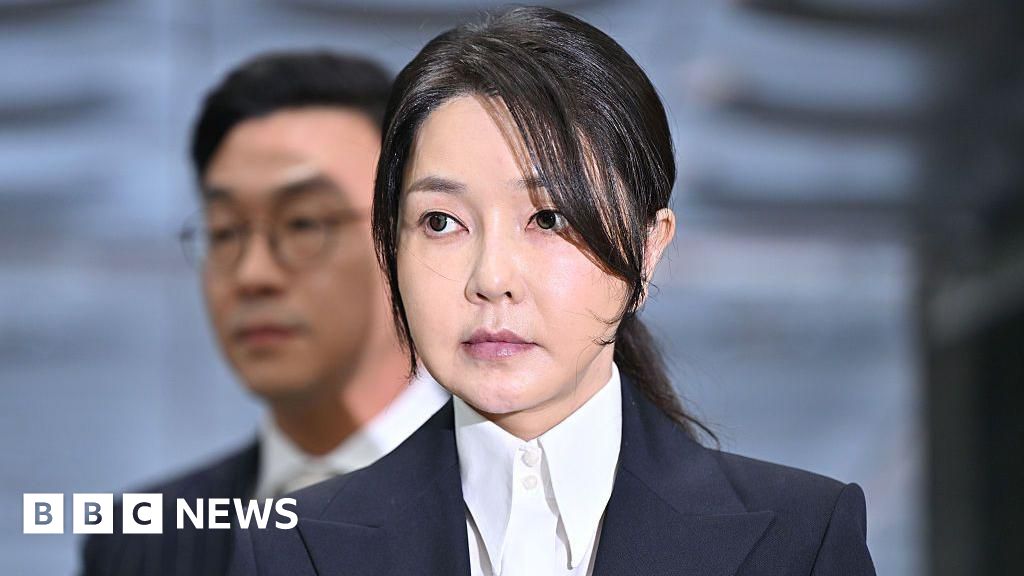
Kim Keon Hee, the former first lady of South Korea, has been arrested in a bribery probe. This marks a historic moment for the country, as it is the first time that a former first couple is in jail at the same time. The arrest comes after an extensive investigation into allegations of corruption and influence-peddling during her husband's presidency.
Key Details
The probe began in 2013 when a businessman was found to have secretly paid for the former first lady's daughter's education. It was later revealed that the businessman had also sponsored the couple's lavish lifestyle, including luxury trips and expensive shopping sprees. This sparked public outrage and calls for the couple to be held accountable for their actions.
The former first lady was arrested on charges of bribery, abuse of power, and embezzlement. Her husband, former President Lee Myung-bak, is currently serving a 17-year prison sentence for his role in the same corruption scandal. This is a significant blow to the reputation of South Korea's political elite and raises questions about the effectiveness of the country's anti-corruption measures.
Impact
The arrest of the former first lady highlights the growing efforts to combat corruption and hold those in positions of power accountable. It sends a strong message that no one is above the law, regardless of their status and connections. This
About the People Mentioned
Kim Keon Hee
Kim Keon-hee, born September 2, 1972, in Yangpyeong, South Korea, is a businesswoman and former First Lady of South Korea.[1][2] She graduated from Kyonggi University with a degree in painting, earned a master's in art education, and obtained a doctorate in digital content design from Kookmin University.[1][4] Changing her name from Kim Myeong-sin in 2008, she worked as an art instructor and exhibition organizer before founding Covana Contents in 2007 (or 2009 per some accounts), serving as its CEO to promote art exhibitions and Korean culture.[1][2][4] She married Yoon Suk Yeol in 2012 at age 40; he was a prosecutor at the time.[1][2] When Yoon was elected president in March 2022, Kim became First Lady, preferring the term "first spouse."[2] She supported animal rights, advocating against the dog meat trade, and focused on creating a supportive environment for her husband's duties while maintaining a higher public profile than predecessors through her fashion and art interests.[1][5] Her tenure was marked by controversies. She apologized in 2021 for exaggerating her resume, including false claims of ties to NYU Stern and a Seoul National University master's, during university job applications.[1][2][5] Allegations included stock manipulation profits from Deutsche Motors (under investigation), tax evasion, kickbacks from exhibitions, and plagiarism in her theses, despite her university clearing her.[2][4] As First Lady, she faced claims of influence-peddling, receiving luxury gifts like a Graff necklace and Chanel bag, and meddling in government appointments.[3][5] Yoon's presidency ended in 2025 amid scandals, including his failed martial law declaration, with Kim arrested in August 2025 for related crimes, marking a historic dual detention of a former presidential couple.[3][5] Post-role, investigations into her continue.[1][3]
About the Organizations Mentioned
South Korea's Anti-Corruption Measures
The **Anti-Corruption and Civil Rights Commission (ACRC)** of South Korea is the nation's central government agency dedicated to combating corruption, protecting citizens' rights, and promoting integrity across the public sector. Established on February 29, 2008, the ACRC was formed by merging three government entities—the Ombudsman of Korea, the Korea Independent Commission Against Corruption, and the Administrative Appeals Commission—to streamline public complaint handling and enhance anti-corruption efforts[1]. ACRC’s core functions include addressing public complaints and administrative appeals, preventing and deterring corruption in public offices, and safeguarding citizens from illegal or unfair administrative actions. It acts as a government-wide "anti-corruption control tower," coordinating comprehensive policies and promoting partnerships between the public and private sectors to foster transparency[2][8]. The commission leads initiatives like the Improper Solicitation and Graft Act and the Act on the Prevention of Conflict of Interest related to public servants’ duties, which build a culture of integrity within government institutions. It also conducts the Anti-Corruption Initiative Assessment (AIA), an annual evaluation system that ranks public institutions on their anti-corruption measures, motivating institutional improvements[2][5]. ACRC operates the Anti-Corruption Training Institute, Korea's only specialized education center for integrity training, supporting mandatory education for public officials and extending its reach to the private sector[2]. It handles millions of complaints annually, providing services in multiple languages to accommodate foreigners and multicultural families, reflecting its inclusive approach[3]. Notably, while ACRC plays a strong preventive and oversight role, criminal investigation and prosecution of corruption cases fall mainly under the Prosecutors’ Office and police, with ACRC receiving whistleblower reports and public complaints to inform investigations[4]. Under the leadership of Chairperson Jeon Hyun-hee since June 2020, the ACRC continues to advance Korea’s anti-corruption landscape by enhancing institutional frameworks, promoting transparency, and protecting civil rights, making it a pivotal institution fo