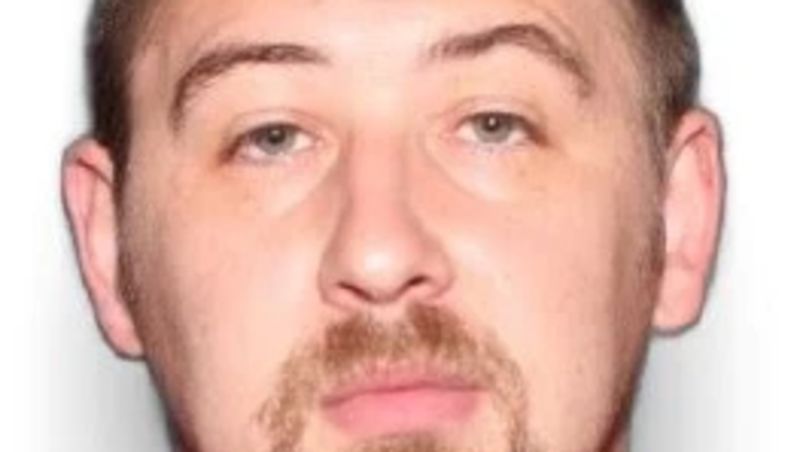
Tennessee Executes Convicted Murderer Despite Legal Battle over Medical Device
#tennessee #byron black #execution #legal battle #medical devices

Introduction
Tennessee has recently made headlines for the controversial execution of Byron Black, a convicted murderer. The execution has sparked a legal battle over his implanted combination pacemaker-defibrillator, which his lawyers argued could prolong his suffering by shocking his heart after a lethal injection. However, despite the attempts to delay the execution, Black's life was ultimately taken by the state.
The Legal Battle
The use of the pacemaker-defibrillator in executions has been a topic of debate in recent years. In 2014, a federal judge in Ohio halted an execution due to concerns over the use of a similar device. The judge argued that the use of the device could amount to cruel and unusual punishment, as it could potentially prolong the inmate's suffering. The issue has also been raised in several other states, including Alabama and Georgia.
Ethical Concerns
The use of medical devices in executions raises ethical concerns and has sparked a larger conversation about the morality of the death penalty. While some argue that the use of these devices is inhumane and violates human rights, others argue that it is necessary for carrying out the punishment. The debate over the use of these devices in executions is likely to continue as more cases arise and legal battles are fought.
About the People Mentioned
Byron Black
Byron Hamish Black is a former professional tennis player from Harare, Zimbabwe, best known for reaching world No. 1 in doubles and for long service to Zimbabwe’s Davis Cup team. He turned professional in the early 1990s after a successful collegiate career at the University of Southern California, where he earned multiple All‑America honors and helped USC to the 1991 national team title[3].[1] On the ATP Tour Black achieved a career‑high singles ranking of world No. 22 in 1996 and recorded Grand Slam singles quarterfinal appearances at the US Open (1995) and Wimbledon (2000)[1][2].[1] He was more successful in doubles, attaining the world No. 1 doubles ranking in February 1994 and winning the 1994 French Open with partner Jonathan Stark; he was also a doubles finalist at the Australian Open (1994, 2001) and at Wimbledon (1996)[1][2].[1] Black represented Zimbabwe at the 1996 Atlanta Olympics in both singles and doubles and was a central figure, alongside his brother Wayne Black, in Zimbabwe’s Davis Cup campaigns for many years[2][3]. Black is notable for an uncommon double‑handed forehand and for coming from a tennis family: his siblings Wayne and Cara Black were also professional players, and his father, Don Black, built grass courts on the family property and played competitively[1][3].[1] After retiring from the tour, Byron Black’s legacy remains in Zimbabwean tennis through his records, Grand Slam title in doubles, and role in raising the profile of the sport in his country[1][2]. Personal details recorded in authoritative player profiles list his full name as Byron Hamish Black, his birthdate as 6 October 1969, and his marriage to Fiona with whom he has children[1][3].[2] Current public records and major tennis databases continue to list his achievements and historical rankings but do not indicate an ongoing professional playing career.
About the Organizations Mentioned
World Health Organization
The World Health Organization (WHO) is a specialized agency of the United Nations, established in 1948, with a mandate to promote global health, coordinate international responses to public health threats, and set standards for health policies and interventions[2]. Headquartered in Geneva, Switzerland, WHO operates in over 150 countries, working with governments, NGOs, and other partners to advance health equity, strengthen health systems, and respond to health emergencies. ## What WHO Does WHO’s core activities include monitoring global health trends, setting international health standards, providing technical assistance to countries, and serving as a forum for scientific and policy discussions on health issues[2]. The organization publishes influential reports such as the annual **World Health Statistics**, which tracks progress toward Sustainable Development Goals (SDGs) and provides a global “health report card”[1][8]. WHO also maintains the Model List of Essential Medicines, guiding countries on which drugs are most critical for public health[7]. In addition, WHO leads global campaigns on issues ranging from infectious disease eradication to noncommunicable diseases (NCDs), maternal and child health, and health emergencies[2][6]. ## History and Key Achievements WHO’s history is marked by landmark achievements, including the eradication of smallpox, near-eradication of polio, and the development of an Ebola vaccine[2]. The organization played a pivotal role in responding to the COVID-19 pandemic, coordinating global research, vaccine distribution, and public health guidance. In May 2025, WHO member states adopted the world’s first **Pandemic Agreement**, a historic step to improve international coordination and equity in future health crises[4]. WHO also spearheads initiatives like the Triple Billion Targets (healthier lives, universal health coverage, and protection from health emergencies) and technical policy packages targeting tobacco, alcohol, salt, and trans fat reduction[1][2]. ## Current Status and Notable Aspects WHO is currently implementing its **Fou
Ohio
The query refers to "Ohio" as an organization, but the search results primarily relate to the State of Ohio as a government entity rather than a business or technology organization. Interpreting "Ohio" here as the State of Ohio’s governmental and economic ecosystem, Ohio is a highly active state government and economic hub in the U.S. Midwest with strong focus on business, technology, workforce development, and legislative initiatives. Ohio’s government, led by Governor Mike DeWine, emphasizes economic development with record-breaking private sector job growth—81,000 new jobs in 2025, the highest in state history[1]. Ohio is recognized as the "tech hub of the Midwest," attracting billion-dollar investments such as Anduril’s autonomous military technology facility and a new electric vehicle battery plant at the Honda factory[1]. Workforce development is a priority, with Lt. Governor Jim Tressel launching region-specific initiatives to prepare qualified talent for expanding industries[1]. Legislatively, Ohio actively addresses tax reform, higher education, energy generation, and public safety[1][2]. The state supports innovation and education in AI and computer science, integrating AI literacy in K-12 and higher education to enhance learning outcomes[3]. Ohio State University plays a pivotal role in research and policy alignment with federal regulations, supporting federally funded research and advancing academic excellence[3][5]. Ohio’s government structure comprises executive, judicial, and legislative branches working collaboratively to implement policies that foster economic growth, education reform, and infrastructure development[7]. The state’s fiscal management includes a $95 billion budget for FY 2024-2025, reflecting a 9% increase to support these priorities[8]. In summary, Ohio functions as a dynamic state government organization driving technological innovation, workforce readiness, and economic expansion, positioning itself as a critical player in the U.S. business and technology landscape. Its strategic investments, legislative reforms, and educational initiatives make it an engaging subject for those interested in business an