Toyota's Bold Leap: The All-Electric 2027 Highlander
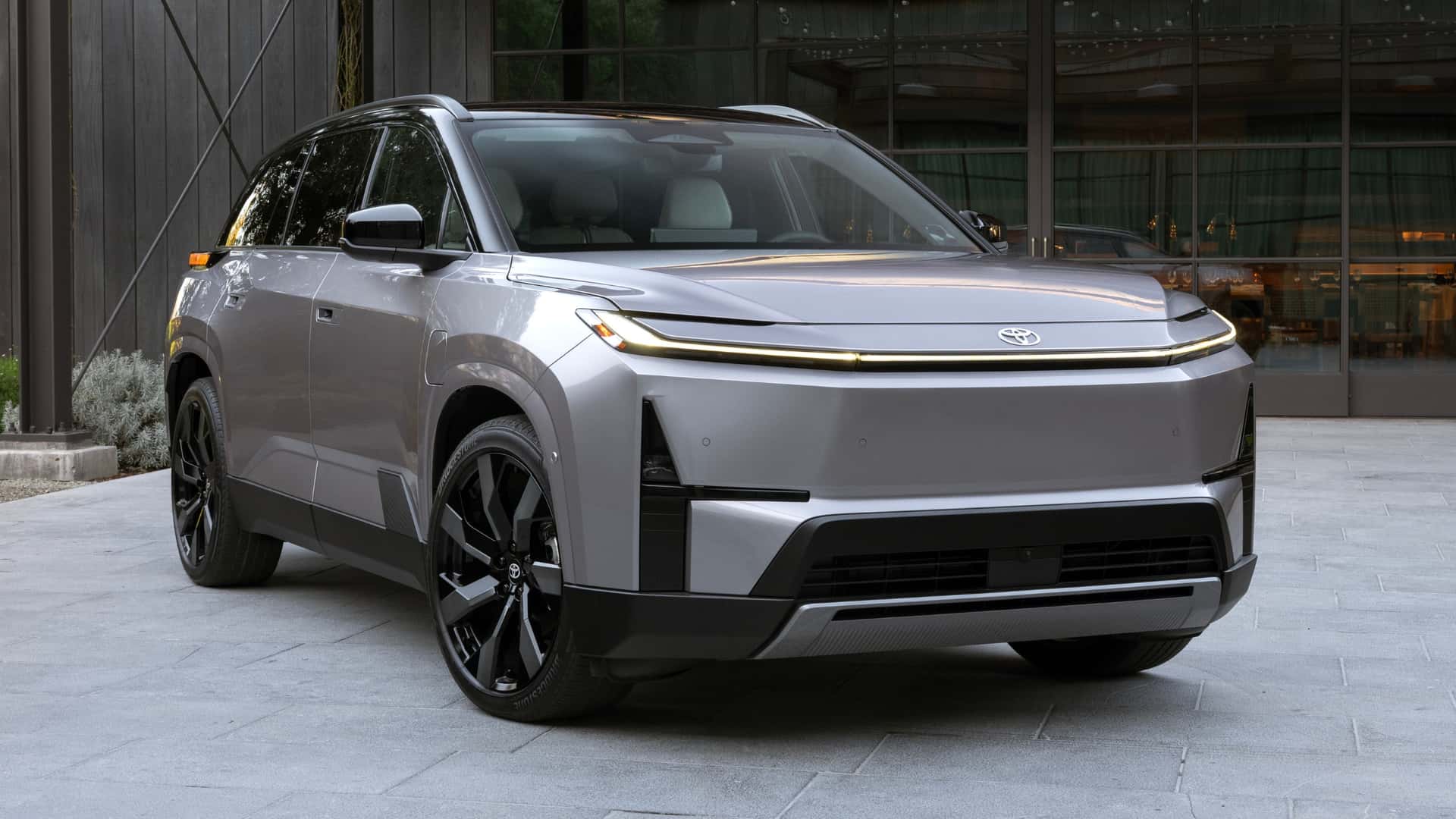
Toyota's Bold Leap: The All-Electric 2027 Highlander
Toyota has unveiled its first fully electric three-row SUV, the 2027 Highlander, ditching gas engines for a battery-electric powertrain that promises up to 320 miles of range. Built on an enhanced TNGA-K platform, this refreshed model boasts a sleek design with full-width LED daytime running lights, semi-flush door handles, and aerodynamic 19-inch wheels, all while retaining seating for seven.[1][4][5]
Powertrains and Performance Options
Available in XLE and Limited trims, the Highlander EV offers flexibility with front-wheel drive or all-wheel drive. The base XLE FWD packs a 77.0-kWh battery, delivering 221 horsepower, 198 lb-ft of torque, and an estimated 287-mile range. AWD variants boost output to 338 hp and 323 lb-ft with dual motors; opt for the larger 95.8-kWh pack for 320 miles, plus off-road modes like Crawl Control.[2][3][6]
Tech-Laden Interior and Charging
Inside, a 14-inch touchscreen, digital gauge cluster, 64-color ambient lighting, and Toyota Safety Sense 4.0 elevate the cabin. Standard perks include heated seats, wireless charging, and a dashcam. With a NACS port, it charges 10-80% in 30 minutes via DC fast chargers, making family adventures electrified and efficient.[4][5][6]
About the Organizations Mentioned
Toyota
**Toyota Motor Corporation**, headquartered in Toyota City, Aichi, Japan, is the world's largest automobile manufacturer, producing around 10 million vehicles annually as a multinational giant specializing in cars, trucks, hybrids, and luxury vehicles under brands like Lexus.[2][1] Founded in 1937 by Kiichiro Toyoda as an independent entity spun off from Toyoda Automatic Loom Works—an innovator in weaving machinery led by Sakichi Toyoda—the company drew from early principles like *jidoka* (automation with human intelligence) that underpin its famed **Toyota Production System (TPS)**, emphasizing efficiency, quality, and waste reduction.[6][1][3] Toyota's first car, the Model AA, launched in 1936, but post-WWII challenges nearly ended it; recovery came via affordable, reliable vehicles for Japan's booming economy.[4][2] Key U.S. entry in 1957 faltered with the underpowered Toyopet, but the 1965 **Corona**—tailored for Americans—tripled sales, followed by the 1968 **Corolla**, the all-time best-selling car with over 30 million units sold globally.[5][4][2] By 1975, Toyota topped U.S. imports, surpassing Volkswagen; 1986 marked 1 million annual U.S. sales and first American-assembled Corolla.[1][5] Milestones include the 1989 Lexus LS 400 luxury debut, 1997 Prius—the first mass-produced hybrid—and 2008 overtake of GM as global sales leader.[2][4][5] Today, Toyota dominates with innovations in hybrids, electrification, and global plants from Brazil (1959) to the UK and U.S., boasting ninth-largest revenue worldwide (as of 2020 data).[2][6] Its culture of relentless improvement fuels tech leadership, from TPS to sustainable mobility, making it an enduring icon in business and automotiv