Tragic Loss of Journalists in Gaza
Introduction
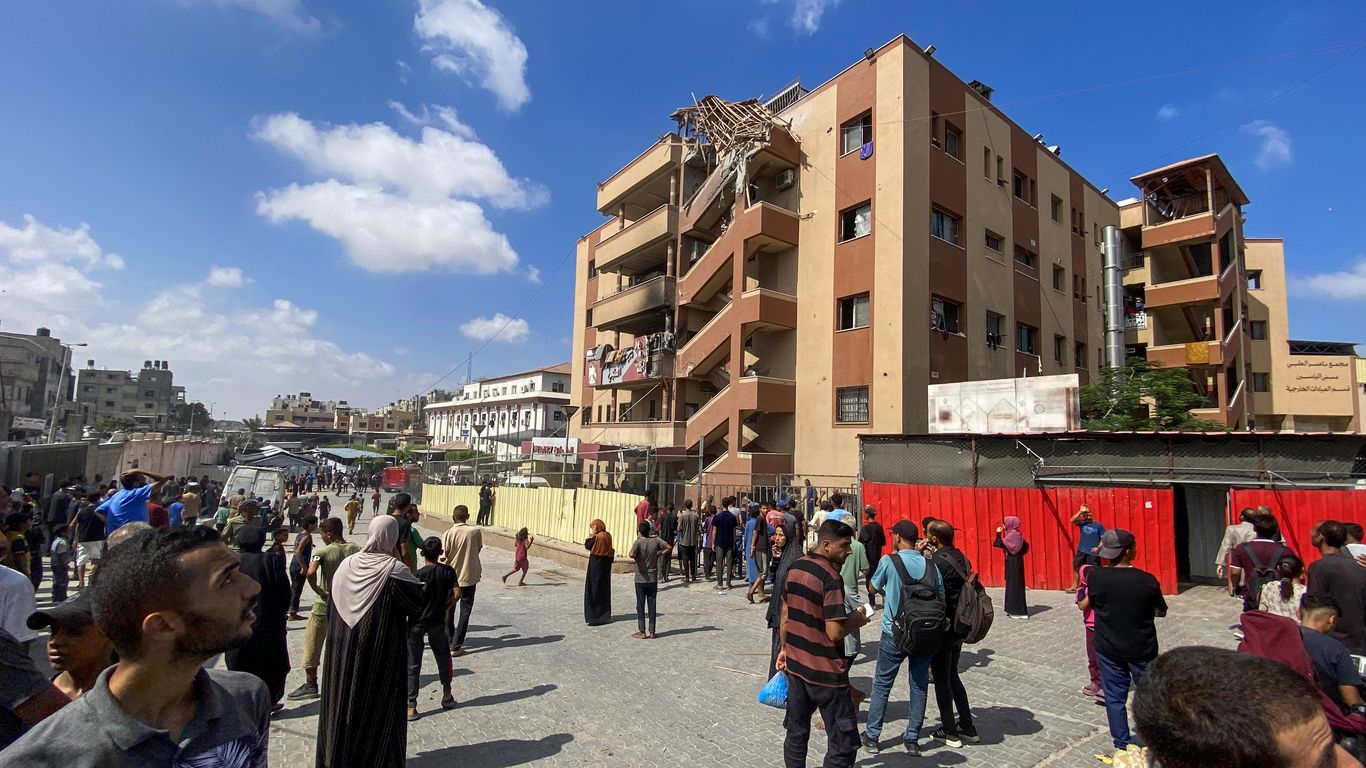
The recent Israeli strikes on a hospital in southern Gaza have resulted in the tragic death of five journalists, including Mariam Dagga, a freelance visual journalist who worked for multiple news outlets, including The Associated Press. This devastating event serves as a harsh reminder of the dangers that journalists face while reporting on conflicts and political turmoil.
Journalists at Risk
Mariam Dagga was one of many journalists who risk their lives to bring crucial information to the public. As a freelancer, she often worked in dangerous and unpredictable environments, relying on her keen journalistic instincts and dedication to her craft. Unfortunately, her bravery and persistence ultimately cost her life. This is not an isolated incident, as journalists all over the world face threats and violence in their line of work.
The Importance of Freedom of Press
The deaths of these five journalists are a tragic loss for the journalism community and a reminder of the importance of freedom of press. In order for a society to function democratically, there must be a free flow of information and the ability for journalists to report on events without fear of violence or oppression. The loss of these journalists is not only a loss for their families and colleagues, but it also hinders the public's right to know and stay informed.
About the People Mentioned
Mariam Dagga
Mariam Abu Dagga was a Palestinian freelance photojournalist based in Gaza, renowned for her courageous coverage of the Israel-Hamas conflict.[1][2][3] She contributed to major outlets including the Associated Press (AP) and Independent Arabia, providing rare visual documentation of the humanitarian crisis, including scenes of malnourished children dying from starvation at Nasser Hospital in southern Gaza.[1][3] Her career gained prominence in 2018 when she filmed the shooting of a Palestinian protester during the Great March of Return demonstrations; the victim was later identified as her brother, intertwining her personal and professional lives.[1] Following Hamas's October 7, 2023, attack on Israel, Abu Dagga became one of the few women journalists on the ground, capturing the war's human toll amid constant displacement, the loss of her mother and a close colleague, and separation from her 13-year-old son, who was evacuated to the United Arab Emirates.[1] Despite repeated dangers, she documented the immediate aftermath of strikes and the deepening famine, bylining an AP story on Gaza's crisis just days before her death.[1] On August 25, 2025, Abu Dagga was killed in Israeli strikes on Nasser Hospital in Khan Younis, alongside journalists Hussam Al-Masri (Reuters), Mohammed Salama (Al Jazeera), Ahmed Abu Aziz, and Moaz Abu Taha, while covering the attacks; others were injured.[2] The Committee to Protect Journalists (CPJ) classified the incident as "unknown" pending investigation into whether it constituted murder in reprisal for her work, noting Israel's claim of targeting a Hamas-operated camera on the hospital roof.[2] Posthumously, she was named the 2025 IPI-IMS World Press Freedom Hero by the International Press Institute, recognizing her determination and inspiration to Gaza's journalists.[1] Her AP photo gallery preserves her stark imagery of wounded arrivals and medical struggles at the hospital.[3]
About the Organizations Mentioned
The Associated Press
The Associated Press (AP) is the world's largest newsgathering organization, renowned for its commitment to independent, nonpartisan, and fact-based journalism. Founded in 1846 by five New York City newspapers, the AP was initially formed to share the costs of covering the Mexican-American War[3][7]. Over the years, it has evolved into a global news agency with operations in nearly 100 countries, providing news to over 1,700 member newspapers and 6,000 television and radio stations in the United States alone[1][6]. ### History and Evolution The AP began as a cooperative venture among newspapers to reduce costs by sharing news gathered via telegraph. By 1856, it was known as the New York Associated Press, and regional organizations like the Western Associated Press emerged later. In 1900, these regional groups merged to form the modern AP[2]. The AP has been instrumental in reporting major historical events, such as the assassination of Abraham Lincoln and the fall of the Shah of Iran[3]. ### Key Achievements AP journalists have won numerous awards, including 59 Pulitzer Prizes, with 36 for photography[6]. The AP is a not-for-profit cooperative owned by its American newspaper and broadcast members, allowing it to maintain a focus on objective journalism[4]. ### Current Status Today, the AP operates in over 230 locations worldwide, producing extensive content including stories, videos, and photos annually[3][6]. It continues to champion press freedom and journalist safety, offering services like the AP Emergency Relief Fund established in 2005[6]. ### Notable Aspects The AP is known for its ethics and integrity in news gathering, providing high-quality, informed reporting on a wide range of topics. It maintains a strong commitment to transparency and fact-based journalism, setting it apart as a trusted source in the news industry[4][6].