Pirro Targets Powell Amid Fed Probe as Bipartisan Backlash Grows
#politics #economy #federal_reserve #investigations #congress
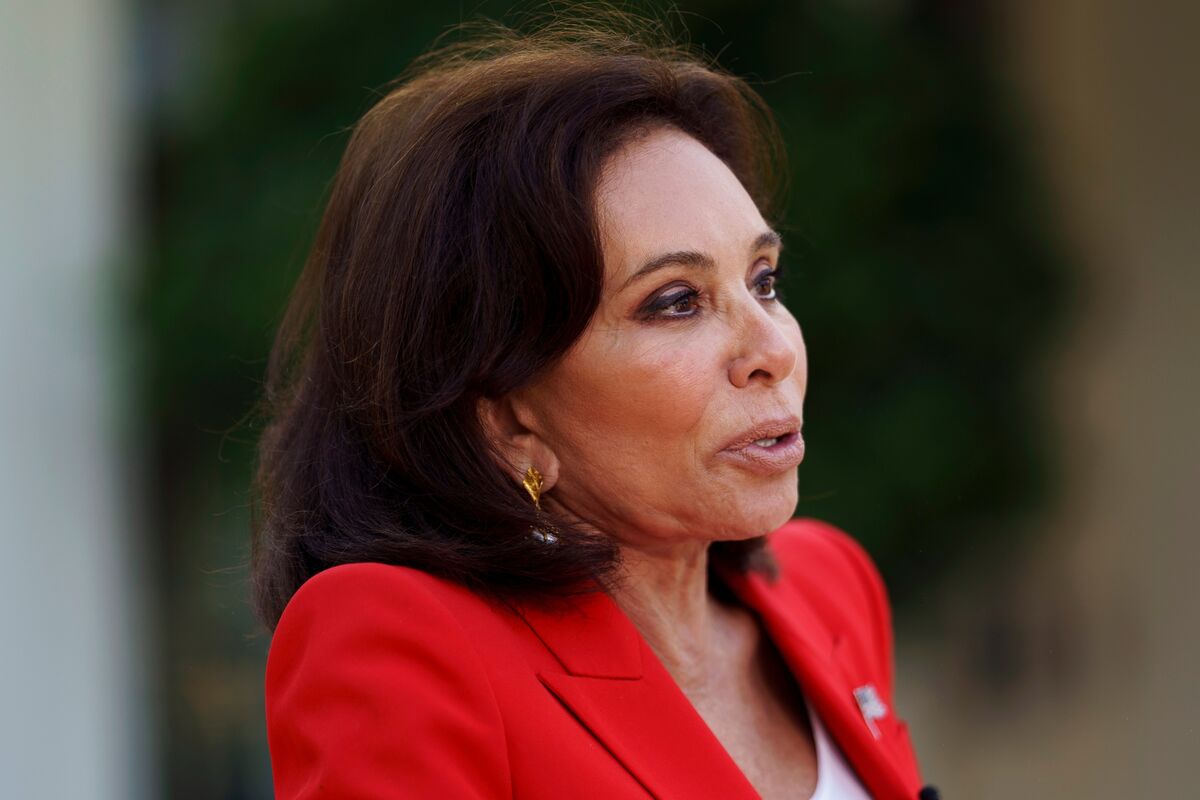
Jeanine Pirro Targets Powell Amid Rising Tensions
U.S. Attorney Jeanine Pirro is boldly pursuing an investigation into Federal Reserve Chair Jerome Powell, issuing grand jury subpoenas without prior Justice Department approval, heedless of intensifying backlash. The probe centers on Powell's June congressional testimony regarding the Fed headquarters' $2.5 billion renovation project, which has exceeded its budget by $700 million. Pirro claims her office's repeated information requests were ignored, forcing legal action to ensure accountability.[1][3]
Pirro Stands Firm Against Criticism
Pirro defended the move on X, insisting it's not a threat of indictment—those words came from Powell himself—and emphasizing decisions based solely on merits. Powell countered in a rare video statement, framing it as political intimidation to influence interest rates amid Trump's long-standing pressure campaign. No charges are decided yet, but the standoff highlights tensions over Fed independence.[2][4]
Bipartisan Backlash and Broader Implications
The inquiry has sparked rare bipartisan outrage, with Senators Thom Tillis, Lisa Murkowski, and Elizabeth Warren condemning it as undermining central bank credibility. GOP lawmakers question DOJ motives, vowing to block Fed nominees until resolution. As Trump denies involvement, this clash raises stakes for economic policy and institutional autonomy in a divided political landscape.[3][4]
About the People Mentioned
Jerome Powell
Jerome H. Powell is the Chair of the Board of Governors of the Federal Reserve System, the central bank of the United States, a position he has held since February 2018 following his initial appointment by President Donald Trump and subsequent reappointment by President Joe Biden for a second four-year term in May 2022[2][5]. He also chairs the Federal Open Market Committee, the Fed’s principal monetary policymaking body[2]. Powell’s tenure spans some of the most significant economic challenges in recent U.S. history, including the post-Great Recession recovery and the financial fallout from the COVID-19 pandemic[3][6]. Born on February 4, 1953, in Washington, D.C., Powell holds an AB in politics from Princeton University (1975) and a law degree from Georgetown University (1979), where he was editor-in-chief of the Georgetown Law Journal[2]. His career before the Fed included roles as a lawyer and investment banker in New York City, a partner at The Carlyle Group (1997–2005), and a visiting scholar at the Bipartisan Policy Center focusing on fiscal issues[2][5]. He served as both Assistant Secretary and Under Secretary of the Treasury under President George H.W. Bush, with responsibilities for financial institutions and the Treasury debt market[2][5]. Powell was first nominated to the Federal Reserve Board by President Barack Obama in 2012 and assumed office in May of that year, later being reappointed for a term ending January 31, 2028[2][8]. As Fed Chair, he initially continued the policy of gradually raising interest rates—a process begun under his predecessor, Janet Yellen—to return monetary policy to more normal levels after the 2007–08 financial crisis[3]. This approach drew criticism from President Trump, who publicly opposed further rate hikes, but Powell maintained that such measures were necessary to prevent inflation and ensure long-term stability[3]. Powell’s leadership was again tested during the COVID-19 pandemic, when he led the Fed in slashing interest rates to near zero, launching emergency lending programs, and purchasing corporate debt to stabilize financial markets—actions that significantly expanded the central bank’s role in the economy[3]. Despite political pressures from both Democratic and Republican administrations, Powell has been praised for his steady, data-driven approach to monetary policy[6]. He resides in Chevy Chase, Maryland, with his wife and three children[6]. As of 2025, Powell remains a central figure in U.S. and global economic policy, overseeing the Fed’s efforts to balance inflation control with support for economic growth amid ongoing uncertainties in the financial landscape[2][5].
Donald Trump
Donald John Trump, born June 14, 1946, in Queens, New York, is an American businessman, media personality, and politician. He graduated from the University of Pennsylvania’s Wharton School in 1968 with a degree in economics. In 1971, he took over his family’s real estate business, renaming it the Trump Organization, through which he expanded into building and managing skyscrapers, hotels, casinos, and golf courses. Trump gained widespread fame as the host of the reality TV show *The Apprentice* from 2004 to 2015, which helped establish his public persona as a successful entrepreneur. Trump entered politics as a Republican and was elected the 45th president of the United States, serving from 2017 to 2021. His presidency was marked by significant policy actions including tax cuts, deregulation, the appointment of three Supreme Court justices, renegotiation of trade agreements (notably replacing NAFTA with the USMCA), and a focus on immigration control including border wall expansion. He withdrew the U.S. from international agreements such as the Paris Climate Accord and the Iran nuclear deal, and engaged in a trade war with China. His administration’s response to the COVID-19 pandemic was criticized for downplaying the virus’s severity. Trump was impeached twice by the House of Representatives—first in 2019 for abuse of power and obstruction, and again in 2021 for incitement of insurrection—but was acquitted by the Senate both times. After losing the 2020 election to Joe Biden, Trump challenged the results, culminating in the January 6, 2021, Capitol riot. He remains a central figure in American politics, having won the 2024 presidential election and returned as the 47th president in 2025, continuing to promote policies aimed at economic growth, border security, and military strength[1][2][3][4].
Thom Tillis
Thomas Roland Tillis, known as Thom Tillis, is an American politician serving as the U.S. Senator for North Carolina. Born on August 30, 1960, in Jacksonville, Florida, Tillis grew up in a working-class family and faced financial challenges early in life. After high school, he worked as a warehouse records clerk before pursuing higher education, earning a bachelor's degree from the University of Maryland University College in 1997[1][2]. Tillis built a successful career in the private sector, working as an executive at IBM and a partner at PricewaterhouseCoopers. His 29-year tenure in technology and management consulting provided him with a deep understanding of policy-making and organizational management[2][4]. He transitioned into public service, serving as a member of the Cornelius Board of Commissioners and later as the PTA president at Hopewell High School. In 2006, he was elected to the North Carolina House of Representatives, where he served as Speaker from 2011 to 2014[2][3]. Tillis was first elected to the U.S. Senate in 2014 and re-elected in 2020. He is a member of several key Senate committees, including Finance, Veterans’ Affairs, and Judiciary[3][5]. As Senator, Tillis has focused on pragmatic policy solutions and job creation. Recently, he has been involved in sponsoring legislation such as the National Park System Long-Term Lease Investment Act[5]. Tillis resides in Huntersville, North Carolina, with his wife Susan, and they have two grown children[2][3].
Lisa Murkowski
Lisa Murkowski is a Republican U.S. Senator from Alaska who has served since 2002. Born in 1957 in Ketchikan, Alaska, she comes from a politically active family; her father, Frank Murkowski, appointed her to the Senate after leaving his seat to become governor. Before her Senate career, she served three terms in the Alaska House of Representatives and practiced commercial law in Anchorage. In 2010, after losing the Republican primary, Murkowski won reelection in a rare and notable write-in campaign, the first successful Senate write-in since 1954[1][2][6]. Murkowski is known for her focus on economic development, energy policy, and environmental issues relevant to Alaska, such as oil and gas production and responsible resource development. She served as Chair and remains the longest-serving Republican member of the Senate Energy and Natural Resources Committee and is Vice Chair of the Senate Indian Affairs Committee. Her legislative work includes championing the Amber Alert system and supporting Alaska’s fishing industry. She has also taken moderate stances on social issues, voting to repeal "Don't Ask, Don't Tell," supporting same-sex marriage, and backing abortion rights legislation[1][2][4]. Throughout her Senate tenure, Murkowski has cultivated bipartisan relationships and leveraged her seniority to secure significant policy achievements for Alaska, including infrastructure investment, COVID-19 relief for Alaskans, and basing F-35 fighters at Eielson Air Force Base. She continues to advocate for Alaska’s development balancing economic opportunity and environmental stewardship. In 2025, she remains an active legislator involved in veterans’ affairs and health policy legislation[1][3][4].
About the Organizations Mentioned
Federal Reserve
## Overview and Mission The Federal Reserve, often called the "Fed," is the central bank of the United States, established by Congress in 1913 to provide the nation with a safer, more flexible, and stable monetary and financial system[1]. Its mission centers on a dual mandate from Congress: to promote maximum employment and maintain price stability, ensuring the dollar retains its value over time[1]. The Fed operates through a unique hybrid structure, combining a national Board of Governors in Washington, D.C., with 12 independent regional Reserve Banks, including institutions like the Cleveland Fed[1]. This decentralized setup allows the Fed to closely monitor economic conditions across diverse regions, industries, and communities, while maintaining independence from short-term political influences[1]. ## Key Functions The Fed’s responsibilities are broad and vital to the U.S. economy. It conducts monetary policy—primarily by influencing interest rates—to achieve its employment and inflation goals[2]. The Fed also supervises and regulates banks to ensure the safety and soundness of the financial system, works to minimize systemic risks, and fosters efficient payment and settlement systems[2]. Additionally, it promotes consumer protection and community development, addressing emerging issues through research, supervision, and enforcement of consumer laws[2]. ## History and Evolution The Federal Reserve is the third central bank in U.S. history, following two failed attempts in the 19th century[1]. Its creation was a response to the financial turbulence of the early 20th century, aiming to prevent crises and stabilize the economy. Over time, the Fed has evolved, adopting more transparent and inclusive policymaking processes. For example, it now conducts regular reviews of its monetary policy framework, engaging with academics, businesses, and the public to refine its strategies and communications[3][5]. ## Recent Developments and Achievements In 2025, the Fed completed its second major review of its monetary policy strategy, tools, and communications, reaffirming its commitment to transparenc
Department of Justice
The **United States Department of Justice (DOJ)** is a federal executive department responsible for enforcing federal laws, ensuring public safety, defending the interests of the United States, and upholding civil rights. Established in 1870 to consolidate federal legal affairs under the Attorney General, the DOJ has grown into a vast organization with over 115,000 employees and a budget exceeding $22 billion[1][4][5]. It operates through more than 40 component organizations, including prominent law enforcement agencies such as the Federal Bureau of Investigation (FBI), Drug Enforcement Administration (DEA), Bureau of Alcohol, Tobacco, Firearms and Explosives (ATF), and the U.S. Marshals Service[1][4][5]. The DOJ’s core mission is to uphold the rule of law, keep the nation safe, protect civil rights, and ensure a fair and impartial administration of justice across federal, state, local, tribal, and international levels[2][5]. It investigates and prosecutes federal crimes, including terrorism, drug trafficking, organized crime, financial fraud, and cybercrime. The FBI, as the DOJ’s principal investigative arm, leads in areas such as counterterrorism, counterintelligence, and cybercrime[6]. Additionally, the DOJ manages federal prisons and provides leadership and resources to state and local law enforcement agencies. Historically, the DOJ’s origins trace back to the Judiciary Act of 1789, which created the Attorney General's office. Its establishment as a separate department in 1870 allowed for greater coordination of federal law enforcement and legal representation of the government[2][4]. Over time, the DOJ has played a critical role in landmark civil rights enforcement, combating organized crime, and adapting to modern challenges such as cyber threats and international criminal cooperation[1][5]. Today, headquartered in Washington, D.C., with field offices nationwide and abroad, the DOJ continues to influence national security and justice policy, balancing traditional law enforcement with evolving technological and societal demands.
Congress
The United States Congress is the legislative branch of the federal government, playing a pivotal role in shaping the nation's policies and laws. As a bicameral legislature, it consists of the House of Representatives and the Senate, each with distinct responsibilities. The House represents congressional districts, while the Senate represents states, ensuring diverse perspectives are heard. **History and Structure:** Congress has a rich history, evolving over time to reflect the nation's demographic changes and political shifts. It is structured into committees that specialize in various policy areas, facilitating the legislative process. The National Archives and Records Administration maintains historical records of Congress, highlighting its ongoing role in governance. **Key Achievements:** Throughout its history, Congress has achieved numerous milestones, including landmark legislation such as the Civil Rights Act and the Affordable Care Act. It has also played a significant role in shaping the nation's economic policies, influencing business and technological advancements. **Current Status:** The 119th Congress, which convened in January 2025, marks significant changes with a Republican majority in both chambers. This setup has implications for policy-making, especially in areas like healthcare and technology regulation. The current Congress is also notable for its diversity, being the most racially and ethnically diverse in history. **Notable Aspects:** - **Diversity and Representation:** The 119th Congress is the most diverse in U.S. history, with increased representation from diverse ethnic backgrounds and the inclusion of the first openly transgender federal legislator. - **Technological Integration:** Congress uses technology to enhance legislative processes, such as through platforms like Congress.gov, which provides access to legislative information and resources. - **Economic Impact:** Congress's decisions have profound impacts on business and technology sectors, influencing regulatory environments and investment opportunities. In summary, the U.S. Congress is a dynamic institution that plays a crucial role in shaping the nation's policies, laws, and economic landscape. Its ongoing evolution reflects the changing needs and demographics of the country, making it a vital