Tragic Loss of Opera Star Jubilant Sykes
Tragic Loss of Opera Star Jubilant Sykes
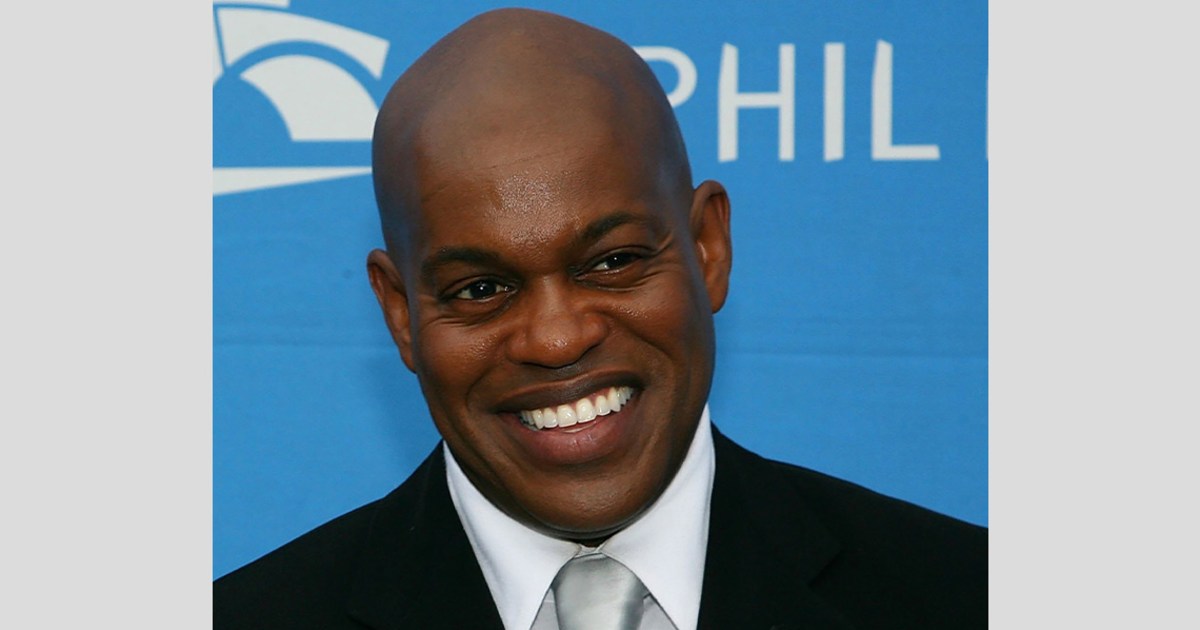
Grammy-nominated opera singer Jubilant Sykes was fatally stabbed at his Southern California home, marking a devastating loss to the music world. Authorities responded to a 911 call in Santa Monica, where they found Sykes suffering from critical injuries consistent with a stabbing. The renowned baritone, aged 71, had a distinguished career performing at prestigious venues including Carnegie Hall, the Kennedy Center, and the Metropolitan Opera.
Son in Custody Following Incident
Santa Monica police arrested Sykes’s 31-year-old son, Micah Sykes, who lived with his parents, on suspicion of the fatal stabbing. The incident shocked friends and family, who remembered Jubilant as a man of joy, faith, and immense talent. His contributions to classical music and his deep commitment to his church community left a lasting impact across the globe.
Legacy and Remembrance
Jubilant Sykes was celebrated not only for his powerful voice but also for his warmth and spirit. Nominated for a Grammy in 2010, his legacy extends beyond his recordings to the lives he touched through music and faith. The opera community mourns the loss of a beloved artist whose light will be dearly missed.
About the People Mentioned
Jubilant Sykes
Jubilant Sykes (September 17, 1954 – December 8, 2025) was an acclaimed American baritone opera singer known for his versatile voice that bridged classical, gospel, jazz, and folk music. Raised in Los Angeles, he began singing as a soprano child before developing a deep baritone voice that earned him international acclaim. His career spanned over five decades, during which he performed at prestigious venues including the Metropolitan Opera, Carnegie Hall, the Kennedy Center, Deutsche Oper Berlin, and London's Barbican Centre. He also appeared at major music festivals like the New Orleans Jazz Festival and iconic venues such as the Apollo Theater and Hollywood Bowl[1][2][3]. Sykes was celebrated for his compelling musical interpretation and vocal power, capable of delivering dramatic operatic moments as well as scaled-down, intimate performances. He collaborated with world-class orchestras such as the Los Angeles Philharmonic, New York Philharmonic, Boston Symphony, Chicago Symphony, and London Symphony Orchestra, working under renowned conductors including Marin Alsop, Leonard Slatkin, and John Williams[2][3][6]. Notable roles included Jake in *Porgy and Bess* at the Metropolitan Opera in 1990 and Celebrant in Leonard Bernstein’s *Mass*, for which he received a Grammy nomination for Best Classical Album in 2009. He also performed in musical theater, playing Pompey in *Bloomer Girl* and Henry Richard Lee in *1776*, and acted in film and theater projects such as *Freedom* and *Breath and Imagination*[1][2]. Sykes was known for his passion in music, often describing singing as an extension of himself. His ability to transcend musical genres made him a unique and respected figure in classical and contemporary music circles. At the time of his death, he served as an artistic advisor for Orchestra Santa Monica[1]. Jubilant Sykes was tragically found stabbed to death at his home in Santa Monica on December 8, 2025, at age 71. His son was arrested and charged in connection with the incident[1].
Micah Sykes
Micah Sykes is primarily known as the son of Jubilant Sykes, a Grammy-nominated baritone opera singer. Micah gained public attention in late 2023 when he was taken into police custody following the fatal stabbing of his father at their home in Santa Monica, California. The incident, described by police as isolated and occurring within a private residence, led to Micah being booked for homicide, with authorities investigating the circumstances and the weapon recovered at the scene. It was also noted that Micah has a history of mental illness, though the connection to the incident remains unclear[3][4]. There is no publicly available information indicating that Micah Sykes holds notable professional roles, achievements, or a public career. His current relevance is tied to the ongoing legal and investigative process following the tragic event involving his father, Jubilant Sykes, who was widely respected in the classical music community for his powerful baritone voice and performances at premier venues worldwide[3][4]. Jubilant Sykes, Micah’s father, was a distinguished artist known for blending operatic technique with American musical traditions, performing at venues such as Carnegie Hall, the Metropolitan Opera, and the Kennedy Center. His mentoring and recordings contributed significantly to American art songs and spirituals, earning him a Grammy nomination in 2009[3][4]. Micah Sykes’s public profile is currently defined by this family tragedy rather than personal professional accomplishments.
About the Organizations Mentioned
Carnegie Hall
Carnegie Hall, opened in 1891 in New York City, is one of the world’s most prestigious music venues, renowned for its unparalleled acoustics and historic cultural significance. Founded through the philanthropy of steel magnate Andrew Carnegie, inspired by his wife Louise and conductor Walter Damrosch, the Hall was conceived as a premier home for music in the city. Designed by architect William Burnet Tuthill, it originally housed three concert spaces, including the large main hall seating 2,800 people, a recital hall, and a chamber music hall[1][2][6]. Over its 130-plus years, Carnegie Hall has hosted an illustrious roster of the world’s finest musicians across genres—from classical legends like Tchaikovsky, Dvořák, and Mahler to jazz icons Billie Holiday and Louis Armstrong, to popular music stars such as The Beatles. It has also been a stage for notable speakers and cultural figures, including Dr. Martin Luther King Jr.[1][3][8]. Despite challenges including financial pressures and the threat of demolition in the mid-20th century, the Hall was saved by public support and legislation. In 1960, New York City purchased the building for $5 million, establishing the Carnegie Hall Corporation as a nonprofit to preserve its mission and maintain its operations[2][7]. Today, Carnegie Hall stands as a national historic landmark and a vibrant cultural institution. It continues to present a diverse array of performances and educational programs. Its reputation as an aspirational venue endures, symbolizing excellence and innovation in music and the arts. Renovations over the years, including the addition of the Zankel Hall in 2003, have modernized the facility while preserving its historic charm[7][8]. Carnegie Hall’s blend of historic legacy, architectural distinction, and ongoing artistic leadership make it a cornerstone of New York’s cultural and business landscape, reflecting the intersection of philanthropy, culture, and urban developmen
Kennedy Center
The **John F. Kennedy Center for the Performing Arts** is the United States' national cultural center, located on the Potomac River in Washington, D.C., and serves as a living memorial to President John F. Kennedy. Established by an Act of Congress in 1964 and opened in 1971, the Kennedy Center presents a diverse range of performing arts including classical and contemporary music, opera, drama, dance, jazz, pop, and folk music, showcasing both American and international artists[1][2][4]. It is the official home of the National Symphony Orchestra and the Washington National Opera[2][3]. The center operates as a public-private partnership, funded largely through private donations, ticket sales, and corporate gifts, with federal funding designated primarily for building maintenance and operations[2]. Architect Edward Durell Stone designed the original building, characterized by its monumental white marble façade and grand interior spaces such as the 630-foot Grand Foyer and the acoustically renowned Concert Hall with a seating capacity of 2,460[2][3]. A significant recent development is **The REACH**, an expansion opened in 2019 designed by Steven Holl Architects. This addition transforms the center into a “living theater” by providing flexible indoor and outdoor spaces for rehearsal, education, and community engagement, blending architecture with landscape. The REACH includes art studios, performance spaces, and a reflective landscape honoring JFK’s legacy through symbolic elements like a grove of 35 ginkgo trees and a reflecting pool inspired by his WWII boat, PT109[1][5]. The Kennedy Center also offers extensive educational and outreach programs aimed at cultural enrichment and diversity, maintaining a commitment to artistic excellence[4]. Its venues are available for public and private events, and it features dining options and art-themed retail shops[3]. As of 2025, the center’s leadership includes President Andy Pharoah and Artistic Director Francesca Zambello, continuing its role as
Metropolitan Opera
The **Metropolitan Opera (The Met)**, founded in 1883 by a group of wealthy New York families including the Vanderbilts, Roosevelts, and Morgans, is the leading American opera company and one of the world’s premier classical music institutions[1][2][7]. Established as an alternative to New York’s older Academy of Music, it opened its first opera house on Broadway and 39th Street with a performance of Gounod’s *Faust* on October 22, 1883[1][6]. The founding subscribers sought a venue that reflected their social stature and outshone the competition. The Met quickly became known for attracting outstanding singers worldwide, including early stars like Enrico Caruso and Geraldine Farrar, and for its pioneering performances in original languages rather than translated versions[4][5]. It experienced a “Silver Age” from 1908 to 1935 marked by luminaries such as Lauritz Melchior and Beniamino Gigli[7]. The company also operated a touring branch, the Metropolitan Opera National Company (1965–67), expanding its reach nationally with young talent[1]. In 1966, the Met moved to its current home at Lincoln Center for the Performing Arts, featuring state-of-the-art stage technology that enhances production quality[1][4][5]. Under the leadership of managers like Rudolf Bing and Peter Gelb, the Met modernized its repertoire and presentation, introducing innovations such as live HD broadcasts to cinemas worldwide, expanding its digital and streaming presence, and renewing classic productions to engage contemporary audiences[7]. The Met is also notable for its artist development programs, including the National Council Auditions and the Lindemann Young Artist Development Program, nurturing emerging operatic talent from around the globe[4]. Its history encompasses over 30 world premieres and numerous U.S. premieres, including landmark contemporary operas like John Adams’s *Nixon in China*[1][8].
Santa Monica police
The Santa Monica Police Department (SMPD), founded in May 1897, is the primary law enforcement agency serving the city of Santa Monica, California. It operates as a full-service police department tasked with public safety, crime prevention, investigation, and community policing within the city’s jurisdiction[1][4]. Over its long history, SMPD has evolved from addressing early issues such as public drunkenness and illegal gambling to modern challenges including gang violence and community engagement[1][2]. Key historical milestones include the introduction of a detective bureau and a call box system in the early 20th century to enhance officer response times. In the 21st century, SMPD implemented the Neighborhood Resource Officer Program in 2008, a community policing initiative linking officers directly to neighborhoods to foster partnerships and problem-solving, reflecting residents’ demand for more engaged policing[2]. The department also overcame challenges related to gang violence, as seen in its investigations in the mid-2000s that uncovered multiple shootings and murders tied to gang activity[2]. Leadership at SMPD has been notable, with Jacqueline Seabrooks becoming the first female police chief in 2012, followed by Ramon Batista in 2021, who is the first Hispanic chief in the department’s 127-year history. Batista leads a diverse workforce of approximately 440 employees, including 228 sworn officers, and oversees an annual budget of $116 million. Under his leadership, SMPD emphasizes cultural diversity, inclusivity, and community representation, reflecting the city’s multicultural population[1][4][6]. The department has faced scrutiny, such as in 2013 when concerns arose over high salaries for some officers, attributed partly to overtime for private events. Nonetheless, SMPD continues to balance operational demands with community-focused strategies to maintain safety and trust in one of Los Angeles County’s prominent coastal cities[1]. In summary, the Santa Monica Police Department is a historically rich, community-oriented law enforcement agency that blend