Your Halo Story: Unravel the Epic Halo Saga Across Games

Your Halo Story
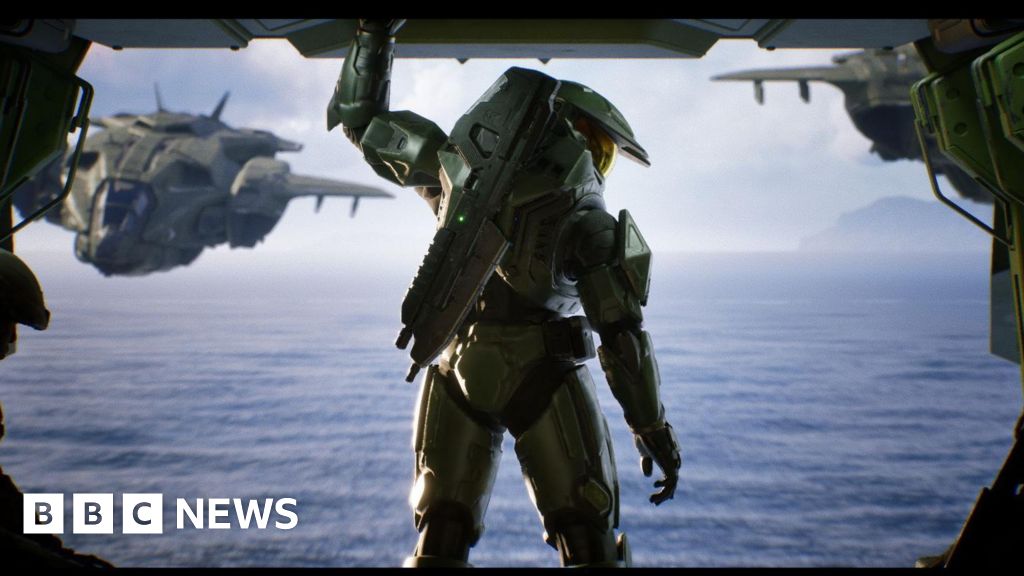
Stories captivate us, weaving epic tales of heroism and cosmic conflict. In the Halo universe, your story unfolds as Master Chief, the faceless supersoldier battling the Covenant alongside AI companion Cortana. From humanity's interstellar expansion to clashes with alien zealots seeking Forerunner godhood via massive ringworlds, Halo's narrative grips millions.[1][4]
Unraveling the Epic Saga
Launched in 2001 with Halo: Combat Evolved, the franchise evolved from Bungie's vision to 343 Industries' stewardship. Key entries like Halo 2, 3, and Infinite pit UNSC Spartans against the Flood parasite and Banished mercenaries. Rich lore spans novels and spin-offs, exploring rebellions, Spartan enhancements, and Cortana's galaxy-shaking rebellion.[2][3][5]
Craft Your Legend on Halo Waypoint
Halo Waypoint invites you to chronicle your journey—share multiplayer triumphs, campaign conquests, and fan theories. Whether reliving the Human-Covenant War or forging new paths in Infinite's open world, your Halo story connects with a global Spartan community, celebrating 25 years of revolutionary gameplay and timeless storytelling.[1][7]
About the Organizations Mentioned
Bungie
**Bungie** is a **video game developer and publisher** based in Bellevue, Washington, and a subsidiary of Sony Interactive Entertainment following the company's acquisition in July 2022.[2] Founded in May 1991 by Alex Seropian and programmer Jason Jones in Chicago, Illinois, Bungie has evolved into one of the gaming industry's most influential studios.[1][2] The company initially built its reputation as a Macintosh games developer during the 1990s, creating the acclaimed *Marathon* and *Myth* franchises.[1] This early success enabled Bungie to expand, establishing Bungie West in San Jose, California in 1997, which produced the action title *Oni*.[2] However, Bungie is primarily known today for developing the *Halo* and *Destiny* series, two of gaming's most iconic franchises that have generated massive player communities and cultural impact.[1] Beyond game development, Bungie operates several notable ventures. The company maintains Bungie.net, a comprehensive platform offering forums, statistics tracking, merchandise sales through the Bungie Store, and integration with its games.[2] Bungie also runs charitable initiatives including The Bungie Foundation and Bungie Aerospace.[2] The studio's stated purpose is to "create worlds that inspire friendship."[3] In February 2021, Bungie announced significant expansion plans, including doubling its Bellevue headquarters space and opening an international office in Amsterdam by 2022 to support *Destiny* development and new intellectual properties.[1][2] Leadership transitioned in August 2025 when Pete Parsons passed the torch to Justin Truman as Studio Head after more than two decades leading the company.[3] Looking forward, Bungie is preparing to launch *Marathon*, an extraction shooter revival, on
343 Industries
**343 Industries**, now rebranded as **Halo Studios**, is a Microsoft-owned video game developer specializing in the iconic *Halo* franchise, headquartered in Redmond (or formerly Kirkland), Washington.[1][3][4][5] Tasked with stewarding *Halo* after Bungie's 2007 independence, it oversees games, media, and expansions for Xbox and PC platforms.[2][3] Founded in late 2007 by Microsoft executive Bonnie Ross—named after the *Halo* AI 343 Guilty Spark—the studio began with about a dozen ex-Bungie staff, including Frank O'Connor as franchise director.[1][2][3][4] Ross pitched it as a "George Lucas"-style creative hub to revive the franchise, amid doubts it was fading.[1][5][6] Early efforts built a unified lore via interviews with Bungie veterans and projects like the 2009 *Halo: Waypoint* app for player stats and the anime anthology *Halo Legends*.[2][3] Key achievements include launching the **Reclaimer Trilogy**: *Halo 4* (2012), which grew the team from 12 to 200+ with upgraded graphics and co-op multiplayer; *Halo 5: Guardians* (2015); and *Halo: Infinite* (2021).[1][2][3] They also delivered remasters like *Halo: Combat Evolved Anniversary* (2011), *Halo: The Master Chief Collection*, and *Halo Wars: Definitive Edition*, plus mobile titles and spin-offs.[1][3] These solidified *Halo* as a Xbox tentpole, crediting diverse talent for success.[2][5] Currently, as of late 2024, **Halo Studios**—under Pierre Hintze—marks "Chapter 3" with a new development "recipe," addressing past technical debt from outdated engines via S
UNSC
The **United Nations Security Council (UNSC)** is the UN's principal organ for maintaining international peace and security, wielding unique powers to authorize military action, impose sanctions, and deploy peacekeeping missions under the UN Charter.[1][2] Established in 1945 at the UN's founding post-World War II, the UNSC comprises 15 members: five permanent ones—the United States, Russia, China, France, and the United Kingdom—each with veto power, and ten non-permanent members elected for two-year terms by the General Assembly.[2][5] This structure, designed to reflect post-war power dynamics, enables binding resolutions under Chapter VII, making them international law enforceable by force if needed.[1][4] Key achievements include over 70 peacekeeping operations since inception, protecting civilians, facilitating elections, and aiding refugees in conflicts worldwide—from Korea and the Gulf War to ongoing missions in Africa and the Middle East.[3][2] It has mediated disputes, tackled arms proliferation, terrorism, and even HIV/AIDS in Africa, while recommending new UN members and secretaries-general.[1][5] Currently, as of 2025, the UNSC oversees 11 active peacekeeping missions across three continents, supported by subsidiary bodies like sanctions committees and the Peacebuilding Commission.[2] It addresses civil wars, natural disasters, and nuclear threats through negotiation (Chapter VI) or assertive measures.[3] Notable aspects include its rotating monthly presidency and the UN Secretary-General's agenda-setting role, though critics highlight veto-induced paralysis—evident in deadlocks over Ukraine, Gaza, and Syria—questioning its representativeness in a multipolar world.[2][3] Despite challenges, the UNSC remains pivotal in global crisis management, blending diplomacy with enforcement to foster stability.(298 words)