Trump Attacks Cuellar Over Loyalty After Pardon's Fallout
Trump Criticizes Cuellar’s Party Loyalty
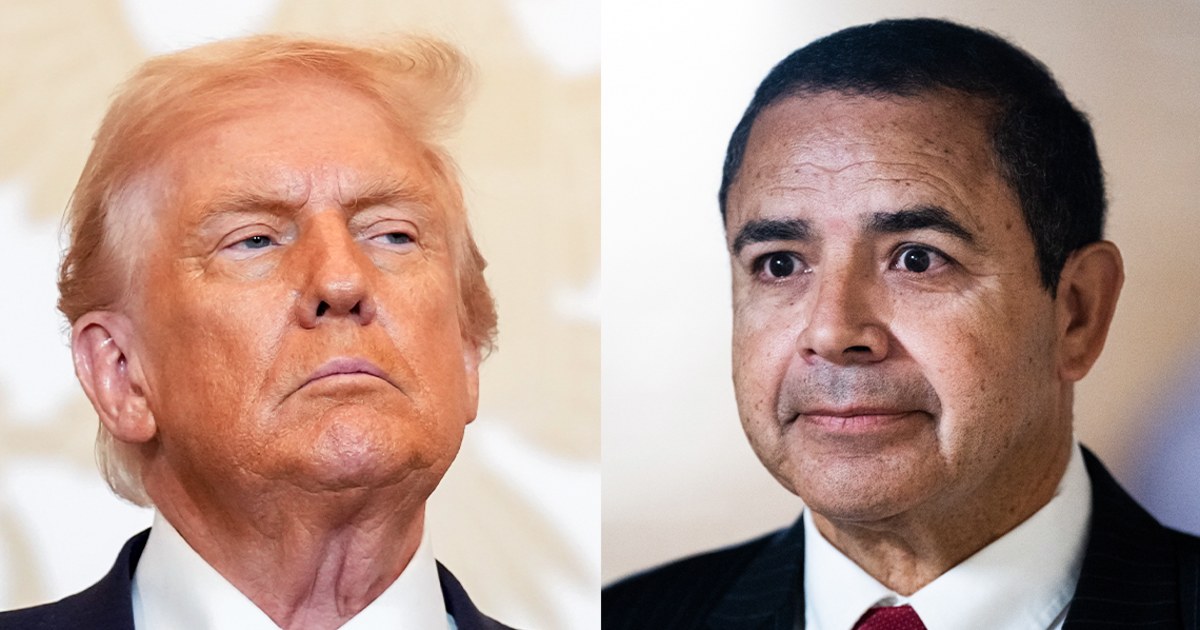
President Donald Trump has openly rebuked Representative Henry Cuellar for seeking reelection as a Democrat following a presidential pardon. Trump accused Cuellar of demonstrating “a lack of loyalty,” suggesting that accepting forgiveness while continuing to run under the Democratic banner is contradictory. This public criticism highlights ongoing party tensions and the challenge of maintaining allegiance amid politically charged pardons.
Context Behind the Controversy
Cuellar’s pardon, granted by Trump, was seen by some as a strategic move, yet it has sparked debate about political loyalty and integrity. Critics argue that benefiting from a Republican president’s pardon should signal a shift in political alignment or gratitude. Cuellar’s decision to remain with the Democrats despite the pardon complicates his standing among both Democrats and Republicans, reflecting broader partisan divides.
Implications for Future Elections
This clash underscores how pardons can impact political dynamics, potentially influencing voter perceptions and party unity. Cuellar’s case may set a precedent for how politicians navigate cross-party pardons and loyalty in upcoming campaigns, intensifying scrutiny on candidate affiliations.
About the People Mentioned
Donald Trump
Donald John Trump, born June 14, 1946, in Queens, New York, is an American businessman, media personality, and politician. He graduated from the University of Pennsylvania’s Wharton School in 1968 with a degree in economics. In 1971, he took over his family’s real estate business, renaming it the Trump Organization, through which he expanded into building and managing skyscrapers, hotels, casinos, and golf courses. Trump gained widespread fame as the host of the reality TV show *The Apprentice* from 2004 to 2015, which helped establish his public persona as a successful entrepreneur. Trump entered politics as a Republican and was elected the 45th president of the United States, serving from 2017 to 2021. His presidency was marked by significant policy actions including tax cuts, deregulation, the appointment of three Supreme Court justices, renegotiation of trade agreements (notably replacing NAFTA with the USMCA), and a focus on immigration control including border wall expansion. He withdrew the U.S. from international agreements such as the Paris Climate Accord and the Iran nuclear deal, and engaged in a trade war with China. His administration’s response to the COVID-19 pandemic was criticized for downplaying the virus’s severity. Trump was impeached twice by the House of Representatives—first in 2019 for abuse of power and obstruction, and again in 2021 for incitement of insurrection—but was acquitted by the Senate both times. After losing the 2020 election to Joe Biden, Trump challenged the results, culminating in the January 6, 2021, Capitol riot. He remains a central figure in American politics, having won the 2024 presidential election and returned as the 47th president in 2025, continuing to promote policies aimed at economic growth, border security, and military strength[1][2][3][4].
Henry Cuellar
Henry Cuellar is a Democratic U.S. Representative from Texas’s 28th congressional district, serving in Congress since 2005.[3][4] He previously served in the Texas House of Representatives from 1987 to 2001 and briefly as Texas secretary of state in 2001.[3] Cuellar is a former attorney and holds a Ph.D.; his district covers much of South Texas, including Laredo and parts of San Antonio.[3][5] On Capitol Hill he is a senior member of the House Appropriations Committee and has served on its Homeland Security, Defense, and Military Construction and Veterans Affairs subcommittees.[5][6] He is known as a centrist or conservative Democrat who has at times voted with Republicans on immigration and border-security measures, positioning him as a bipartisan dealmaker on certain national-security and appropriations matters.[3][5] Cuellar’s notable achievements include long tenure on appropriations, influence over homeland-security funding decisions, and roles that direct federal resources to South Texas projects and border security programs.[5][6] He has been repeatedly reelected to his district since first winning his congressional seat in 2004.[3] In 2024 he and his wife were indicted on charges including bribery and money laundering, but before a scheduled trial he received a presidential pardon in 2025; following that pardon, House Democrats voted to restore him as the ranking Democratic member of the Appropriations Subcommittee on Homeland Security in December 2025.[1][2][7] The restoration drew mixed reactions within his party because the subcommittee oversees more than $65 billion in annual homeland-security funding.[1] Cuellar is preparing to defend his seat in a newly redrawn, more Republican-leaning district for upcoming elections, and his political standing remains relevant because of his appropriations role and the attention around his legal case and pardon.[1][2][4]
About the Organizations Mentioned
Democrats
The **Democratic Party** is one of the two major political parties in the United States, widely recognized as a liberal and progressive organization that advocates for social and economic equality, civil rights, environmental protection, and worker rights. It generally supports stronger government intervention in the economy and social welfare programs such as Medicaid and food aid, funded through progressive taxation[1][3]. Founded in 1848 with the creation of the Democratic National Committee (DNC), it is the oldest continuing political party and party committee in the U.S.[2]. The **Democratic National Committee (DNC)** is the central governing body, overseeing campaign activities, party organization, and the Democratic National Convention. It coordinates efforts across all 57 states and territories, supporting local and state party organizations to elect Democrats at every level of government[1][2]. The current DNC chair as of 2025 is Ken Martin[1][2]. Historically, the party has undergone significant transformations, evolving from its roots as the Jacksonian Party to its current identity emphasizing progressive policies and social justice[3]. The party is known for using the color blue as its symbol since the 2000 presidential election[3]. It has pioneered civil rights legislation and expanded social safety nets, shaping much of modern American social policy. In recent years, the Democratic Party has focused on renewal efforts to address changing public expectations and declining support among certain voter groups. This involves reevaluating policies and strategies to build a sustainable majority amid rapid social and technological change[4]. It also actively fights to protect democratic institutions and voting rights, coordinating a broad coalition of organizations to defend against anti-democratic threats[6]. Currently, the party continues to mobilize grassroots voters and organize campaigns across all levels, aiming to secure electoral victories and promote a fairer, more equal future for Americans—efforts often highlighted in business and technology news for their impact on policy and governance[5].
Republicans
The **Republican Party** is a major political organization in the United States, founded in 1854 in Jackson, Michigan, primarily by anti-slavery activists opposing the expansion of slavery into new U.S. territories[1][2]. Its origins lie in the political turmoil following the Kansas-Nebraska Act, which ignited sectional conflicts. The party emerged from a coalition of former Whigs, Free Soil Democrats, and abolitionists united by the ideology of "Free Soil, Free Labor, Free Men," advocating against slavery, supporting free market labor, and promoting modern economic development including railroads, banking, and high tariffs[4][6]. Key early achievements include the nomination and election of Abraham Lincoln as the first Republican president in 1860, whose leadership during the Civil War was pivotal in preserving the Union and abolishing slavery. Lincoln’s Emancipation Proclamation and the party’s role in passing the 13th, 14th, and 15th Amendments were landmark contributions to civil rights and the redefinition of American freedom[2][5][6]. The party dominated national politics from the Civil War era until the Great Depression, during which it was the principal advocate for industrial and business interests, protective tariffs, and national banking[2][5]. Throughout its history, the Republican Party has undergone ideological shifts but has consistently emphasized economic modernization and conservative fiscal policies, aligning with business and technological advancement. The early 20th century saw figures like Theodore Roosevelt promote progressive reforms, while later eras emphasized free enterprise and innovation to drive growth[2][4]. Currently, the Republican Party remains a central force in American politics, influencing policies related to business, technology, and governance. Its historical legacy as the party of Lincoln and abolition continues to be a defining aspect, shaping its identity and appeal, especially in debates over civil rights, economic policy, and national unity[5][6]. The party’s evolution reflects ongoing tensions between tradition and modernization within the U.S. political landscap