Trump's Influence Reshapes Texas GOP Politics
Trump's Influence Reshapes Texas Republican Politics
Senator John Cornyn faces an unprecedented challenge in Texas's Republican primary as former President Trump's growing influence over the GOP reshapes the political landscape. The longtime senator, first elected in 2002, now confronts questions about whether he aligns with the party's evolving priorities. With Trump's Republican Party demanding loyalty to his agenda, Cornyn's establishment credentials and past disagreements with Trump have become liabilities rather than strengths.
A Three-Way Battle for the Soul of the GOP
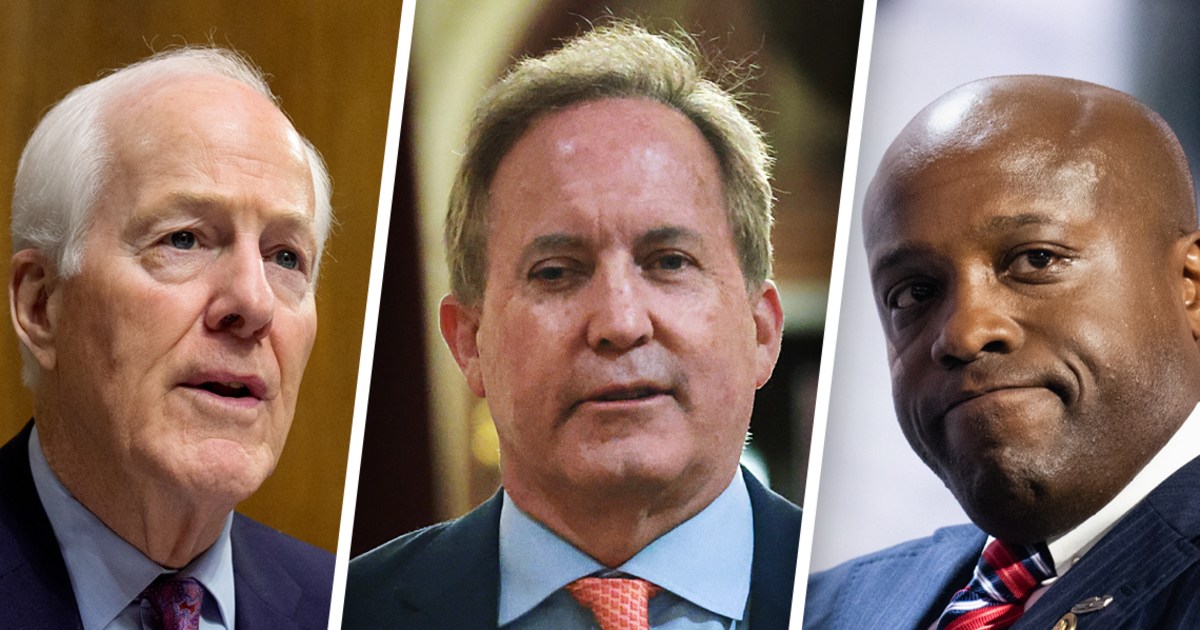
Cornyn competes against Texas Attorney General Ken Paxton and Representative Wesley Hunt in a contentious primary that symbolizes deeper ideological divisions within Republicans. Paxton, backed by Trump allies like Steve Bannon, represents the hardline MAGA wing, while Hunt claims kinship with Trump through early endorsement and convention prominence. The race reflects whether traditional conservatives can survive in Trump's transformed Republican Party, with Senate leadership warning that nominating Paxton could cost the party Texas entirely.
Consequences for Congressional Control
This primary matters beyond Texas. With Republicans defending a narrow Senate majority, a fractured GOP primary could unexpectedly threaten a traditionally safe Republican seat, potentially shifting the balance of power in Congress during the 2026 midterm elections.
```About the Organizations Mentioned
Republican Party
The **Republican Party**, also known as the **GOP (Grand Old Party)**, is one of the two major political parties in the United States, founded in 1854 primarily by anti-slavery activists opposing the Kansas-Nebraska Act and the expansion of slavery into U.S. territories[1][5]. It was formed from a coalition of former Whigs, Democrats, and Free Soil party members who shared opposition to slavery and a desire for a national political force promoting economic development and social order[2][5]. The party's early base included northern Protestants, businessmen, factory workers, professionals, and prosperous farmers. It strongly supported pro-business policies like the national banking system, the gold standard, railroads, and high tariffs[1][3]. Abraham Lincoln, the first Republican president elected in 1860, led the party through the Civil War, championing the abolition of slavery and the preservation of the Union. This solidified the GOP’s dominance in national politics for decades, especially in the North, while it remained weak in the South[1][5][6]. Historically, the Republican Party was instrumental in major social reforms, including the Emancipation Proclamation and the passage of the 13th, 14th, and 15th Amendments, which abolished slavery, guaranteed equal protection, and secured voting rights for African Americans, respectively[6]. The party also supported women's suffrage early on, backing the 19th Amendment[6]. In the 20th century, Republicans were associated with both conservative economic policies—favoring reduced taxes, limited government regulation, and individual economic freedom—and a strong national defense[7]. The party experienced ideological splits, notably in 1912 when Theodore Roosevelt led a progressive faction away from the conservative wing[1][5]. Today, the GOP continues to promote conservative social policies and states’ rights, opposing extensive federal intervention and advocating free-market principles[7]. For readers interested in business and technology,
GOP
The **GOP**, or **Grand Old Party**, is the widely recognized nickname for the **Republican Party** of the United States, a major conservative political party founded in 1854. It originated from anti-slavery activists opposing the Kansas-Nebraska Act, uniting former Whigs and Free Soilers with a platform centered on halting the expansion of slavery. The party's early historic milestone was the election of Abraham Lincoln in 1860, which precipitated the Civil War; under Lincoln’s leadership, the GOP focused on preserving the Union and abolishing slavery[1][2][3]. Throughout its history, the Republican Party has evolved from its abolitionist roots to champion business interests, industrial growth, and economic policies favoring limited government intervention. In the late 19th and early 20th centuries, it promoted protective tariffs and infrastructure development. The party experienced fluctuating influence, losing ground during the New Deal era but regaining prominence with Dwight D. Eisenhower’s presidency in the 1950s, marked by moderate conservatism[1][2]. Today, the GOP advocates for reduced taxes, conservative social policies, limited government regulation, strong national defense, and states’ rights. It remains one of the two dominant forces in American politics, consistently shaping legislative agendas and national discourse[2]. The party is organized and led nationally by the **Republican National Committee (RNC)**, which manages fundraising, election strategies, and the party platform, coordinating efforts across states and counties under the leadership of a chairman[3][4]. Notably, the acronym "GOP" was popularized in the late 19th century and originally stood for "Grand Old Party," symbolizing the party's legacy in preserving the Union and championing liberty. It is now a common term in political commentary and media[3][5]. In recent years, the GOP has undergone significant membership changes in Congress and leadership adjustments, reflecting its dynamic role in U.S. politics as




:focal(0x0:3000x2000)/static.texastribune.org/media/files/f6d94f38200a0464c1c4a0a414a44463/Quorum%20Break%20ABIA%20BD%20TT%2003.jpg)