Trump's Silence on Obamacare Rate Spikes Leaves Millions Vulnerable

Trump's Silence on Obamacare Rate Spikes Leaves Millions Vulnerable
As Affordable Care Act subsidies near expiration, President Trump has yet to endorse any plan to prevent premium hikes affecting over 20 million enrollees. With rates potentially doubling by January, families face tough choices amid rising health costs. Republicans in Congress push for extensions, but divisions persist without White House guidance.
Senate Vote Looms Amid Policy Uncertainty
The Senate prepares for a pivotal Thursday vote on a Republican health proposal, including two-year extensions of enhanced tax credits with income caps at 700% of poverty levels and minimum premiums. Trump signals interest in redirecting funds directly to individuals, bypassing insurers for better personalized coverage. Yet, his 'wait-and-see' stance fuels internal GOP rifts, as some lawmakers warn of economic fallout in their districts reliant on ACA plans.
Broader Implications for American Health Care
Without action, expiring subsidies could spike premiums, echoing Project 2025 critiques of cutting Medicaid and ACA protections. Trump's drug pricing wins, like slashing Ozempic costs via most-favored-nation deals, offer relief, but holistic reform lags. Bipartisan frameworks emerge, yet time ticks toward open enrollment deadlines, urging swift endorsement to shield working families from crisis.
About the People Mentioned
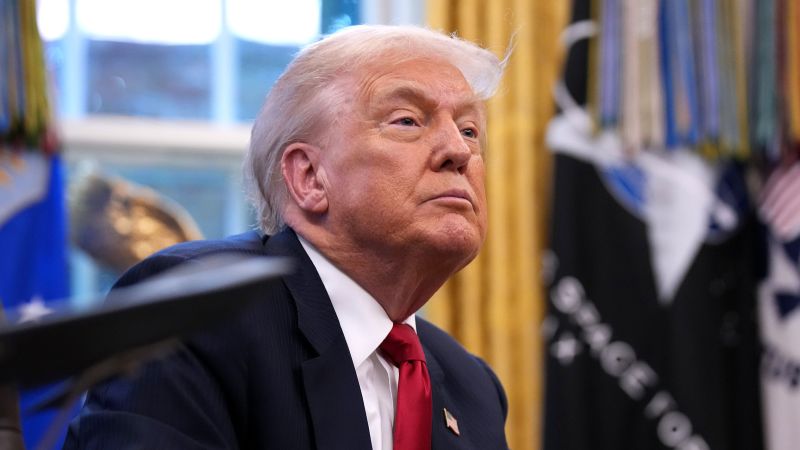
Trump
Donald John Trump, born June 14, 1946, in Queens, New York, is an American businessman, media personality, and politician who has served as both the 45th and 47th President of the United States[1][3][5]. He is the only president since Grover Cleveland to be elected to two non-consecutive terms, winning the 2016 and 2024 elections and serving from 2017 to 2021, and again from 2025 onward[2][3][5]. Trump’s political rise marked a significant shift in American politics, as he positioned himself as a political outsider and won the Republican nomination in 2016, defeating Democrat Hillary Clinton in the general election[1][5][6]. He was re-elected in 2024, defeating Vice President Kamala Harris, with Ohio Senator JD Vance as his running mate[5]. Before entering politics, Trump was a prominent real estate developer, inheriting and expanding his family’s business into the Trump Organization, which includes hotels, casinos, golf courses, and branded products worldwide[1][3][6]. He gained broader fame as the host of the reality TV show *The Apprentice* from 2004 to 2015[1][5][6]. Trump has authored several books, including the best-selling *The Art of the Deal* (1987)[5][6]. During his first term, Trump pursued a conservative agenda, including significant tax cuts, deregulation, border security measures, and a hardline stance on immigration[1][4]. He appointed three Supreme Court justices and withdrew the U.S. from several international agreements, including the Paris Climate Accord and the Iran nuclear deal, while initiating a trade war with China[1]. His administration’s response to the COVID-19 pandemic was marked by mixed messaging and clashes with health officials[1]. Trump was impeached twice—in 2019 for abuse of power and obstruction of Congress, and in 2021 for incitement of insurrection following the January 6 Capitol attack; he was acquitted by the Senate both times[1]. After losing the 2020 election to Joe Biden, Trump’s refusal to concede and claims of election fraud culminated in the Capitol riot and ongoing legal challenges[1][3]. Trump’s return to the presidency in 2025, at age 78, makes him the oldest person ever inaugurated for a second term[2]. His current administration has pledged to continue his previous policies, emphasizing border security, economic growth, and a rejection of what he terms “extremist” policies from the political left[4]. Trump remains a polarizing figure, with a strong base of support and equally vocal opposition, and his influence on the Republican Party and American politics endures[2][3].
About the Organizations Mentioned
White House
The **White House Office** is a central organizational component within the Executive Office of the President of the United States (EOP), tasked with supporting the President in managing day-to-day operations, policy formulation, and political affairs. It is headed by the White House Chief of Staff and staffed by senior aides who report directly to the President, including those with titles such as Assistant to the President and Deputy Assistant to the President. These staff members are mostly political appointees without the need for Senate confirmation, allowing the President considerable discretion in shaping the office to suit each administration's priorities[1]. Historically, the White House Office was established in 1939 through Reorganization Plan 1 and Executive Order 8248 to provide immediate assistance to the President. It functions as the nerve center for presidential staff, physically located primarily in the West Wing, and plays a pivotal role in managing the President’s policy agenda, communications, and political strategy. Its flexible organization allows each President to tailor the staff composition and roles according to their governance style and objectives[1]. In the current context of 2025, the White House Office operates under the administration of President Donald J. Trump, who returned to office after the 2024 election. His administration emphasizes rejecting prior policies deemed extremist and focuses on enhancing quality of life, economic growth, and American energy dominance. The administration includes Vice President JD Vance and First Lady Melania Trump, among others, with a Cabinet advising on various governmental functions[4][6]. Recent initiatives linked to the White House’s operational sphere include the establishment of a new **Department of Government Efficiency (DOGE)** aimed at modernizing federal technology and software to boost government productivity. The DOGE agenda is implemented through the renamed United States DOGE Service within the Executive Office, reflecting a concerted push to leverage technology for administrative modernization[5]. Notably, the White House Office also coordinates national security and homeland security functions through the National Security Council staff, underscoring its central role
Congress
The United States Congress is the legislative branch of the federal government, playing a pivotal role in shaping the nation's policies and laws. As a bicameral legislature, it consists of the House of Representatives and the Senate, each with distinct responsibilities. The House represents congressional districts, while the Senate represents states, ensuring diverse perspectives are heard. **History and Structure:** Congress has a rich history, evolving over time to reflect the nation's demographic changes and political shifts. It is structured into committees that specialize in various policy areas, facilitating the legislative process. The National Archives and Records Administration maintains historical records of Congress, highlighting its ongoing role in governance. **Key Achievements:** Throughout its history, Congress has achieved numerous milestones, including landmark legislation such as the Civil Rights Act and the Affordable Care Act. It has also played a significant role in shaping the nation's economic policies, influencing business and technological advancements. **Current Status:** The 119th Congress, which convened in January 2025, marks significant changes with a Republican majority in both chambers. This setup has implications for policy-making, especially in areas like healthcare and technology regulation. The current Congress is also notable for its diversity, being the most racially and ethnically diverse in history. **Notable Aspects:** - **Diversity and Representation:** The 119th Congress is the most diverse in U.S. history, with increased representation from diverse ethnic backgrounds and the inclusion of the first openly transgender federal legislator. - **Technological Integration:** Congress uses technology to enhance legislative processes, such as through platforms like Congress.gov, which provides access to legislative information and resources. - **Economic Impact:** Congress's decisions have profound impacts on business and technology sectors, influencing regulatory environments and investment opportunities. In summary, the U.S. Congress is a dynamic institution that plays a crucial role in shaping the nation's policies, laws, and economic landscape. Its ongoing evolution reflects the changing needs and demographics of the country, making it a vital
Project 2025
**Project 2025** is a comprehensive policy blueprint developed by The Heritage Foundation and over 100 conservative organizations to reshape the U.S. federal government under a potential Republican presidency, particularly as a transition plan for Donald Trump.[1][3][4] Launched in 2023, the initiative aims to "deconstruct the administrative state" on Day One of a new term, emphasizing restoration of family values, national sovereignty, border security, and individual rights.[1][3] Its cornerstone is the 900+ page *Mandate for Leadership: The Conservative Promise*, a detailed manual outlining agency-by-agency reforms, authored by former Trump officials like Russell Vought and involving advisors such as Stephen Miller.[1][2][3] Built on four pillars—policy consensus, personnel database, training academy, and 180-day playbook—the project seeks to centralize executive power via the unitary executive theory, eliminating civil service protections to replace career staff with loyal appointees.[1][3] Key proposals include placing the federal bureaucracy under direct presidential control (e.g., DOJ independence curtailed), rejecting gender identity policies in favor of biological definitions of sex and traditional marriage, banning public sector unions, cutting overtime protections, and rolling back worker safety, environmental, and social safety net rules.[1][2][4] Proponents argue this streamlines efficiency; critics, including the ACLU and Democracy Forward, decry it as an authoritarian overhaul undermining civil rights, labor, and democracy.[2][4][6] Achievements encompass mobilizing hundreds of contributors for the *Mandate* and building a vetted conservative talent pool.[3] By late 2025, post-Trump's 2024 victory, trackers note its architects—like Vought for OMB—in key administration roles, with ongoing implementation of executive actions across 20 agencies affecting workers, health, and environment.[2][5][7] Funded with eight figures, Project 2025 remains a polarizing force