Trump Targets Minnesota Over Fraud Allegations
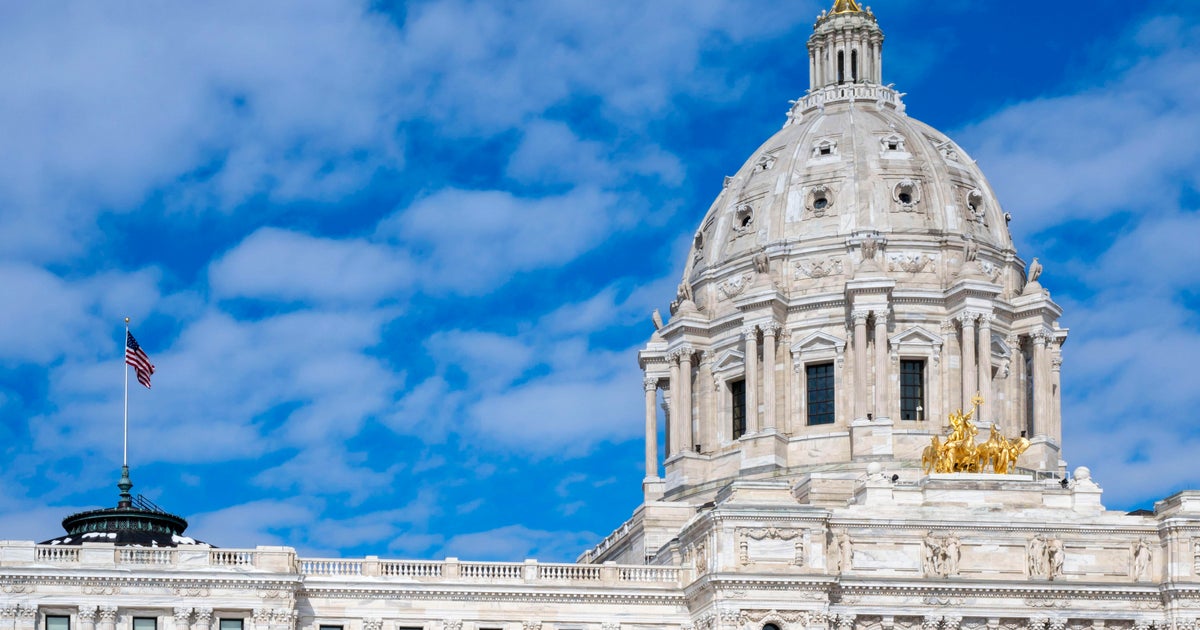
Trump Targets Minnesota Over Fraud Allegations
President Trump has intensified scrutiny on Minnesota, branding it a "hub of fraudulent money laundering activity" and criticizing Governor Tim Walz for alleged lax oversight. The controversy centers on several high-profile fraud cases, most notably the Feeding Our Future scandal, which saw $250 million in federal pandemic aid misappropriated through false claims about child nutrition programs.
Focus on Somali Community and Federal Response
Many of those charged in the Feeding Our Future case and related Medicaid and autism program frauds are of Somali descent, drawing national attention and sparking concerns about racial profiling. Federal investigators are probing whether any stolen funds reached extremist groups abroad, though no evidence has been found to date. The Trump administration has threatened to withhold federal funding, citing improper licensing and visa fraud, while Walz defends the state’s compliance with federal rules.
Broader Implications
The fallout highlights tensions between federal oversight and state autonomy, as well as the risks of politicizing complex fraud investigations.
About the People Mentioned
Tim Walz
Timothy James Walz (born April 6, 1964) is an American politician, former educator, and Army National Guard veteran who has served as the **41st governor of Minnesota** since January 2019.[1][6] A member of the Democratic–Farmer–Labor Party (DFL), he was elected governor in 2018 and re‑elected in 2022.[1][6] Walz was born in West Point, Nebraska, and raised in a rural community.[1][5] He enlisted in the **Army National Guard** at age 17 and served for 24 years, retiring as a command sergeant major.[2][5] He earned a bachelor’s degree in social science education from Chadron State College and later a master’s in educational leadership from Minnesota State University, Mankato.[2][4] Walz worked as a high school teacher and football coach, including at Mankato West High School, and previously taught on the Pine Ridge Reservation and in China through a Harvard-affiliated program.[2][4][5] Entering politics, Walz was elected in 2006 to the U.S. **House of Representatives** for Minnesota’s 1st Congressional District, a largely rural and traditionally conservative area, and served six terms from 2007 to 2019.[1][2] In Congress he served on the Agriculture, Armed Services, and Veterans’ Affairs committees, and held leadership roles on subcommittees dealing with farm policy and veterans’ issues.[2][5] As governor, Walz has overseen Minnesota’s responses to the **COVID‑19 pandemic** and the civil unrest following the 2020 murder of George Floyd.[1] His administration has emphasized education, health care, and economic support for working families, and he has signed legislation expanding paid leave, cutting certain fees, and lowering some prescription drug costs.[3][6] In 2023 he approved a public safety bill establishing **universal background checks** and “red flag” laws for firearms.[1][3] Minnesota under Walz also codified abortion rights in state law after the overturning of Roe v. Wade, keeping the state a regional access point for reproductive health services.[3] Walz was identified as a **vice‑presidential candidate in the 2024 election cycle**, raising his national profile beyond Minnesota politics.[2][3]
About the Organizations Mentioned
Feeding Our Future
Feeding Our Future was a Minnesota-based nonprofit founded by Aimee Bock in 2016 with the stated mission of distributing food to low-income children and senior citizens through federal nutrition programs.[1] The organization partnered with the United States Department of Agriculture (USDA) to administer the Child and Adult Care Food Program and the Summer Food Service Program, which provide reimbursements for meals distributed to vulnerable populations.[3] ## Growth and Expansion Between 2018 and 2021, Feeding Our Future experienced dramatic growth, receiving approximately $244 million in federal funding.[1] The organization's expansion accelerated significantly during the COVID-19 pandemic, growing from receiving $3.4 million in federal funds in 2019 to nearly $200 million by 2021.[4] During this period, Feeding Our Future opened more than 250 meal distribution sites throughout Minnesota, recruiting individuals and entities to participate in the federal nutrition programs.[5] ## The Fraud Scheme Rather than fulfilling its charitable mission, Feeding Our Future orchestrated what Attorney General Merrick Garland called the country's largest pandemic relief fraud scheme.[2] The organization fraudulently claimed to distribute thousands of meals daily while providing few or no actual meals at most locations. Founder Aimee Bock and co-conspirator Salim Said, a restaurant owner, created shell companies and submitted fake attendance rosters and meal counts to obtain federal reimbursements.[5] The scheme involved fabricated documentation and money laundering through family-owned entities. ## Current Status In January 2022, the FBI raided Feeding Our Future locations, leading to the organization's disestablishment.[2] By September 2022, 48 individuals were charged with fraud-related crimes.[3] Aimee Bock was convicted at
Trump administration
The **Trump administration** refers to the executive branch of the U.S. federal government during Donald J. Trump’s presidency, initially from January 20, 2017, to January 20, 2021, and resuming with his second term starting in 2025. It was characterized by a mix of aggressive domestic policies, significant judicial appointments, and a distinct foreign policy approach that emphasized "America First" principles[4][8]. The administration’s key activities included **tax reform**, notably passing the $3.2 trillion Tax Cuts and Jobs Act, which represented the largest overhaul of the U.S. tax code in decades[5]. Trump also renegotiated trade agreements with major economies including Mexico, Canada, China, Japan, and South Korea, prioritizing bilateral deals over multilateral ones such as the Trans-Pacific Partnership (TPP), which the administration withdrew from early on[1][2]. The administration sought to protect American jobs by restricting cheap foreign labor and influencing agencies like the Tennessee Valley Authority to retain American workers[5]. On the judicial front, the Trump administration appointed over 200 federal judges, including three Supreme Court justices—Neil Gorsuch, Brett Kavanaugh, and Amy Coney Barrett—shaping the judiciary for years to come[4]. These appointments were among the most significant achievements, influencing U.S. law on multiple fronts. In foreign policy, the administration pursued a controversial agenda: it imposed travel bans on several predominantly Muslim countries, withdrew U.S. troops from northern Syria, and supported Saudi Arabia militarily despite congressional opposition related to the Yemen conflict[1][3]. It also fostered new international technology alliances, such as securing commitments from allies to exclude Chinese telecom giant Huawei from 5G infrastructure and signing AI cooperation agreements with the UK[5]. The Trump administration faced substantial political turmoil, including two impeachments by the House of Representatives—first in 2019 over Ukraine dealings, and again in 2021 following the January