Turner Warns Against Pro-Russia Stance in Ukraine Peace Talks
Turner Warns Against Pro-Russia Stance in Ukraine Peace Talks
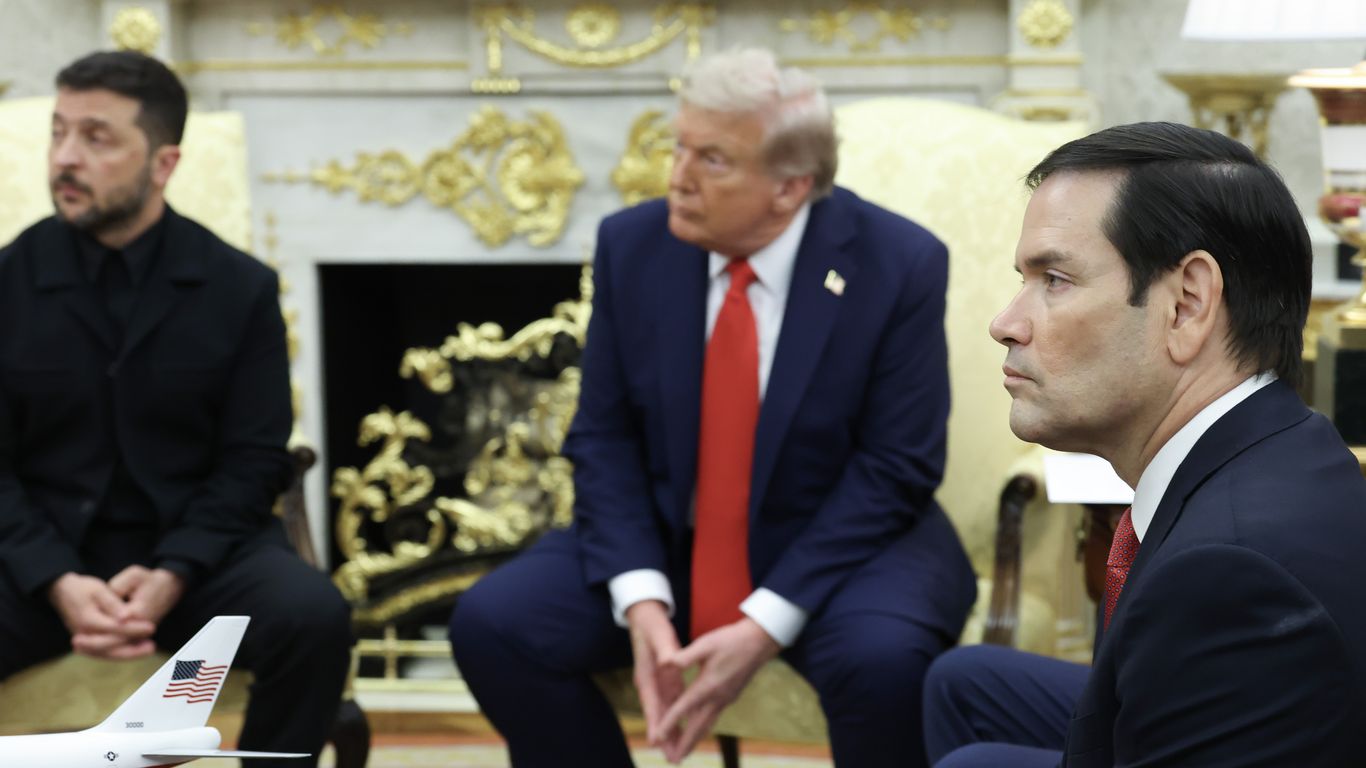
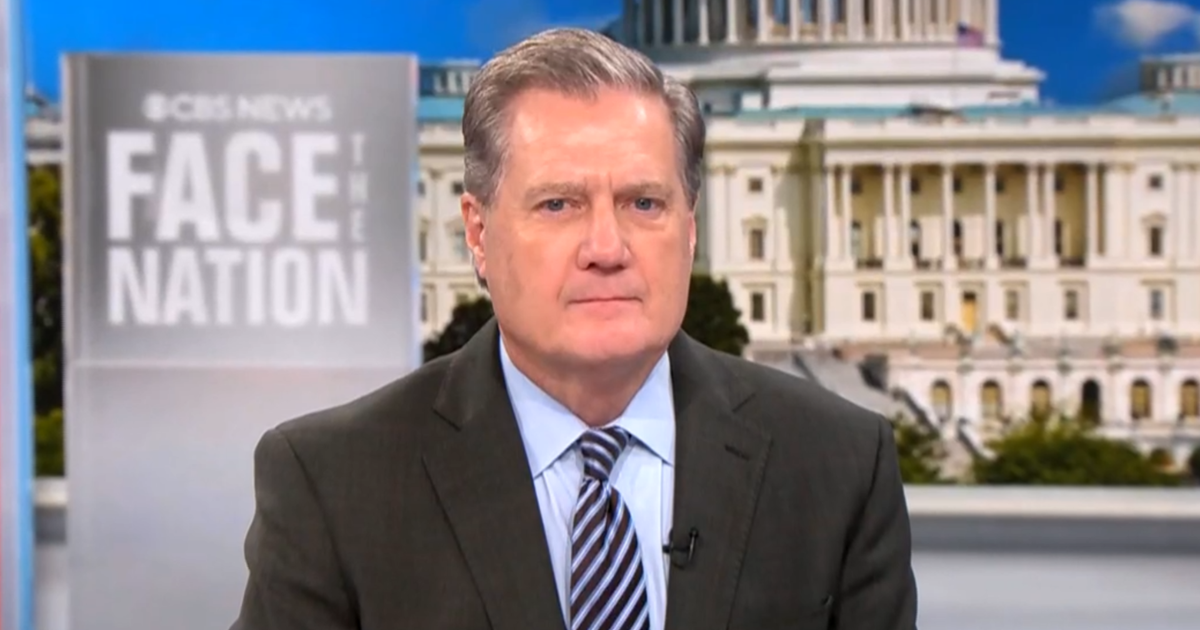
Republican Rep. Mike Turner has voiced strong concerns over the latest White House-backed efforts to broker peace in Ukraine, stating that “you can’t be America First and pro-Russia.” As Ukrainian negotiators met with U.S. officials including Marco Rubio, Special Envoy Steve Witkoff, and Jared Kushner, Turner emphasized that Russia remains a self-declared adversary of the United States, actively developing advanced nuclear weapons and launching cyberattacks against Western interests.
Upholding Ukraine’s Sovereignty
Turner stressed that any peace arrangement must prioritize Ukraine’s sovereignty and security, warning that Russia’s aggression extends beyond Ukraine to threaten NATO and the broader West. He urged President Trump to listen directly to Ukrainian President Zelenskyy, not just to Russian President Putin, highlighting the importance of supporting democratic values and resisting authoritarian expansion.
Call for Cautious Negotiations
With bipartisan concern growing, Turner called for caution in negotiations, reminding Americans that supporting Ukraine is about defending shared principles of freedom and democracy. He warned that unchecked Russian aggression could embolden further threats to global stability, making it essential for the U.S. to remain vigilant and supportive of Ukraine’s fight for independence.
About the People Mentioned
Mike Turner
Michael R. Turner is a Republican congressman representing Ohio's 10th District, serving in the U.S. House of Representatives since 2003.[5] Born in 1960, he is a lifelong resident of Southwest Ohio, where his father worked in manufacturing for over 40 years.[1] Before his congressional career, Turner practiced law in Dayton for over 17 years, specializing in real estate and corporate law, and opened his own private legal practice in 1991.[1] He served as Mayor of Dayton for eight years, during which he focused on neighborhood revitalization and economic development. As mayor, he created Rehabarama, a private-public partnership that rehabilitated neglected housing in historic neighborhoods and received national awards.[1][3] He improved police response time by 40 percent, added 54 police officers to the force, and established a development fund that awarded over $19 million in grants for housing and job-producing projects, all while maintaining a balanced budget throughout his tenure.[1] In Congress, Turner has been a strong advocate for Wright-Patterson Air Force Base, which is located in his district and remains Ohio's largest single-site employer. Throughout his time in Congress, the base has successfully added approximately 19,000 jobs on-site.[1] He helped secure $182 million in federal funding for the construction of a new National Air and Space Intelligence Center.[1] Turner serves as a senior member of the House Armed Services Committee and currently chairs the Tactical Air and Land Forces Subcommittee, which oversees ammunition programs, Army and Air Force acquisition programs, and Navy and Marine Corps aviation programs.[2] He previously chaired the Strategic Forces Subcommittee, which had jurisdiction over the nation's nuclear arsenal, Department of Defense intelligence programs, and missile defense systems.[2] Internationally, Turner was appointed Chairman of the U.S. Delegation to the NATO Parliamentary Assembly in January 2011 and was elected President of the NATO Parliamentary Assembly in December 2014.[1] He currently serves as Vice-Chairman of the Defense and Security Committee of the NATO Parliamentary Assembly.[1]
Marco Rubio
Marco Rubio is an American politician born on May 28, 1971, in Miami, Florida, to Cuban immigrant parents. He gained prominence as a leading figure in the Republican Party and currently serves as the 72nd U.S. Secretary of State, a position he assumed in January 2025 after unanimous Senate confirmation[1][3]. Rubio's political career began in Florida, where he served as a city commissioner in West Miami and later as the Speaker of the Florida House of Representatives. During his tenure as Speaker, he implemented several reforms, including compiling "100 Innovative Ideas for Florida's Future," which led to significant legislative changes[2]. He was elected to the U.S. Senate in 2010, representing Florida until 2025. Rubio has been a key voice in U.S. foreign policy, particularly concerning Latin America, China, and the Middle East, and has championed bipartisan legislation on issues like immigration and human rights[1][4]. Rubio gained national attention for his role in the bipartisan "Gang of Eight" immigration reform effort and his 2016 presidential campaign, which ended with his endorsement of Donald Trump in the Florida primary[1][3]. He has also been a proponent of conservative populism, aligning himself with Trump's policies[3]. Recently, Rubio was nominated by Trump to serve as Secretary of State and, in April 2025, was also named acting National Security Advisor[3]. Rubio is married to Jeanette Dousdebes Rubio, and they have four children together. He holds a bachelor's degree from the University of Florida and a law degree from the University of Miami School of Law[4]. His appointment as Secretary of State marks a significant milestone, as he is the first Latino to hold the position[1].
Steve Witkoff
Steve Witkoff is an American real estate developer, investor, and attorney, born on March 15, 1957, in the Bronx, New York. He began his career as a real estate lawyer, working for prominent New York firms such as Dreyer & Traub and Rosenman & Colin, where he represented major developers and investors. In 1985, Witkoff co-founded Stellar Management with Laurence Gluck, acquiring and managing residential properties in New York City, particularly in Harlem, Washington Heights, and the Bronx. The firm later expanded into Manhattan office buildings, including the notable 33 Maiden Lane, which was leased to the Federal Reserve Bank of New York. In 1997, Witkoff founded the Witkoff Group, a privately held real estate company headquartered in New York City. Under his leadership, the Witkoff Group has financed, repositioned, and constructed more than 70 properties across major U.S. cities and internationally, with offices in New York, Los Angeles, and Miami. The company has been involved in high-profile acquisitions such as the Daily News Building, the Woolworth Building, and the Park Lane Hotel in Manhattan. Witkoff has also led major redevelopment projects, including the revitalization of the Shore Club in Miami Beach and the One High Line condominium in Manhattan. Witkoff is recognized for his expertise in real estate finance and development, and his company has partnered with international investors and sovereign wealth funds. In 2024, following the U.S. presidential election, Witkoff was named co-chair of President-elect Donald Trump’s inaugural committee and appointed as U.S. Special Envoy to the Middle East, focusing on diplomatic efforts related to the Israel-Hamas conflict and broader regional negotiations. Witkoff’s recent activities include high-value property transactions in Miami Beach and continued involvement in major real estate developments across the United States.
Jared Kushner
Jared Corey Kushner, born January 10, 1981, in Livingston, New Jersey, is an American businessman, investor, and former senior advisor to President Donald Trump. He is the son of real estate developer Charles Kushner and took over Kushner Companies after his father's legal troubles. Kushner built a notable career in real estate, including the 2007 purchase of 666 Fifth Avenue in Manhattan for $1.8 billion, and acquiring the New York Observer newspaper in 2006, where he served as publisher. Kushner married Ivanka Trump in 2009, linking him to the Trump family. He played a significant role in Donald Trump's 2016 presidential campaign, managing digital strategy and social media, and was instrumental in creating the campaign’s proprietary voter database. In January 2017, Kushner was appointed senior advisor to President Trump, leading initiatives such as criminal justice reform, notably helping pass the First Step Act in 2018, and spearheading efforts in the Middle East peace process, authoring the Trump peace plan and facilitating the Abraham Accords, which normalized relations between Israel and several Arab states in 2020. During his White House tenure, Kushner directed the Office of American Innovation, aiming to apply private-sector practices to government operations. His involvement in the 2016 campaign and subsequent contacts with Russian officials drew scrutiny during investigations into election interference, though he denied any wrongdoing. After leaving the White House in 2021, Kushner moved to Florida and began private equity ventures. In 2022, he published a memoir titled *Breaking History: A White House Memoir*. He and Ivanka Trump have since focused on their family and business interests, notably stepping back from active roles in Trump's 2024 presidential campaign. Kushner remains relevant as a figure blending political influence with business and diplomatic engagements, including recent involvement in Middle East-related initiatives[1][2][4][7].
Volodymyr Zelenskyy
Volodymyr Oleksandrovych Zelenskyy, born on January 25, 1978, in Kryvyi Rih, Ukraine, is a Ukrainian politician and former entertainer. He is the sixth president of Ukraine, having taken office in 2019. Before entering politics, Zelenskyy was a well-known comedian, actor, screenwriter, film producer, and director. He graduated with a law degree from Kyiv National Economic University in 2000 but never practiced law. Instead, he co-founded the production company Kvartal 95, which produced films, cartoons, and TV shows, including the popular series "Servant of the People," where he played a fictional Ukrainian president. Zelenskyy's political career began when he announced his candidacy for the 2019 presidential election on New Year's Eve in 2018. He positioned himself as an anti-establishment and anti-corruption figure, which resonated with the public. He won the election with a landslide victory of 73.23% in the second round, defeating incumbent President Petro Poroshenko. Upon taking office, Zelenskyy dissolved the Verkhovna Rada and called for snap elections, which resulted in his party, Servant of the People, gaining an absolute majority in parliament. As president, Zelenskyy has faced significant challenges, including the ongoing conflict with Russia. His leadership during the full-scale Russian invasion of Ukraine, which began in February 2022, has made him a global figure of resistance. He has been recognized for his efforts, including being named Time Magazine's Person of the Year in 2022. Zelenskyy is married to Olena Zelenska and has two children. His presidency has been marked by a strong focus on national unity and international diplomacy to secure support for Ukraine during the ongoing conflict.
Vladimir Putin
Vladimir Putin is the current President of Russia, a position he has held for multiple terms since 2000, with a brief interlude as Prime Minister from 2008 to 2012[1][3]. Born in Leningrad (now Saint Petersburg) in 1952, Putin began his career in the Soviet Union’s security services, joining the KGB in 1975 and rising to the rank of Lieutenant Colonel by the time he left in 1991, following postings in East Germany and Leningrad[4]. After the Soviet Union’s collapse, he transitioned into politics, serving as an adviser to Saint Petersburg Mayor Anatoly Sobchak and later moving to Moscow, where he held various administrative roles under President Boris Yeltsin[6]. Putin was appointed Prime Minister in August 1999 and became acting President when Yeltsin unexpectedly resigned that December[3][6]. He won his first presidential election in March 2000, promising to stabilize Russia’s economy and political system after the tumultuous 1990s[3][7]. During his initial terms, he centralized power, reasserted federal control over Russia’s regions, and curtailed the influence of the country’s oligarchs through legal and economic measures[7]. Putin was re-elected in 2004 but, due to constitutional term limits, stepped aside in 2008, becoming Prime Minister under his successor Dmitry Medvedev, while retaining significant influence[3]. Constitutional amendments later extended presidential terms, and Putin returned to the presidency in 2012[1]. Putin’s time in office has been marked by assertive foreign policy, including military interventions in Syria in support of President Bashar al-Assad and the 2014 annexation of Crimea, which led to international sanctions[1]. Domestically, his tenure has seen increased state control over media, the suppression of political opposition, and constitutional changes consolidating executive authority[1]. In 2022, Russia’s full-scale invasion of Ukraine triggered a major international crisis, further isolating Russia from the West and prompting widespread condemnation[1]. As of 2025, Putin remains a dominant figure in Russian politics, having secured another term in office through constitutional changes that allow him to potentially remain president until 2036[1]. His leadership continues to shape Russia’s domestic trajectory and its role in global affairs, amid ongoing conflict in Ukraine and strained relations with NATO and Western countries[1].
Donald Trump
Donald John Trump, born June 14, 1946, in Queens, New York, is an American businessman, media personality, and politician. He graduated from the University of Pennsylvania’s Wharton School in 1968 with a degree in economics. In 1971, he took over his family’s real estate business, renaming it the Trump Organization, through which he expanded into building and managing skyscrapers, hotels, casinos, and golf courses. Trump gained widespread fame as the host of the reality TV show *The Apprentice* from 2004 to 2015, which helped establish his public persona as a successful entrepreneur. Trump entered politics as a Republican and was elected the 45th president of the United States, serving from 2017 to 2021. His presidency was marked by significant policy actions including tax cuts, deregulation, the appointment of three Supreme Court justices, renegotiation of trade agreements (notably replacing NAFTA with the USMCA), and a focus on immigration control including border wall expansion. He withdrew the U.S. from international agreements such as the Paris Climate Accord and the Iran nuclear deal, and engaged in a trade war with China. His administration’s response to the COVID-19 pandemic was criticized for downplaying the virus’s severity. Trump was impeached twice by the House of Representatives—first in 2019 for abuse of power and obstruction, and again in 2021 for incitement of insurrection—but was acquitted by the Senate both times. After losing the 2020 election to Joe Biden, Trump challenged the results, culminating in the January 6, 2021, Capitol riot. He remains a central figure in American politics, having won the 2024 presidential election and returned as the 47th president in 2025, continuing to promote policies aimed at economic growth, border security, and military strength[1][2][3][4].
About the Organizations Mentioned
White House
The **White House Office** is a central organizational component within the Executive Office of the President of the United States (EOP), tasked with supporting the President in managing day-to-day operations, policy formulation, and political affairs. It is headed by the White House Chief of Staff and staffed by senior aides who report directly to the President, including those with titles such as Assistant to the President and Deputy Assistant to the President. These staff members are mostly political appointees without the need for Senate confirmation, allowing the President considerable discretion in shaping the office to suit each administration's priorities[1]. Historically, the White House Office was established in 1939 through Reorganization Plan 1 and Executive Order 8248 to provide immediate assistance to the President. It functions as the nerve center for presidential staff, physically located primarily in the West Wing, and plays a pivotal role in managing the President’s policy agenda, communications, and political strategy. Its flexible organization allows each President to tailor the staff composition and roles according to their governance style and objectives[1]. In the current context of 2025, the White House Office operates under the administration of President Donald J. Trump, who returned to office after the 2024 election. His administration emphasizes rejecting prior policies deemed extremist and focuses on enhancing quality of life, economic growth, and American energy dominance. The administration includes Vice President JD Vance and First Lady Melania Trump, among others, with a Cabinet advising on various governmental functions[4][6]. Recent initiatives linked to the White House’s operational sphere include the establishment of a new **Department of Government Efficiency (DOGE)** aimed at modernizing federal technology and software to boost government productivity. The DOGE agenda is implemented through the renamed United States DOGE Service within the Executive Office, reflecting a concerted push to leverage technology for administrative modernization[5]. Notably, the White House Office also coordinates national security and homeland security functions through the National Security Council staff, underscoring its central role
NATO
The **North Atlantic Treaty Organization (NATO)** is a transatlantic military alliance founded in 1949 to secure peace in Europe and protect democratic nations from Soviet aggression. It began with 12 founding members and has expanded to include 32 countries across North America and Europe as of 2025, including recent additions Finland (2023) and Sweden (2024)[1][3]. NATO's core principle is collective defense, meaning an attack against one ally is considered an attack against all, enshrined in Article 5 of its founding treaty[3]. Originally established as a Cold War bulwark, NATO has evolved beyond its initial Euro-Atlantic focus, engaging in missions worldwide, such as in Afghanistan and Libya[1]. The alliance remains central to U.S.-Europe military cooperation and has adapted to new security challenges, particularly Russia’s 2022 invasion of Ukraine, which has significantly reshaped NATO’s priorities. This aggression has spurred increased defense spending, stronger collective deterrence efforts, and accelerated Ukraine’s path toward potential membership[1][4]. In June 2025, NATO held its first summit in the Netherlands, where leaders agreed on raising defense spending targets to 5% of GDP—split between 3.5% for core defense and 1.5% for related security costs, including support for Ukraine. This marked a historic commitment to bolster the alliance’s military capabilities amid evolving global threats. The summit also emphasized eliminating defense trade barriers and reaffirmed the ironclad commitment to collective defense[2][5]. NATO’s ongoing significance lies in its role as a strategic security platform fostering cooperation among member states, responding to geopolitical instability, and adapting to emerging threats like terrorism and cyber warfare[4]. Its "open door" policy continues to invite eligible European democracies to join, reinforcing its mission to safeguard peace, democracy, and shared technological and defense innovations across allied nations[1][4].