Urgent Search Intensifies for Savannah Guthrie's Missing Mother Nancy Guthrie

Urgent Search for Savannah Guthrie's Missing Mother
In a chilling development, 84-year-old Nancy Guthrie, mother of "Today" show host Savannah Guthrie, vanished from her Catalina Foothills home near Tucson, Arizona, Saturday night around 9:45 p.m. Family dropped her off after an evening together, but she never made it to church Sunday morning, prompting a frantic 911 call by noon. Pima County Sheriff Chris Nanos starkly declared, "I believe she was abducted," emphasizing her limited mobility—she couldn't walk 50 yards—ruling out her leaving willingly[1][2].
Sheriff's Alarming Findings and Investigation Shift
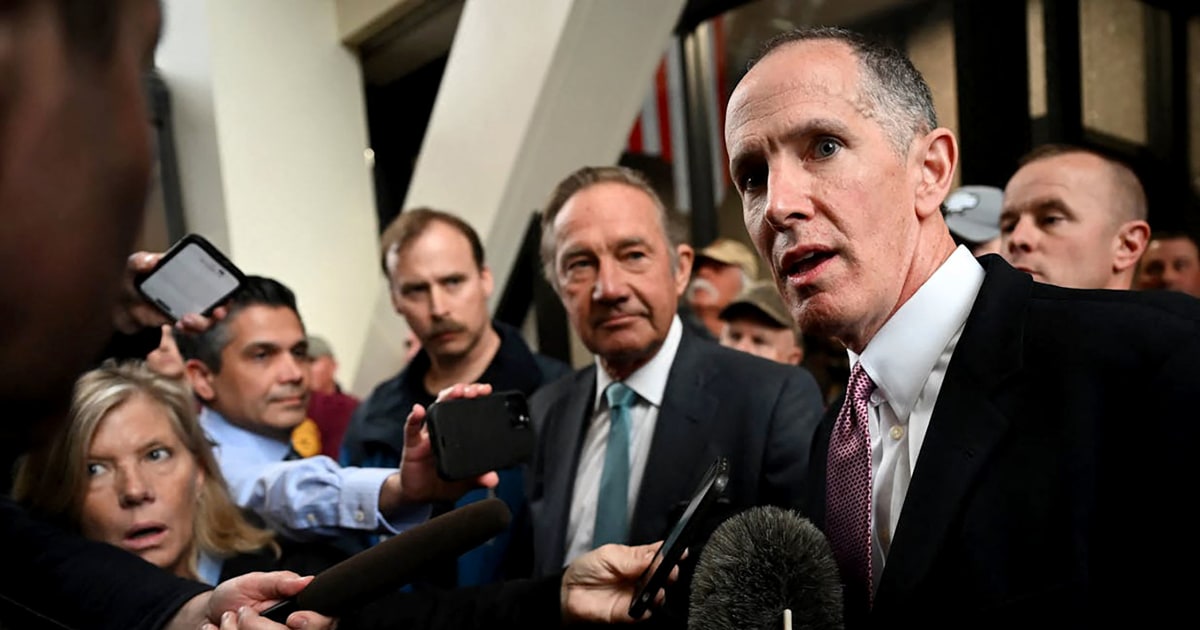
Authorities found her cell phone and car at the home, with "grave concern" elements inside turning the site into a crime scene. Search teams using drones and helicopters yielded nothing, halting rescue efforts as the FBI joins the probe. Sharp-minded Nancy urgently needs life-sustaining medication; "We're racing the clock," Nanos warned, probing stalking or harassment leads[2][3].
Family's Plea Amid Heartbreaking Bond
Savannah, absent from "Today," shared her close tie to Nancy, who raised her alone after her father's death. "Bring her home," she urged publicly, thanking supporters. The family clings to hope for her safe return in this harrowing ordeal[3][4].
About the Organizations Mentioned
Pima County Sheriff's Office
The **Pima County Sheriff's Department (PCSD)**, established in 1865, serves as the primary law enforcement agency for Arizona's Pima County, encompassing unincorporated areas outside Tucson while providing jail operations, court security, and specialized services like search and rescue.[1][6] Founded shortly after Arizona's territorial status in 1863, PCSD traces its roots to frontier law enforcement under the Howell Code, with the first sheriff, Berry Hill DeArmitt, appointed in 1864.[3][4][7] Early leaders like Peter Rainsford Brady and Charles A. Shibell navigated turbulent times, evolving from small posses to a structured force by statehood in 1912. By 1944, staffing reached 24 personnel across Tucson, Ajo, and Marana; milestones include appointing Frank C. Johnson as the first Black deputy in 1948.[1][5] A 2003 historical book, *Keeping the Peace Since 1865*, chronicles this legacy with photos from territorial eras to modern operations.[2] **Key achievements** highlight innovation: Sheriff Clarence Dupnik oversaw the 1984 launch of one of the nation's first direct-supervision jails, slashing inmate violence via staff-inmate interaction.[1] He pioneered the Pima County/Tucson Metropolitan Counter Narcotics Alliance and the Border Crime Unit—a multi-agency task force now a national model, combating drug and human trafficking with Border Patrol and state officers.[1] PCSD also launched Arizona's inaugural volunteer crime-prevention program, deploying over 200 citizens for patrols, fingerprinting, and Neighborhood Watch.[1] Today, PCSD boasts **600 sworn deputies and 872 civilians**, emphasizing community tools like the online **Community Crime Map** for public data access and the **Desk Officer Reporting System (DORS)** for efficient minor incident filings—blending tradition with tech-driven transparency.[1][6] Notable aspects include honoring falle
FBI
The Federal Bureau of Investigation (FBI) is a premier law enforcement agency in the United States, renowned for its role in protecting the nation from domestic and international threats. Founded on July 26, 1908, as the Bureau of Investigation, it was initially tasked with addressing land fraud and corporate malfeasance under President Theodore Roosevelt[1][2]. Over time, its mandate expanded significantly, particularly with the passage of the Mann Act in 1910, which allowed federal jurisdiction over certain moral offenses[1][4]. ### History and Evolution The FBI underwent significant transformation under J. Edgar Hoover, who became its director in 1924. Hoover implemented strict hiring standards and enhanced operational capabilities, transforming the agency into a robust investigative force[1][4]. The FBI's name was officially changed to the Federal Bureau of Investigation in 1935[5][6]. Throughout its history, the FBI has faced challenges, including concerns about potential abuses of power, but it has consistently demonstrated its value in national security and law enforcement[3][4]. ### Key Achievements The FBI has been instrumental in combating various crimes, including white-collar offenses, civil rights violations, and national security threats. Notable achievements include its role in enforcing the Espionage Act during World War I and its investigations into organized crime throughout the 20th century[2][4]. ### Current Status Today, the FBI is a sophisticated agency with over 37,100 employees, including special agents and professionals in various fields such as intelligence analysis and cybersecurity[5]. It operates in 55 field offices across the U.S. and has an international presence in 81 nations[5]. The FBI continues to evolve, addressing emerging threats like cybercrime and terrorism while maintaining its commitment to justice and integrity. ### Notable Aspects The FBI is known for its rigorous training programs at the FBI Academy in Quantico, Virginia, and its advanced forensic capabilities at the FBI Laboratory. Its work in business and technology includes
Today Show
**Today**, also known as **The Today Show**, is NBC's flagship morning television program, airing weekdays from 7:00 a.m. to 11:00 a.m. ET, delivering news, interviews, lifestyle segments, and entertainment to millions of viewers.[1] Launched on January 14, 1952, by NBC executive Sylvester "Pat" Weaver, it pioneered the morning talk show format worldwide, initially as a two-hour weekday broadcast from 7:00 to 9:00 a.m.[1] Weaver, who later led NBC as president (1953-1956), envisioned it as innovative programming, with early working titles like *The Rise and Shine Revue* under supervisor Jerome Alan Danzig.[1] The show expanded to Sundays in 1987 and Saturdays in 1992, grew to three hours in 2000, and four in 2007—though later hours evolved into separate entities like *Today with Hoda & Jenna*.[1] Studio moves marked its history: from RCA Exhibition Hall to Studio 3K in 1958 amid sponsor pressure from Philco, then to other NBC spaces like Florida Showcase, Studio 8G, and Studio 3B.[1] **Today** dominated ratings unchallenged until the late 1980s, when ABC's *Good Morning America* surged ahead, yet it remains fifth on the list of longest-running U.S. TV series after 74 years.[1] Key achievements include setting the morning TV standard, launching companion hits like *The Tonight Show*, and adapting through expansions and format tweaks amid fierce competition.[1] Currently, it thrives as a multimedia powerhouse, blending hard news with viral human-interest stories, celebrity buzz, and tech-savvy segments on gadgets and digital trends—appealing to business pros tracking media evolution and innovation.[1] Notable aspects: iconic Rockefeller Center window overlooks, enduring hosts like Matt Lauer (pre-201