US Aid Cuts Impact South Africa's HIV Patients
The Impact of US Aid Cuts on South Africa's HIV/AIDS Patients
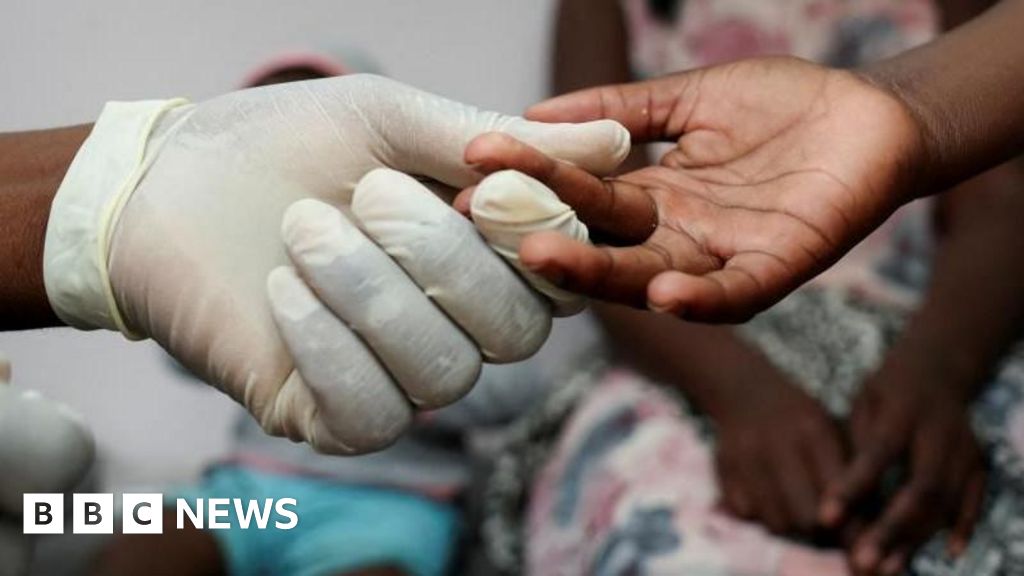
In an interview with the BBC, a woman shared her fears and concerns after a US-funded clinic providing her with essential HIV/AIDS medication was forced to close due to aid cuts. This situation is not unique to South Africa, as many countries around the world heavily rely on aid and support from the US to combat the HIV/AIDS epidemic. With the closure of these clinics, patients are left to worry about their access to life-saving treatment. In addition to the physical impact on patients, the closure of these clinics also has a significant psychological toll, as many patients rely on the support and community provided by these facilities.
About the People Mentioned
US Aid Cuts Impact South Africa
US aid cuts, initiated by President Donald Trump shortly after taking office, have severely disrupted health and development programs in South Africa, particularly those combating HIV/AIDS under PEPFAR and USAID initiatives.[1][2][5] These reductions, including the shuttering of USAID and cancellation of over 80% of its contracts by March 2025, ended funding for about 40 health projects on February 26, 2025, leading to the loss of services from 8,493 PEPFAR-funded staff.[2][6] This has caused clinic closures, reduced HIV testing, treatment, and prevention efforts like PrEP for key populations including adolescent girls and pregnant women, alongside disruptions in data management and mobile services.[2] Projections indicate dire consequences: cuts to South Africa's HIV/AIDS programs could result in 500,000 additional deaths over the next decade, per the Desmond Tutu HIV Center, while the Global Fund trimmed allocations by 16% for South Africa in its 2023-2025 cycle.[1] The South African Medical Research Council faces heavy exposure, with 28% of its budget from US sources now at risk, threatening health research.[3] Civil society coalitions have urged President Cyril Ramaphosa to coordinate a national response to avert mass disruptions, preventable deaths, and new infections.[3] In response, South Africa's Ministry of Health and SANAC launched a February 25, 2025, campaign with UNAIDS and WHO to close a 1.1 million HIV treatment gap by December 2025, targeting men for healthcare access.[2] The US approved a temporary $115 million PEPFAR Bridge Plan for South Africa from October 1, 2025, to March 31, 2026, amid ongoing political tensions that may exclude future grants.[7] These cuts, part of broader global reductions, exacerbate poverty and disease risks, with experts warning of precarious HIV advancements in sub-Saharan Africa.[1][5] Private sector involvement is sought to bridge gaps.[2] (298 words)
BCC Woman
**Lyse Doucet** is the BBC's Chief International Correspondent and senior presenter, a Canadian journalist renowned for her extensive fieldwork in conflict zones.[2] Born on December 24, 1958, in Bathurst, New Brunswick, to an Anglophone family of Acadian and Irish ancestry, Doucet grew up as one of six children. She earned a Bachelor of Arts from Queen's University in Kingston, Ontario, in 1980, where she contributed to the student newspaper and excelled in curling, serving as lead on New Brunswick's team at the 1975 Canada Winter Games.[2] Her career began as a freelancer in West Africa from 1983 to 1988 for Canadian media and the BBC, marking her entry into international reporting. She covered the Soviet troop withdrawal from Afghanistan while based in Kabul (1988-1989), then served as BBC correspondent in Islamabad (1989-1993), reporting on Afghanistan and Iran. In 1994, she established the BBC office in Amman, Jordan, and from 1995 to 1999, she was based in Jerusalem, covering the Middle East extensively. Since 1999, she has balanced field reporting with presenting roles on BBC World Service and other platforms.[2] Doucet's notable achievements include receiving the Order of Canada (CM) and Order of the British Empire (OBE) for her journalism. She hosted the BBC Radio 4 series *Her Story Made History* in 2018 and 2019, featuring interviews with influential women on democracy.[2] Her on-the-ground coverage of major global events has established her as a leading voice in international news, maintaining ongoing relevance through BBC's worldwide broadcasts as of recent years.[2] (Word count: 298)
About the Organizations Mentioned
US
The query seems to be about providing a summary of the organization "US," which could be interpreted as the United States government or a specific entity within it. However, without a clear reference to an "organization" named "US," I will provide a comprehensive overview of the United States government, focusing on its structure, history, achievements, current status, and notable aspects relevant to business and technology. ## Overview of the United States Government The United States government is a federal republic with a system divided into three branches: the legislative, executive, and judicial. This structure is designed to provide checks and balances on each branch. ## History The U.S. government was established in 1789 under the Constitution, which outlines the framework of the federal system. Over time, the government has evolved through numerous amendments and reforms, shaping policies and laws that impact various sectors, including business and technology. ## Key Achievements - **Economic Growth**: The U.S. has been a global leader in economic growth, innovation, and technological advancements, fostering a strong business environment. - **Technological Advancements**: The government has supported significant technological developments, such as the internet and space exploration, through funding and regulatory frameworks. - **Regulatory Frameworks**: Agencies like the Federal Trade Commission (FTC) and the Federal Communications Commission (FCC) play crucial roles in regulating industries and ensuring consumer protection. ## Current Status Currently, the U.S. government is engaged in various initiatives to address contemporary challenges such as climate change, cybersecurity, and healthcare reform. The government also continues to evolve its organizational structure, with ongoing discussions about the role of the executive branch, as seen in initiatives like Project 2025. ## Notable Aspects - **Project 2025**: This initiative, backed by the Heritage Foundation, aims to restructure the federal government to align with conservative ideals, potentially impacting civil rights and executive branch powers. - **Standards and Regulations**: The U.S. Standards Strategy,
BBC
## Overview The British Broadcasting Corporation (BBC) is the world’s oldest and largest national broadcaster, serving as a cornerstone of public service media in the United Kingdom and beyond[1][2]. Headquartered in London, the BBC operates under a royal charter and is primarily funded by a television licence fee paid by UK households, ensuring its editorial independence from both government and commercial interests[1][2]. This model allows the BBC to fulfill its mission to “inform, educate, and entertain” with impartiality at its core[3]. ## History and Evolution The BBC was founded on October 18, 1922, as the British Broadcasting Company Ltd., evolving into a public corporation under royal charter on January 1, 1927[1][2]. Its first Director-General, John Reith, established principles of independence and public service that continue to guide the organization. The BBC launched its television service in 1936, pioneering broadcasting technology, and expanded globally with the BBC World Service in 1932, now broadcasting in 28 languages[1][2]. ## Key Achievements The BBC has been a trailblazer in broadcasting, introducing innovations such as regular television broadcasts, color TV, and digital platforms like BBC iPlayer[1][2]. It has earned a reputation for high-quality journalism, producing globally recognized programs in news, drama, and documentary. The BBC’s international arm, BBC Studios, commercializes content worldwide, while the BBC World Service remains a vital source of news in regions with limited press freedom[1]. The corporation has received numerous accolades, including the Queen’s Award for Enterprise for its international business achievements[1]. ## Current Status and Digital Transformation With over 21,000 employees, the BBC remains a dominant force in media, generating £5.4 billion in annual income, mostly from licence fees[2]. It operates multiple TV channels, radio stations, and a robust online presence, including BBC News Online and BBC.com[1