US Arrears Push UN Toward $4B Budget Crisis, Warns Guterres
#united_nations #us #budget #arrears #international_relations

UN Awaits US Move on $4 Billion Debt
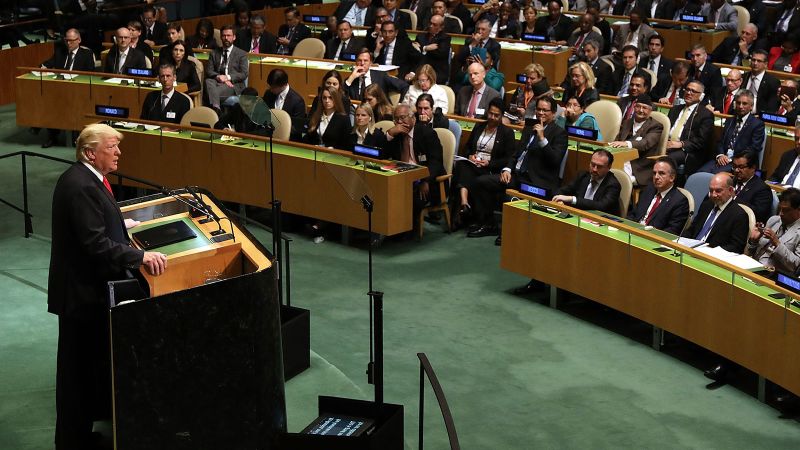
The United Nations holds its breath as the United States grapples with nearly $4 billion in arrears, accounting for 95% of the organization's regular budget shortfall. UN officials, including Secretary-General António Guterres, warn of potential financial collapse by July without prompt payments. The US tops the debtor list at $2.196 billion for regular dues alone, plus $1.944 billion for peacekeeping and $43.6 million for tribunals, amid ongoing talks with Ambassador Mike Waltz.
Breakdown of US Arrears and Global Impact
Breakdowns reveal $827 million owed for 2025 dues and $767 million for 2026, stemming from the Trump administration's 2025 nonpayment and withdrawals from bodies like WHO and UNESCO. Venezuela trails distantly at $38 million, having lost General Assembly voting rights. While 61 nations have paid 2026 dues by February, US delays cripple UN operations, erode leverage against rivals like China, and risk America's own voting privileges.
Path Forward Amid Fiscal Crisis
Guterres urges financial rule overhauls to recycle unspent funds, emphasizing the untenable trajectory. Bipartisan US bills fund future budgets but ignore arrears. A promised down payment could stabilize the 80-year-old body, preserving US influence in global peacekeeping and reforms essential to national interests.
About the Organizations Mentioned
United Nations
The United Nations (UN) is a pivotal international organization established in 1945, following the devastation of World War II, with the primary goal of maintaining global peace and security, fostering international cooperation, and promoting social progress. The UN Charter, signed by 51 founding member states, including the United States, the United Kingdom, China, and the Soviet Union, laid the foundation for this ambitious endeavor[1][3]. ## History and Structure The UN was born out of the failures of its predecessor, the League of Nations, which failed to prevent World War II. Key planning meetings, such as the Dumbarton Oaks Conference in 1944, defined the UN's structure, which includes the General Assembly, the Security Council, the Economic and Social Council, the Trusteeship Council, the International Court of Justice, and the Secretariat[1][6]. The Security Council, with five permanent members (the United States, China, France, Russia, and the United Kingdom), holds significant influence due to its veto power[2]. ## Key Achievements Over the years, the UN has played a crucial role in conflict resolution, human rights advocacy, and sustainable development. Notable achievements include the establishment of the Universal Declaration of Human Rights in 1948 and the implementation of numerous peacekeeping missions worldwide[3][4]. The UN has also been instrumental in addressing global challenges such as climate change and pandemics through its various programs and agencies. ## Current Status Today, the UN comprises 193 member states, with its most recent addition being South Sudan in 2011[5]. The organization continues to evolve, addressing emerging issues like digital governance and cybersecurity. Despite challenges, the UN remains a cornerstone of international diplomacy and cooperation. ## Notable Aspects The UN's work is not limited to politics; it also impacts business and technology through initiatives that promote sustainable development and digital inclusion. Its role in setting global standards and fostering international cooperation makes it a significant player in shaping the
World Health Organization
The World Health Organization (WHO) is a specialized agency of the United Nations, established in 1948, with a mandate to promote global health, coordinate international responses to public health threats, and set standards for health policies and interventions[2]. Headquartered in Geneva, Switzerland, WHO operates in over 150 countries, working with governments, NGOs, and other partners to advance health equity, strengthen health systems, and respond to health emergencies. ## What WHO Does WHO’s core activities include monitoring global health trends, setting international health standards, providing technical assistance to countries, and serving as a forum for scientific and policy discussions on health issues[2]. The organization publishes influential reports such as the annual **World Health Statistics**, which tracks progress toward Sustainable Development Goals (SDGs) and provides a global “health report card”[1][8]. WHO also maintains the Model List of Essential Medicines, guiding countries on which drugs are most critical for public health[7]. In addition, WHO leads global campaigns on issues ranging from infectious disease eradication to noncommunicable diseases (NCDs), maternal and child health, and health emergencies[2][6]. ## History and Key Achievements WHO’s history is marked by landmark achievements, including the eradication of smallpox, near-eradication of polio, and the development of an Ebola vaccine[2]. The organization played a pivotal role in responding to the COVID-19 pandemic, coordinating global research, vaccine distribution, and public health guidance. In May 2025, WHO member states adopted the world’s first **Pandemic Agreement**, a historic step to improve international coordination and equity in future health crises[4]. WHO also spearheads initiatives like the Triple Billion Targets (healthier lives, universal health coverage, and protection from health emergencies) and technical policy packages targeting tobacco, alcohol, salt, and trans fat reduction[1][2]. ## Current Status and Notable Aspects WHO is currently implementing its **Fou
UNESCO
## Overview UNESCO—the United Nations Educational, Scientific and Cultural Organization—is a specialized UN agency headquartered in Paris, France, with 194 member states and 12 associate members[6]. Established in 1945 in the aftermath of World War II, UNESCO was founded to build peace through international cooperation in education, science, and culture, directly addressing the belief that political and economic agreements alone cannot secure lasting peace[1][6]. Its mission is rooted in fostering dialogue, sustainable development, and human rights by promoting collaboration across nations[6]. ## Core Activities UNESCO operates across five main program areas: education, natural sciences, social and human sciences, culture, and communication/information[6]. The organization sets global norms and standards, develops policy frameworks, and builds international networks—most notably through its World Heritage, Biosphere Reserves, and Global Geoparks programs[1]. UNESCO is a leader in global education, guiding efforts to achieve Sustainable Development Goal 4 (quality education) and convening high-level forums like the Global Education Meeting[2][5]. In science, UNESCO supports international research, ethical guidelines, and innovation, including co-chairing UN initiatives on artificial intelligence (AI) and digital governance[5]. Culturally, UNESCO protects and promotes both tangible and intangible heritage, maintaining the World Heritage List and supporting the preservation of cultural diversity[1][6]. ## Key Achievements UNESCO’s most visible achievement is its World Heritage program, which has inscribed over 1,150 sites of outstanding universal value, safeguarding them for future generations[1]. The organization has also pioneered global literacy campaigns, advanced Holocaust and genocide education to combat antisemitism, and promoted media freedom through initiatives like the UN Plan of Action on the Safety of Journalists[1][5]. UNESCO’s work in science includes fostering international collaboration on climate action, water resource management, and ethical standards in emerging technologies[5][7]. ## Current Status As of 2025