Steve Bannon's Poll Surround Threat and Trump's Election Takeover Push

Steve Bannon's Poll Surround Threat and Trump's Election Takeover Push
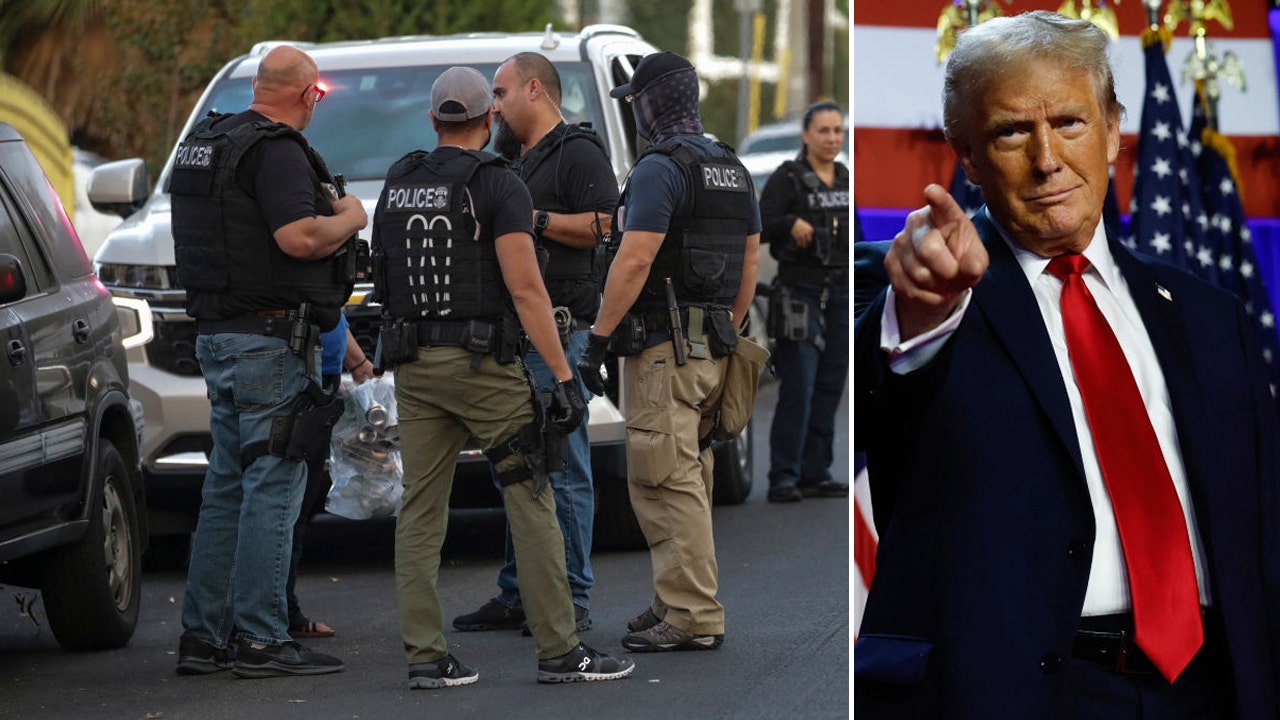
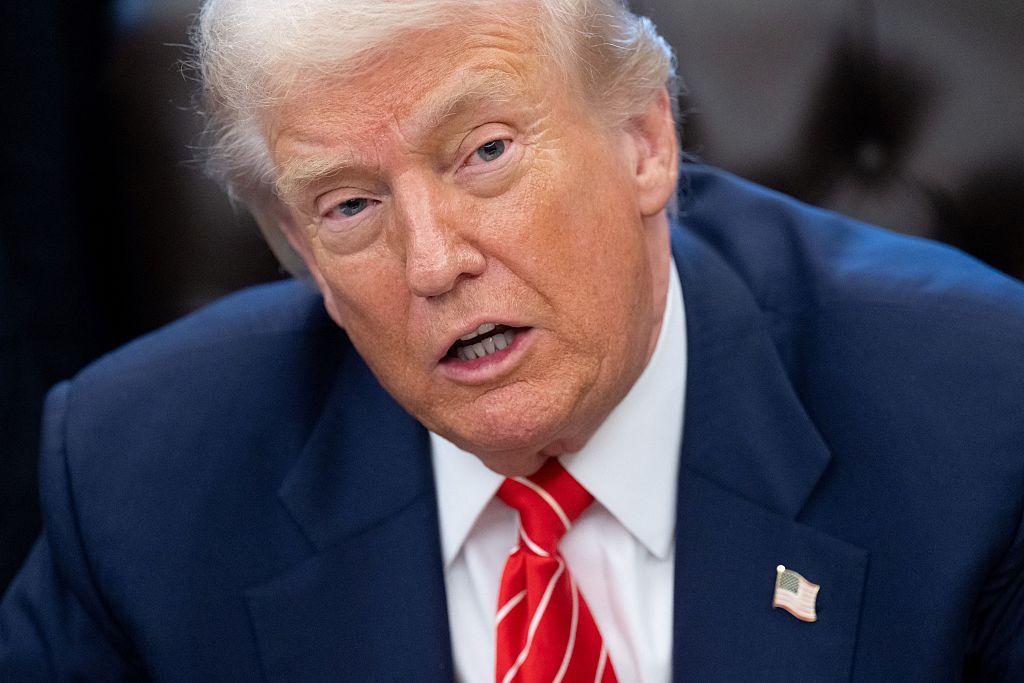
Former Trump advisor Steve Bannon ignited controversy by claiming ICE would "surround the polls" to combat alleged voter fraud, aligning with President Trump's aggressive calls to nationalize elections. During a recent Oval Office press conference, Trump asserted states act merely as federal agents in voting, questioning why the government doesn't directly manage elections nationwide. This rhetoric revives unfounded claims of illegal immigrant voting in cities like Detroit and Philadelphia.[1]
Unpacking Trump's Four-Part Nationalization Plan
Election law expert Mark Elias outlines Trump's strategy: first, baseless accusations of migrant fraud to justify federal intervention; second, targeting at least 15 states for GOP control; third, ballot seizures post-vote; and ultimately, full federal takeover ahead of 2026 midterms. Trump urged Republicans to "take over voting," echoing his Dan Bongino podcast remarks, while the Justice Department demands voter rolls from states like Minnesota.[1][2]
Constitutional Clash and Democratic Risks
Trump's vision collides with the U.S. Constitution, which reserves primary election authority to states, with Congress able to regulate only the "manner" via laws like uniform ID or audits—not presidential command. Legal scholars warn such moves lack basis and invite court challenges, threatening decentralized democracy as 2026 looms.[3]
About the People Mentioned
Dan Bongino
Dan Bongino is a public figure known for his diverse career in law enforcement, politics, and media. Born on December 4, 1974, in Queens, New York, he began his public service career with the New York Police Department (NYPD) in 1995. Bongino joined the U.S. Secret Service in 1999, where he served in various roles, including the Presidential Protective Division during the administrations of Presidents George W. Bush and Barack Obama[1][2]. During his tenure with the Secret Service, Bongino was recognized for his work on financial fraud investigations, earning a Department of Justice award. He concluded his Secret Service career in 2011 and went on to pursue other ventures. In 2012, he was the Republican nominee for the U.S. Senate in Maryland but lost the election[6]. Bongino has also built a career as a media personality. He hosts the popular podcast "The Dan Bongino Show" and has been a contributor to Fox News and other media outlets. He is a multiple-time New York Times Best Selling author and has written extensively on politics and government[2][3]. Recently, Dan Bongino was appointed as the Deputy Director of the FBI in February 2025 by Director Kash Patel. This appointment marks his return to government service, where he will oversee domestic and international investigative and intelligence activities[1][3]. Bongino's selection has been notable due to his conservative views and his role as a prominent commentator on political issues. His appointment does not require Senate confirmation, aligning with the typical process for the position[3].
Donald Trump
Donald John Trump, born June 14, 1946, in Queens, New York, is an American businessman, media personality, and politician. He graduated from the University of Pennsylvania’s Wharton School in 1968 with a degree in economics. In 1971, he took over his family’s real estate business, renaming it the Trump Organization, through which he expanded into building and managing skyscrapers, hotels, casinos, and golf courses. Trump gained widespread fame as the host of the reality TV show *The Apprentice* from 2004 to 2015, which helped establish his public persona as a successful entrepreneur. Trump entered politics as a Republican and was elected the 45th president of the United States, serving from 2017 to 2021. His presidency was marked by significant policy actions including tax cuts, deregulation, the appointment of three Supreme Court justices, renegotiation of trade agreements (notably replacing NAFTA with the USMCA), and a focus on immigration control including border wall expansion. He withdrew the U.S. from international agreements such as the Paris Climate Accord and the Iran nuclear deal, and engaged in a trade war with China. His administration’s response to the COVID-19 pandemic was criticized for downplaying the virus’s severity. Trump was impeached twice by the House of Representatives—first in 2019 for abuse of power and obstruction, and again in 2021 for incitement of insurrection—but was acquitted by the Senate both times. After losing the 2020 election to Joe Biden, Trump challenged the results, culminating in the January 6, 2021, Capitol riot. He remains a central figure in American politics, having won the 2024 presidential election and returned as the 47th president in 2025, continuing to promote policies aimed at economic growth, border security, and military strength[1][2][3][4].
About the Organizations Mentioned
Immigration and Customs Enforcement
**Immigration and Customs Enforcement (ICE)** is a federal law enforcement agency under the U.S. Department of Homeland Security (DHS). Established by the Homeland Security Act of 2002, ICE was created in response to the 9/11 attacks to enhance national security and protect public safety. The agency's primary mission is to enforce federal laws related to customs, trade, and immigration, focusing on cross-border crime and illegal immigration[1][2][3]. **History and Structure:** ICE was formed by merging the U.S. Customs Service and the Immigration and Naturalization Service. It operates with over 20,000 staff across more than 400 global offices, with an annual budget of approximately $8 billion[3]. The agency is structured into several key directorates, including **Enforcement and Removal Operations (ERO)**, which handles immigrant detention and deportation, and **Homeland Security Investigations (HSI)**, which investigates transnational crimes[1][2]. **Key Functions and Achievements:** ICE is known for its immigration enforcement efforts, particularly in interior regions of the U.S. It conducts investigations into human trafficking, terrorism, and other transnational crimes. Despite controversy over policies like family separation and detention conditions, ICE has made significant strides in combating illegal activities and protecting national security[4][6]. **Current Status and Notable Aspects:** Today, ICE continues to face challenges and controversy, particularly regarding its enforcement practices and impact on immigrant communities. The agency's actions can have profound effects on local economies and social services, as fear of ICE may deter undocumented immigrants from accessing essential services[6]. Despite these challenges, ICE remains a crucial component of U.S. immigration policy, working to balance enforcement with humanitarian concerns.
Justice Department
The United States Department of Justice (DOJ) is the principal federal agency responsible for enforcing federal laws, ensuring public safety, and protecting civil rights. Headquartered in Washington, D.C., the DOJ operates under the leadership of the Attorney General, who serves as a key member of the President’s Cabinet. As of 2025, Pam Bondi holds this position, having taken office in February and quickly shaping the department’s priorities. Established in 1870 during President Ulysses S. Grant’s administration, the DOJ’s roots trace back to the creation of the Attorney General’s office in 1789. Over the years, it has grown into a vast organization with more than 115,000 employees and over 40 component agencies, including the Federal Bureau of Investigation (FBI), Drug Enforcement Administration (DEA), and U.S. Marshals Service. The DOJ also houses specialized divisions for criminal, civil, antitrust, tax, civil rights, and national security matters, and oversees 94 U.S. Attorney offices nationwide. The DOJ’s mission centers on upholding the rule of law, safeguarding national security, and defending civil liberties. In 2025, the department has shifted its enforcement focus, prioritizing areas such as healthcare fraud, customs and tariff evasion, and corporate misconduct, especially involving foreign adversaries and financial gatekeepers. Recent policy changes have emphasized efficiency in investigations and reduced reliance on corporate compliance monitors, reflecting a broader effort to minimize regulatory burdens on businesses. Notably, the DOJ has also been tasked with reviewing past government conduct to address concerns about the “weaponization” of federal agencies, ensuring accountability and restoring public trust. For business and technology leaders, the DOJ’s evolving priorities—particularly in areas like cybersecurity, antitrust, and international trade—have significant implications for compliance, risk management, and corporate governance.
Congress
The United States Congress is the legislative branch of the federal government, playing a pivotal role in shaping the nation's policies and laws. As a bicameral legislature, it consists of the House of Representatives and the Senate, each with distinct responsibilities. The House represents congressional districts, while the Senate represents states, ensuring diverse perspectives are heard. **History and Structure:** Congress has a rich history, evolving over time to reflect the nation's demographic changes and political shifts. It is structured into committees that specialize in various policy areas, facilitating the legislative process. The National Archives and Records Administration maintains historical records of Congress, highlighting its ongoing role in governance. **Key Achievements:** Throughout its history, Congress has achieved numerous milestones, including landmark legislation such as the Civil Rights Act and the Affordable Care Act. It has also played a significant role in shaping the nation's economic policies, influencing business and technological advancements. **Current Status:** The 119th Congress, which convened in January 2025, marks significant changes with a Republican majority in both chambers. This setup has implications for policy-making, especially in areas like healthcare and technology regulation. The current Congress is also notable for its diversity, being the most racially and ethnically diverse in history. **Notable Aspects:** - **Diversity and Representation:** The 119th Congress is the most diverse in U.S. history, with increased representation from diverse ethnic backgrounds and the inclusion of the first openly transgender federal legislator. - **Technological Integration:** Congress uses technology to enhance legislative processes, such as through platforms like Congress.gov, which provides access to legislative information and resources. - **Economic Impact:** Congress's decisions have profound impacts on business and technology sectors, influencing regulatory environments and investment opportunities. In summary, the U.S. Congress is a dynamic institution that plays a crucial role in shaping the nation's policies, laws, and economic landscape. Its ongoing evolution reflects the changing needs and demographics of the country, making it a vital