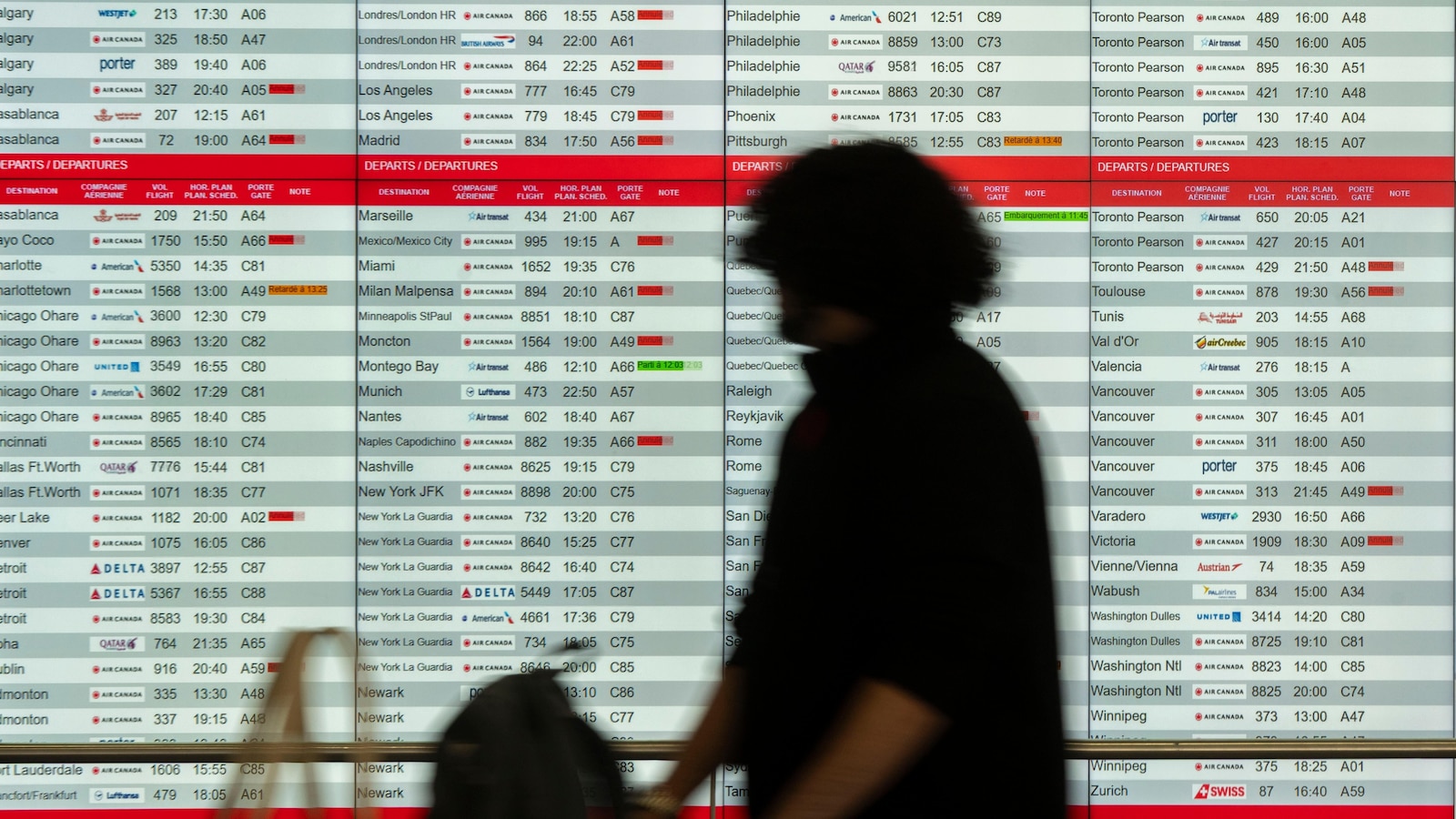
Air Canada Suspends Cuba Flights Amid Fuel Shortage
About the People Mentioned
Perplexity
**Perplexity AI** is an American software company founded in August 2022 by engineers Aravind Srinivas (CEO), Denis Yarats (CTO), Johnny Ho (Chief Strategy Officer), and Andy Konwinski, specializing in an AI-powered web search engine that delivers synthesized responses with real-time citations from internet sources.[1][2][3] The founders drew from experiences at OpenAI, Meta, Quora, and Databricks to address limitations in traditional search and early AI chatbots like ChatGPT, which often lacked verifiable sources.[1][2][3] Perplexity launched its flagship conversational "answer engine" on December 7, 2022, initially as a free public beta using OpenAI's GPT-3.5 and Microsoft Bing, later incorporating proprietary models based on Mistral-7B and LLaMA-2.[1][2][4] It pivoted from an earlier tool, Bird SQL, after Twitter's API changes in February 2023, focusing on direct answers over links.[1][2] Key achievements include rapid growth: 2 million monthly active users by March 2023, 10 million by January 2024, and 780 million queries processed monthly by 2025.[1][2][5] Funding milestones propelled valuations from $1 billion in April 2024 (after $165 million raised) to $14 billion in June 2025 ($500 million round), reaching $20 billion by September 2025.[3] Backed by investors like Jeff Bezos, Nvidia, and Shopify's Tobi Lutke, it introduced mobile apps, a Pro subscription, Chrome extension, and a publishers' revenue-sharing program in July 2024.[1][3][4] Recent events underscore ambition: In January 2025, Perplexity proposed merging with TikTok's U.S. operations ahead of a ban; in August 2025, it bid $34.5 billion for Google Chrome to address antitrust issues.[3] Today, Perplexity remains a leading AI search disruptor, blending LLMs like GPT-4, Claude, and Mistral for personalized, ad-free research, challenging Google with over 10 million users and unicorn status in under two years.[2][3][4][5] (Word count: 298)
About the Organizations Mentioned
Air Canada
Air Canada, founded in 1937 as Trans-Canada Air Lines (TCA), is Canada’s largest airline and the nation’s flag carrier, headquartered in Montreal. It was established by the Canadian government to provide transcontinental air service, originally operating under a government monopoly on domestic routes until deregulation began in the late 1950s[1][3][4]. The airline adopted the name Air Canada in 1965 and fully privatized by 1989 to compete in a more open market[1][2]. Air Canada serves over 220 destinations worldwide across six continents, operating a diverse and modern fleet of more than 400 aircraft, recognized for fuel efficiency and environmental considerations[7]. It is a founding member of the Star Alliance, enhancing its global connectivity through partnerships[2][7]. Major hubs include Toronto, Montreal, Vancouver, and Calgary, enabling extensive domestic and international network coverage[3][5]. Key milestones in Air Canada’s history include pioneering transcontinental flights in Canada, being the first North American airline to serve Moscow in 1966, and acquiring Canadian Airlines International in 2000, which positioned it as one of the world’s largest airlines[1][4]. The airline has faced challenges such as financial difficulties culminating in bankruptcy protection in 2003 and competition from low-cost carriers[5]. Despite this, it has maintained a significant role in Canadian and global aviation, carrying nearly 45 to 50 million passengers annually as of recent years[2][5]. Notably, Air Canada was the first airline globally to implement a computer reservation system with remote terminals in 1953, highlighting its early adoption of technology[3]. It holds a prestigious Four-Star ranking from Skytrax, reflecting high service standards among international airlines[7]. Overall, Air Canada represents a dynamic blend of historic legacy, technological innovation, and global reach, making it an influential player in the aviation business and a key facilitator of international trade and travel for Canada.
WestJet
**WestJet** is a major Canadian airline headquartered at Calgary International Airport, providing scheduled and charter flights to over 100 destinations across Canada, the United States, Europe, Mexico, Central America, and the Caribbean.[1][2][4][7] Originally launched as a low-cost carrier inspired by Southwest Airlines, it has evolved into a hybrid full-service model while emphasizing employee culture and customer value.[1][2][5] Founded on June 27, 1994, by Clive Beddoe, David Neeleman, and partners, WestJet began operations on February 29, 1996, with three Boeing 737-200s, 220 employees, and routes linking Calgary, Edmonton, Kelowna, Vancouver, and Winnipeg.[1][2][4][5][6] It quickly expanded domestically, adding eastern Canada hubs like Hamilton and Toronto by 2000, and went public in 1999 with shares rising from $10 to $18 by year-end.[3][4] International growth accelerated in 2004 with U.S. routes to cities like Los Angeles and Orlando, followed by Caribbean and Mexico services in 2007, and Europe in 2015–2018 via Boeing 767s and the 737 MAX 8—the first for a Canadian carrier.[1][2][5] Key achievements include pioneering Required Navigation Performance (RNP) technology in 2004 for efficient operations at small airports, record quarterly profits like C$52.8 million in 2006, and a 2019 CAD$5 billion acquisition by Onex Corporation, solidifying its status as Canada's second-largest airline.[1][2][4] WestJet's "people-first" ethos shines through profit-sharing via its Pro-Active Communications Team (PACT) and WestJet Mosaik rewards program.[4] Today, with nearly 180 aircraft, WestJet rivals Air Canada, blending low fares with premium features amid a post-pan
Air Transat
**Air Transat** is Canada's leading leisure airline, specializing in scheduled and charter flights to over 60 destinations across 25 countries in the Americas and Europe, transporting around 5 million passengers annually.[1][2][3] Headquartered in Montreal, Quebec, and wholly owned by Transat A.T. Inc.—a major tourism company with 5,000 employees—it focuses on vacation hotspots like the Caribbean and Mexico in winter, Europe in summer, and year-round routes from key hubs such as Montréal-Trudeau and Toronto Pearson airports.[1][2][4] Founded in 1986, Air Transat launched its inaugural flight on November 14, 1987, from Montreal to Acapulco, quickly expanding by acquiring Nationair's maintenance base in 1993.[1][5] Under Transat's umbrella, it has grown into a global holiday travel powerhouse, achieving milestones like IOSA safety accreditation as the first North American leisure carrier and fleet modernization with Airbus A330s and the recent A321neoLR introduction.[5][6] Strategic moves include codeshares with Porter Airlines, Turkish Airlines, and WestJet, plus interlines with carriers like Azul and Air Europa, enhancing connectivity.[1] Key achievements spotlight its excellence: crowned **World's Best Leisure Airline** by Skytrax in 2012, 2018, 2019, and beyond, earning 4-Star Leisure Airline certification for superior seats, catering, IFE, cleanliness, and friendly staff service.[1][2][3][5][6] It ranks among Canada's Best Employers (first in airlines per Forbes), wins Best Tour Operator at Agents’ Choice and Trophées Uni-Vers awards, and pioneered an all-female crew flight in 2011.[1][3] Today, with a 43-aircraft fleet as of November 2025, Air Transat emphasizes sustainability—adopting a 2008 CSR policy