Tragic Satena Flight Crash in Colombia Leaves 15 Dead, Investigation Underway

Tragic Crash of Satena Flight in Colombia
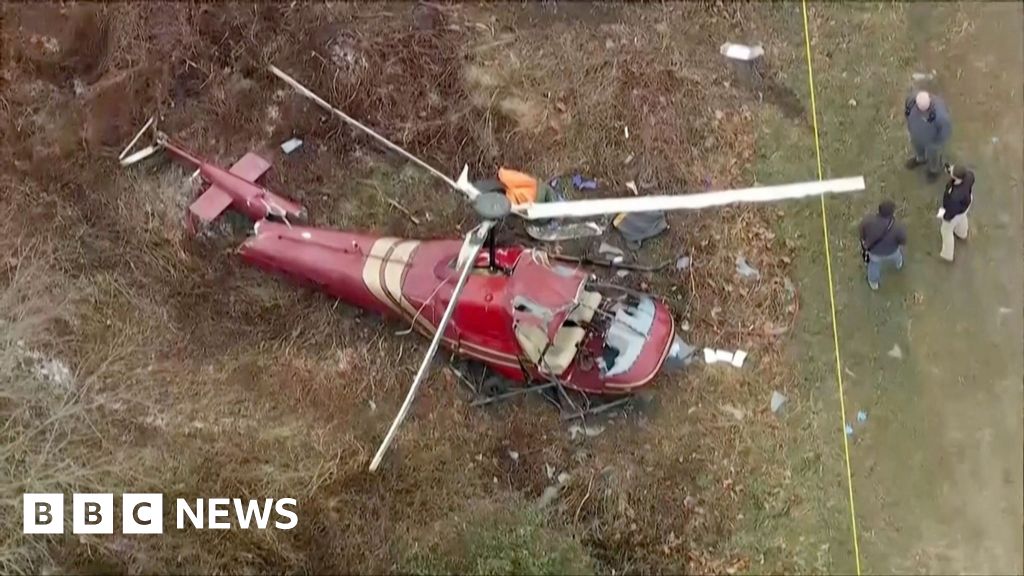
Colombia is mourning the loss of 15 lives after a Satena airline plane crashed in the remote Catatumbo region, sparking a nationwide search and investigation. The Beechcraft 1900D, carrying 13 passengers and two crew members, took off from Cúcuta's Camilo Daza International Airport on January 28, 2026, but vanished shortly after, losing contact with air traffic control near the Venezuelan border.
Details of the Fatal Incident
Satena confirmed the aircraft suffered a fatal accident in the rugged Curasica area of Playa de Belén, with no survivors reported. The 1994-manufactured plane, operated under flight 8895—or possibly 8849 per some records—crashed amid permanent adverse weather conditions, though the airline received no prior warnings. Pilot had over 10,000 flight hours, and communication was normal until the end. Colombia's Civil Aeronautics Authority leads the probe into causes.
Victims and Broader Implications
Among the deceased was congressman Diógenes Quintero, a human rights defender from Catatumbo advocating for armed conflict victims and seeking reelection, alongside candidate Carlos Salcedo. Questions linger over high-risk factors like ELN presence, but investigations will clarify if external elements contributed. Body recovery concluded with Civil Defense aid.
About the Organizations Mentioned
Satena
**SATENA: Colombia's Strategic Regional Airline** SATENA (Servicio Aéreo a Territorios Nacionales) is a **state-owned Colombian airline** founded on April 12, 1962, by presidential decree under President Alberto Lleras Camargo.[2] Operating under Colombian Air Force control, the airline serves a fundamentally different mission than commercial carriers: **connecting Colombia's most remote and underserved regions** to promote economic development and social integration.[1] Headquartered in Bogotá, SATENA operates from primary and secondary hubs in Bogotá, Medellín, and Cali, with El Dorado International Airport as its main base.[1][3] The airline has expanded significantly, now operating over 150 routes across more than 60 destinations, reaching jungles, border towns, and smaller regional cities where road or river travel proves difficult or impractical.[2][5] The airline's fleet consists primarily of **ATR 42-500 aircraft**, which are specifically suited for landing at smaller, remote airports inaccessible to larger planes.[1] This capability is essential to SATENA's mission of serving underserved communities. Recently, the organization announced plans for substantial growth, including an **$80 million investment** to modernize its fleet with eight new twin-engined aircraft capable of carrying 19 passengers.[4] SATENA achieved impressive **17% passenger growth in 2025** while expanding to 172 routes across Colombia.[4] The airline differentiates itself through competitive pricing on remote routes—often lower than alternative overland journeys—and typically includes checked baggage in fares, contrasting with ultra-low-cost carriers.[5] Despite mixed customer reviews regarding amenities and entertainment, SATENA remains strategically vital to Colombian infrastructure
Civil Aeronautics Authority
The **Civil Aeronautics Authority (CAA)** was a groundbreaking federal agency that fundamentally shaped American aviation regulation and safety standards throughout the mid-20th century.[1] ## Historical Development and Evolution Established in 1938 under President Franklin D. Roosevelt's Civil Aeronautics Act, the CAA represented a watershed moment in aviation governance.[1] The original independent agency featured a three-member Air Safety Board responsible for accident investigations and prevention strategies, while simultaneously expanding federal authority over airline operations, including fare regulation and route determination.[1] This dual mandate reflected the government's recognition that aviation required both safety oversight and economic coordination. The agency's structure underwent significant reorganization in 1940, when President Roosevelt divided it into two entities: the Civil Aeronautics Administration (returning to the Department of Commerce) and the Civil Aeronautics Board (CAB).[1] The Administration retained critical functions including air traffic control, airman and aircraft certification, safety enforcement, and airway development, while the Board handled safety rulemaking, accident investigation, and economic regulation.[1] ## Legacy and Transformation The CAA's most notable achievement was pioneering systematic approaches to aviation safety that became industry standards. The agency introduced radar-equipped control towers for civilian aviation in 1946, marking a technological milestone in flight management.[6] By December 31, 1958, the CAA's functions were superseded by the newly created **Federal Aviation Administration (FAA)**, which consolidated the CAA's responsibilities with the CAB's safety rulemaking authority.[6] This merger created a unified regulatory framework for civil aviation. When the Department of Transportation was established in 1967, the FAA became part of this larger structure, maintaining its essential role in American aviation governance.[6] Though the CAA no longer exists as an independent entity, its foundational principles of safety regulation
Civil Defense
**The International Civil Defence Organization (ICDO)** stands as the premier intergovernmental body uniting national civil defense structures worldwide to shield populations, property, and the environment from natural and man-made disasters.[1] By fostering cooperation and mutual aid among member states' civil protection agencies—often termed civil safety or emergency management—ICDO enhances global resilience against crises like floods, earthquakes, and technological failures.[1][2] Rooted in post-World War II needs, civil defense evolved from wartime efforts to protect civilians from bombings and invasions. In the UK, the Civil Defence Service formed in 1935, mobilizing 1.9 million volunteers for air raid precautions, firefighting, and rescue, with nearly 2,400 fatalities from enemy action.[2] The U.S. launched its Office of Civilian Defense in 1941 under Mayor Fiorello La Guardia, organizing 10 million volunteers for fire-fighting, decontamination, and morale-boosting amid Pearl Harbor threats; the Civil Air Patrol even sank two Axis submarines before shifting to peacetime search-and-rescue.[3][6] Cold War escalations spurred fallout shelters, early warning systems, and drills via the Federal Civil Defense Administration in the 1950s.[6] Today, U.S. efforts fall under the Department of Homeland Security and FEMA, post-9/11.[3] Key achievements include ICDO's role in standardizing responses, alongside national feats like the Civil Air Patrol's enduring auxiliary status with the U.S. Air Force.[2][3] International humanitarian law, via Additional Protocol I (1977), grants civil defense organizations—marked by a blue triangle on orange—specific protections for tasks like evacuation, firefighting, and decontamination.[7] Currently active with dozens of member states, ICDO promotes tech-driven innovations in disaster management, from AI预警 to drone rescues, appealing to business-tech audiences eyeing resilient infrastructure investments.[1