Artemis 2 Astronauts Gear Up for Historic Launch Rehearsal
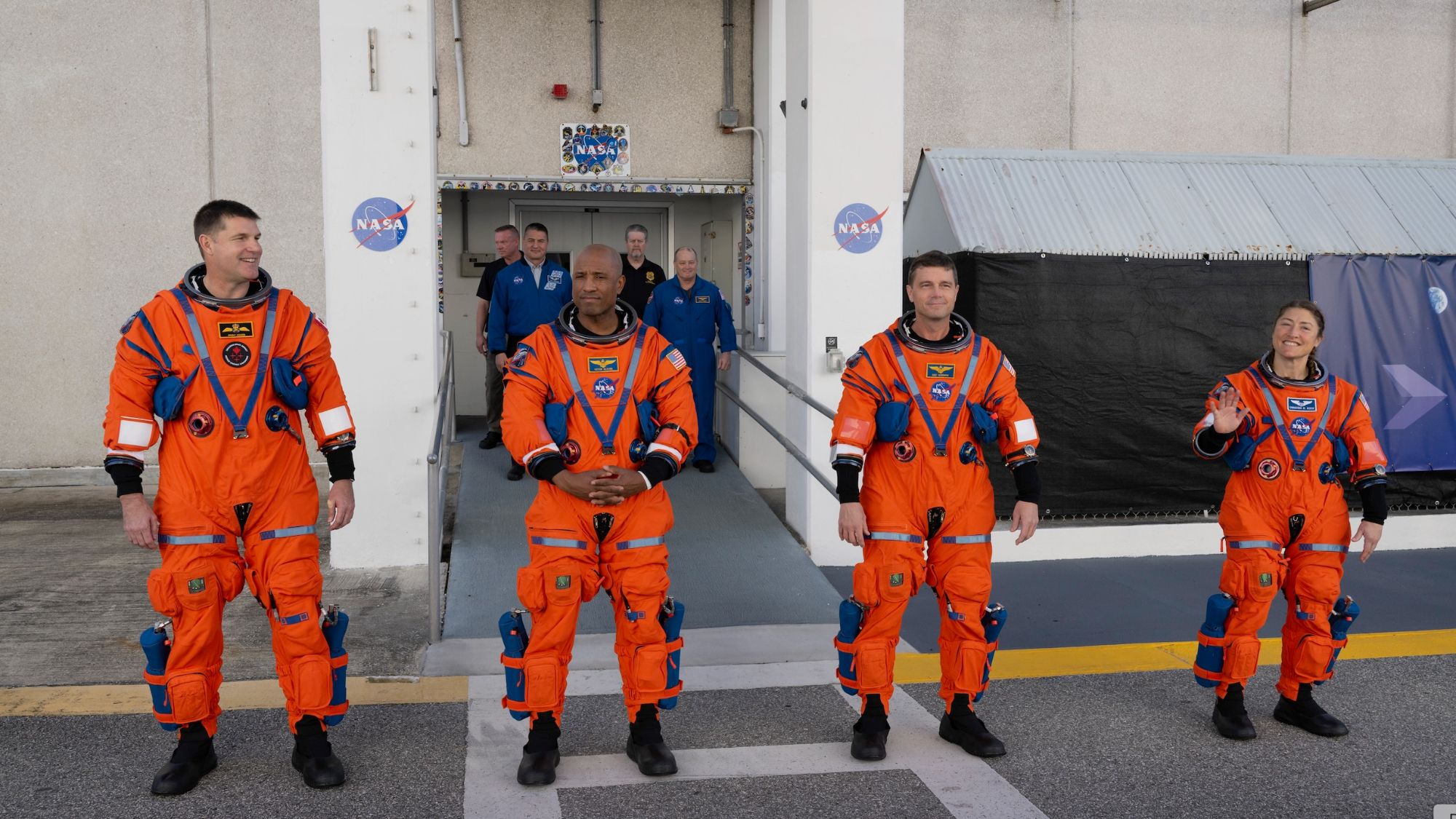
Artemis 2 Astronauts Gear Up for Historic Launch Rehearsal
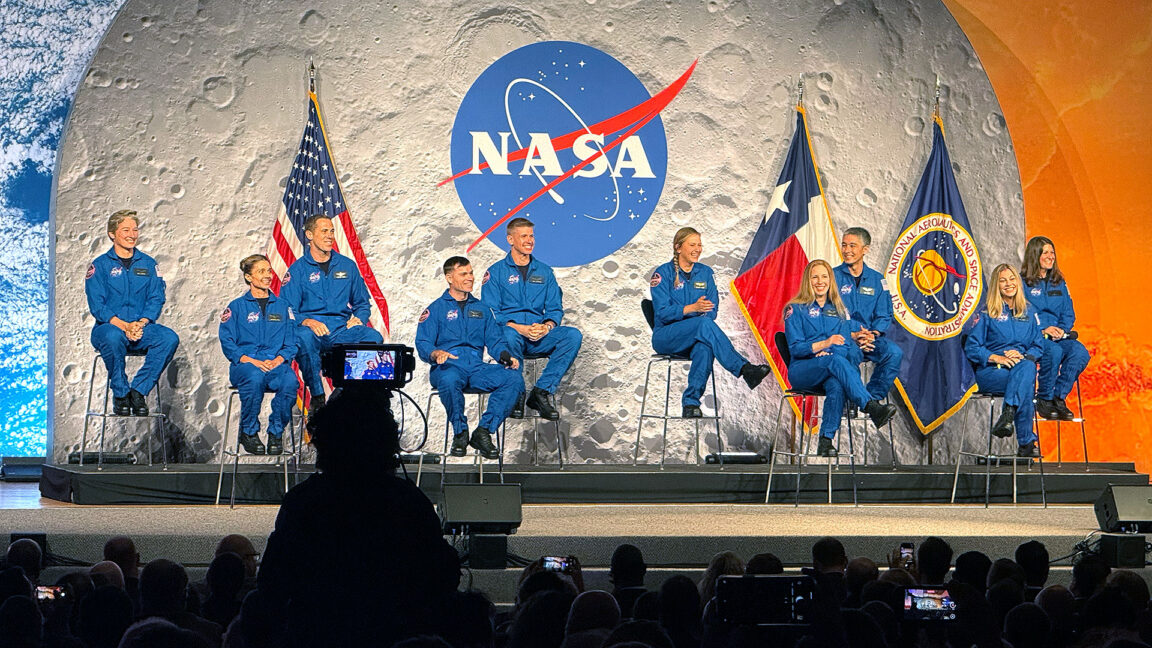
NASA's Artemis 2 crew recently completed a crucial dress rehearsal at Kennedy Space Center, inching closer to the first crewed lunar mission in over 50 years. On December 20, astronauts Reid Wiseman, Victor Glover, Christina Koch, and Canadian Jeremy Hansen donned spacesuits, walked out from the Neil A. Armstrong Operations and Checkout Building, and practiced boarding the Orion spacecraft inside the Vehicle Assembly Building.[1][3]
Simulating Launch Day with Precision
This countdown demonstration test mimicked the full launch timeline, from suiting up to strapping in and a simulated countdown halt at T-29 seconds. Despite delays from technical issues like a thermal barrier blemish, the rehearsal validated procedures for the Space Launch System rocket and Orion with its European Service Module. Originally set for November, it faced postponements but succeeded, paving the way for wet dress rehearsals.[2][1]
Path to Lunar Orbit and Beyond
Slated for no earlier than February 5, 2026, Artemis 2 will send the crew around the Moon for a 10-day journey, building on Artemis 1's uncrewed success. Newly confirmed NASA Administrator Jared Isaacman hailed it as America's moon return. Next, Artemis 3 eyes a 2028 lunar landing, advancing sustainable exploration toward Mars.[1][5]
About the People Mentioned
Reid Wiseman
**Reid Wiseman Overview** Gregory Reid Wiseman is an American astronaut, engineer, and naval officer born on November 11, 1975, in Baltimore, Maryland.[4] He earned a Bachelor of Science degree in computer and systems engineering from Rensselaer Polytechnic Institute and a Master of Science in Systems Engineering from Johns Hopkins University.[3] Before joining NASA, Wiseman built a distinguished military career. He was commissioned through ROTC following his 1997 graduation and reported to Pensacola, Florida, for flight training, becoming a naval aviator in 1999.[3] He flew the F-14 Tomcat for Fighter Squadron 101 and later the FA-18F Super Hornet for Strike Fighter Squadron 103.[2] Wiseman deployed twice to the Middle East for Operations Southern Watch, Enduring Freedom, and Iraqi Freedom. After attending the U.S. Naval Test Pilot School in 2004, he worked on advanced aircraft programs including the F-35 Lightning II and served as Strike Operations Officer for Carrier Air Wing Seventeen.[2] NASA selected Wiseman as an astronaut in June 2009 as part of Astronaut Group 20, and he completed training in May 2011.[5] His first spaceflight came as Flight Engineer aboard the International Space Station during Expeditions 40/41 from May to November 2014, a 165-day mission.[4] During this mission, Wiseman and his crew completed over 300 scientific experiments and set a record of 82 hours of research in a single week, while Wiseman performed two spacewalks totaling approximately 13 hours.[1][5] After his spaceflight, Wiseman served as Deputy Chief of the Astronaut Office from June 2017 and was promoted to Chief on December 18, 2020.[4] He stepped down in November 2022 to return to active flight status.[5] On April 3, 2023, NASA announced Wiseman as commander of Artemis II, marking his current role.[5] This mission represents the first crewed lunar flyby since Apollo 17 in 1972, positioning Wiseman as a key figure in humanity's return to lunar exploration.[6]
Victor Glover
**Victor J. Glover Jr.** is a United States Navy captain, test pilot, and NASA astronaut born on April 30, 1976, in Pomona, California.[2] He was selected as a member of NASA's 21st Astronaut Group in 2013 while serving as a legislative fellow on the personal staff of Senator John McCain.[1][4] Glover earned his Naval Aviator wings on December 14, 2001, following flight training in Pensacola, Florida, and Kingsville, Texas.[1] Over his military aviation career, he accumulated 3,500 flight hours in more than 40 different aircraft, completed over 400 carrier arrested landings, and flew 24 combat missions.[1] He served as an F/A-18 Hornet, Super Hornet, and EA-18G Growler pilot, and graduated from the U.S. Air Force Test Pilot School.[2] After completing Astronaut Candidate Training in 2015, Glover served in various roles including space station capsule communicator and Expedition 52 Increment Lead Crewmember.[1] His first spaceflight came in November 2020 as pilot of SpaceX's Crew-1 mission aboard the Crew Dragon spacecraft Resilience, marking the first operational crewed flight of that vehicle.[2] During this mission, he spent 168 days in space from November 16, 2020, to May 2, 2021, completed four spacewalks totaling 26 hours and 7 minutes, and served as a flight engineer for ISS Expeditions 64 and 65.[1][3] Notably, Glover became the first African American to live in residence aboard the International Space Station, not merely visit for short-term missions.[2][8] Currently, Glover holds significant relevance in NASA's deep space exploration program. In 2023, he was assigned as pilot for the Artemis II mission, a approximately 10-day crewed flight to the Moon that will test NASA's Orion spacecraft, Space Launch System rocket, and foundational human deep space exploration capabilities.[1][7] This mission represents a critical step in NASA's goal to establish a long-term lunar presence for science and exploration.
Christina Koch
Christina Hammock Koch (pronounced "Cook") is an American engineer and NASA astronaut selected in 2013 as part of the 21st astronaut class.[1][3][5] Born in Grand Rapids, Michigan, and raised in Jacksonville, North Carolina, she earned Bachelor of Science degrees in electrical engineering and physics, plus a Master of Science in electrical engineering from North Carolina State University.[3][4] Early in her career, Koch participated in NASA's Academy program in 2001, worked as an electrical engineer at Goddard Space Flight Center on instruments for missions like Juno and Van Allen probes, and gained experience in extreme environments, including a winter-over at Amundsen-Scott South Pole Station and research in Alaska and American Samoa.[1][2][5] Koch completed astronaut training in 2015, including T-38 jet piloting, Russian language, robotics, and spacewalk simulations.[1][5] Assigned to her first mission in 2018, she launched on March 14, 2019, aboard a Russian Soyuz to the International Space Station (ISS) as flight engineer for Expeditions 59, 60, and 61.[1][5] Her stay lasted a record 328 consecutive days—the longest single spaceflight by a woman and second-longest by a U.S. astronaut—covering 5,248 Earth orbits and involving over 210 experiments in biology, Earth science, physical sciences, and technology, such as protein crystal growth, 3D bioprinting, and Alpha Magnetic Spectrometer upgrades.[1][2][4] She conducted six spacewalks totaling 42 hours and 15 minutes, including the first all-female spacewalk on October 18, 2019, with Jessica Meir.[1][5] Post-mission, Koch served as Branch Chief of the Assigned Crew Branch in NASA's Astronaut Office and Assistant for Technical Integration for the Johnson Space Center Director.[1] She is currently training as Mission Specialist I for Artemis II, NASA's planned crewed lunar flyby mission, positioning her as a key figure in returning humans to the Moon and advancing Mars exploration goals.[1][3][6] Her achievements continue to inspire STEM fields, particularly for women.[2][6]
Jeremy Hansen
Jeremy Roger Hansen, born January 27, 1976, in London, Ontario, is a Canadian astronaut, colonel in the Royal Canadian Air Force, fighter pilot, and physicist.[1][3][4] Raised on a farm near Ailsa Craig and later in Ingersoll, he developed an early passion for aviation, joining the Royal Canadian Air Cadets at age 12, earning glider pilot wings at 16, and a private pilot license at 17.[1][2][3] Hansen holds a Bachelor of Science in space science (1999) and a Master of Science in physics from the Royal Military College of Canada.[1][2] He trained as a CF-18 fighter pilot, serving in squadrons at CFB Cold Lake, Alberta, including roles in NORAD operations, deployments, and as a maintenance test pilot.[4][6] Selected by the Canadian Space Agency in 2009 as one of two new astronauts, he joined NASA's 20th astronaut class, completing training in 2011 that covered ISS systems, spacewalks, robotics, T-38 flights, Russian language, and survival skills.[1][2][6] Key achievements include serving as Capcom at NASA's Mission Control, supporting ISS expeditions; participating in ESA's 2013 CAVES analog mission in Sardinian caves; and NASA's 2014 NEEMO 19 undersea mission in the Aquarius habitat.[1][3][4] He became the first Canadian to lead a NASA astronaut class, managing training for U.S. and Canadian candidates through 2020.[1][2][5] In 2023, Hansen was assigned as mission specialist for Artemis II, NASA's first crewed Orion flight test on the SLS rocket, scheduled for early 2026, making him the first Canadian to travel to the Moon and beyond low Earth orbit.[1][2][3][4] He advocates for STEM education, inspiring youth through outreach and flying historic aircraft like the Hawk One F-86 Sabre.[1][2] As of late 2025, he remains a pivotal figure in Canada's space program, preparing for this historic lunar orbit mission.[3]
Jared Isaacman
Jared Isaacman is an American entrepreneur, pilot, philanthropist, and commercial astronaut, best known for his leadership in the payments industry, aviation, and private space exploration[2][3]. Born on February 11, 1983, in Union, New Jersey, Isaacman demonstrated early entrepreneurial drive by founding United Bank Card—later renamed Harbortouch and then Shift4 Payments—at age 16 from his family’s basement[1][2]. Under his leadership as CEO and later Executive Chairman, Shift4 Payments grew into a leading integrated payment processing company, handling $200 billion in transactions annually for 60,000 merchants[2][3]. His business acumen earned him recognition as one of “America’s Best Entrepreneurs” by BusinessWeek and multiple nominations for Ernst & Young’s “Entrepreneur of the Year”[1]. Isaacman’s passion for aviation is equally notable. He holds over 7,000 flight hours and is rated in multiple experimental and ex-military aircraft[3]. He co-founded Draken International in 2011, now the world’s largest private air force, which trains pilots for the U.S. Armed Forces[3][5]. He has also performed in over 100 airshows with the Black Diamond Jet Team, dedicating proceeds to charity, and set two speed-around-the-world flight records in 2008 and 2009 to raise funds for the Make-a-Wish Foundation[3][5]. In the realm of space, Isaacman commanded SpaceX’s Inspiration4 mission in September 2021, the first all-civilian orbital spaceflight, which raised over $240 million for St. Jude Children’s Research Hospital, including his own $100 million pledge[2][3]. He is also the commander of the upcoming Polaris Dawn mission, part of a series aiming to advance commercial space capabilities, and is currently undergoing astronaut training with SpaceX[2][4]. His total time in space, following Inspiration4 and Polaris Dawn (completed September 2024), is nearly eight days[4]. Isaacman is married to Monica Isaacman, whom he met in middle school, and they have two daughters[5]. He holds a Bachelor of Science in Professional Aeronautics from Embry-Riddle Aeronautical University[1]. His blend of business leadership, aviation expertise, and commitment to philanthropy continues to make him a prominent figure in both the technology and aerospace sectors[3][6].
About the Organizations Mentioned
NASA
The National Aeronautics and Space Administration (NASA) is the United States’ premier civil space agency, responsible for the nation’s civilian space program, aeronautics research, and aerospace technology development[1][2]. Headquartered in Washington, D.C., NASA operates ten major field centers across the country and employs nearly 18,000 civil servants, supported by an extensive network of contractors, academic institutions, and international partners[1][2]. Since its establishment in 1958, NASA has revolutionized humanity’s understanding of the cosmos, pioneered technological advancements, and shaped global space policy. ## History and Key Achievements NASA was created in response to the Soviet Union’s 1957 launch of Sputnik, with the goal of ensuring U.S. leadership in space exploration. It succeeded the National Advisory Committee for Aeronautics (NACA) and quickly became the driving force behind iconic programs such as Project Mercury (America’s first human spaceflight program), Project Gemini (which developed techniques for space rendezvous and extravehicular activity), and the Apollo program, which landed astronauts on the Moon between 1969 and 1972[1]. The agency also developed the Space Shuttle, the world’s first reusable spacecraft, and built the International Space Station (ISS), a symbol of international collaboration and scientific research[1][5]. NASA’s robotic exploration has been equally transformative, with over 1,000 uncrewed missions investigating Earth, the Moon, Mars, and beyond. The agency’s fleet of observatories—including the Hubble Space Telescope and the James Webb Space Telescope—has provided unprecedented views of the universe, from the birth of stars to the detection of exoplanets[1]. The Perseverance rover is currently searching for signs of ancient life on Mars, while New Horizons explored Pluto and the outer solar system[1]. ## Current Status and Notable Aspects Today, NASA is advancing the Artemis program, aiming to return human
Kennedy Space Center
**Kennedy Space Center (KSC)** is NASA's primary launch site for human spaceflight, research, and technology development, spanning over 144 square miles on Merritt Island, Florida.[3][4] Established to support ambitious lunar goals, it processes, assembles, and launches spacecraft while driving technological innovation and commercial partnerships.[1][2] KSC's origins trace to 1961, when President John F. Kennedy pledged a crewed Moon landing by 1970, prompting NASA to acquire land north of Cape Canaveral.[1][3][4] On July 1, 1962, NASA activated the Launch Operations Center (LOC) on Merritt Island, independent from Marshall Space Flight Center, under director Kurt Debus.[1][2] Following Kennedy's assassination, President Lyndon Johnson renamed it John F. Kennedy Space Center on November 29, 1963.[1][3] Iconic infrastructure followed: the 525-foot Vehicle Assembly Building (VAB) construction began in 1963, Launch Complex 39 opened by 1967, and the Operations and Checkout Building in 1964.[1][2] Key achievements define KSC's legacy. It hosted 13 Saturn V launches, including Apollo 11's 1969 Moon landing by Neil Armstrong and Buzz Aldrin, Apollo 8's first crewed lunar orbit, and Skylab's 1973 deployment.[4][5] The site adapted for 135 Space Shuttle missions from 1981 to 2011, advancing reusable rocketry.[2][4] Tragically, it witnessed the 1967 Apollo 1 fire, killing Gus Grissom, Ed White, and Roger Chaffee.[1] Today, KSC thrives in the commercial era. SpaceX's 2014 lease enabled Falcon 9 launches from Pad 39A, starting with a 2017 debut, blending public-private tech synergies.[4] NASA launched uncrewe
Neil A. Armstrong Operations and Checkout Building
# Neil Armstrong Operations and Checkout Building The **Neil Armstrong Operations and Checkout (O&C) Building** is a historic five-story facility located in the Industrial Area of NASA's Kennedy Space Center on Merritt Island, Florida.[1] Rather than an independent organization, it functions as a critical NASA infrastructure asset that has served as the backbone of America's human spaceflight program for over six decades. ## Purpose and Facilities The building features **twin-block facilities** designed for multiple spaceflight operations.[1] One section houses crew quarter dormitories where astronauts prepare and suit up before missions, while the other contains a large spacecraft workshop dedicated to manufacturing, assembly, and testing of crewed spacecraft.[1] This dual-purpose design enables comprehensive pre-flight preparation and vehicle validation in a single location. ## Historical Significance Built in 1964, the facility was originally called the Manned Spacecraft Operations Building.[5] It became the site where astronauts from Apollo 7 onward began the tradition of walking through iconic double doors (numbered 1238) for media coverage before launches—a custom that continues today.[2] The building processed and tested Apollo command, service, and lunar modules throughout the Apollo program, serving all crewed missions from Apollo 1 in 1966 through the Apollo-Soyuz Test Project in 1975.[1] ## Modern Operations During the 1980s and 1990s, the facility housed and tested Spacelab modules for Space Shuttle flights.[1] In 2007-2009, a $55 million renovation modernized the building, after which Lockheed Martin assumed operations for Orion spacecraft production.[1] The Orion spacecraft for the Artemis 1 mission completed assembly there before moving to processing facilities in January 2021.[1] As of July
Vehicle Assembly Building
The **Vehicle Assembly Building (VAB)** is not an organization, but rather a monumental NASA facility located at Kennedy Space Center in Florida that serves as a critical hub for assembling and preparing the world's largest space launch vehicles. ## History and Purpose Construction of the VAB began in 1963 and was completed in 1966[3], originally designed as the **Vertical Assembly Building** to support the Apollo program's Saturn V rockets[2]. The facility was engineered to allow massive rocket components to be stacked vertically in preparation for launch, mirroring how rockets would stand on the launch pad[1]. ## Scale and Engineering The VAB stands as one of the world's largest buildings by volume, enclosing approximately 129.4 million cubic feet[3]. Measuring 525 feet tall, 518 feet wide, and covering eight acres[3], it features four massive high bays with doors standing 456 feet high—the largest doors in the world, requiring about 45 minutes to open or close[1]. The structure contains 65,000 cubic yards of concrete and 98,590 tons of steel, supported by 4,225 steel pilings driven 164 feet into bedrock[3]. ## Evolution and Current Operations After the Apollo program ended, the VAB was reconfigured for the Space Shuttle program when it was renamed the Vehicle Assembly Building[2]. Following the shuttle's retirement in 2011[2], NASA modified the facility to support assembly of the Space Launch System (SLS) and Orion spacecraft[1]. Today, the VAB remains a central element in NASA's deep space exploration missions, including preparations for lunar and Mars missions[4]. ## Notable Features The building features the largest American flag painted on any structure—209 feet tall and 110 feet wide[3]. Its sophisticate