Artemis 2 Scheduling Tension Shifts SpaceX Crew-12 Timeline
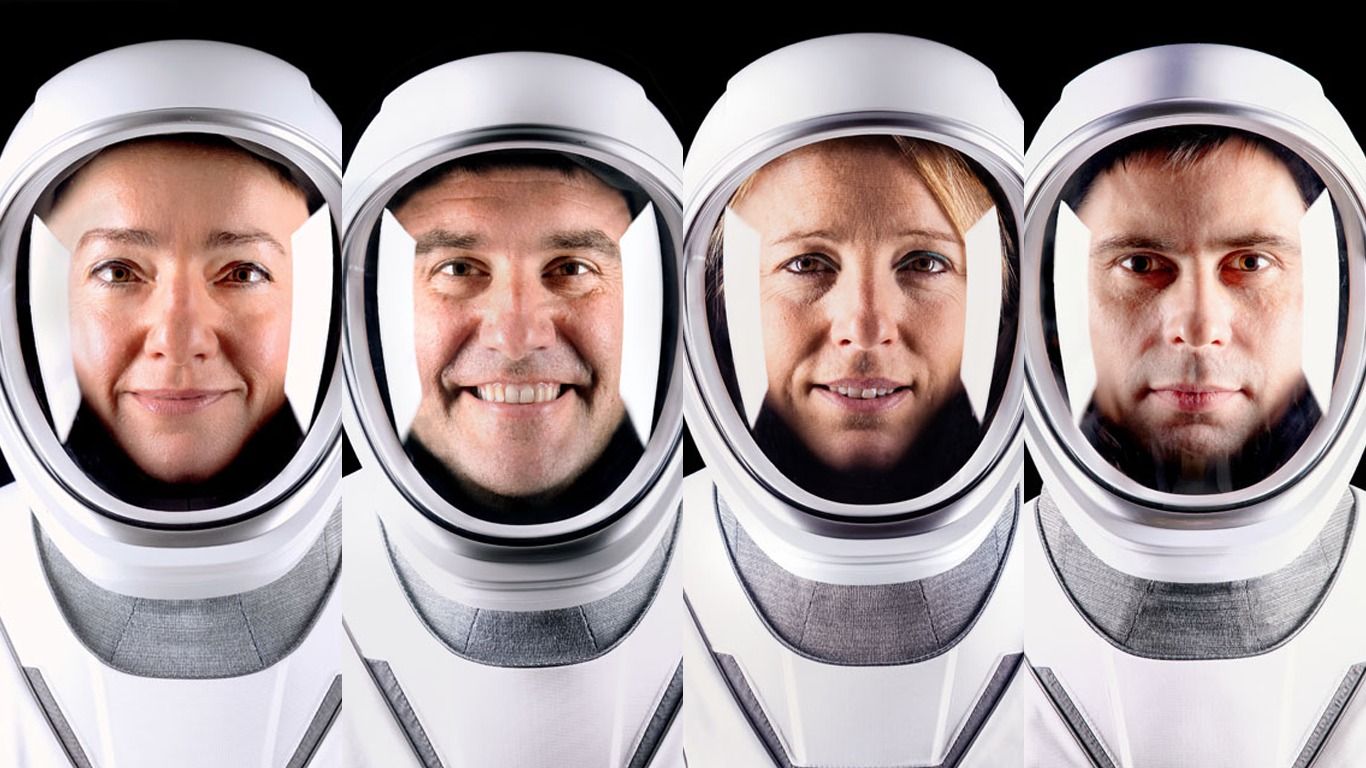
NASA's Artemis 2 Mission Sparks Scheduling Tension with SpaceX Crew-12
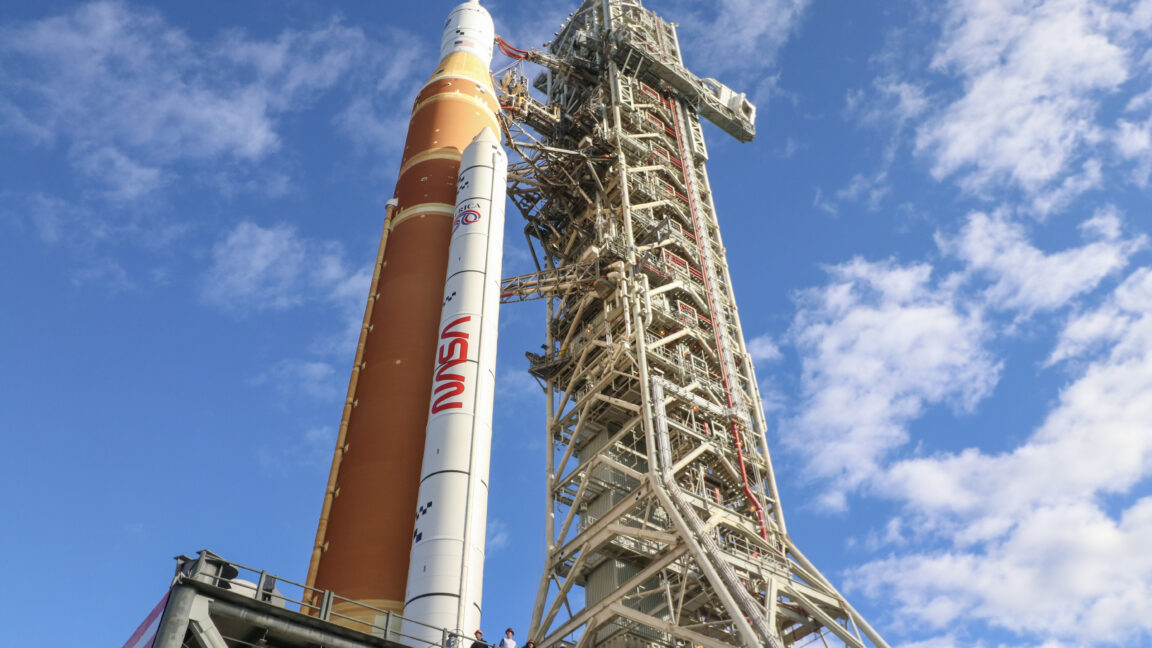
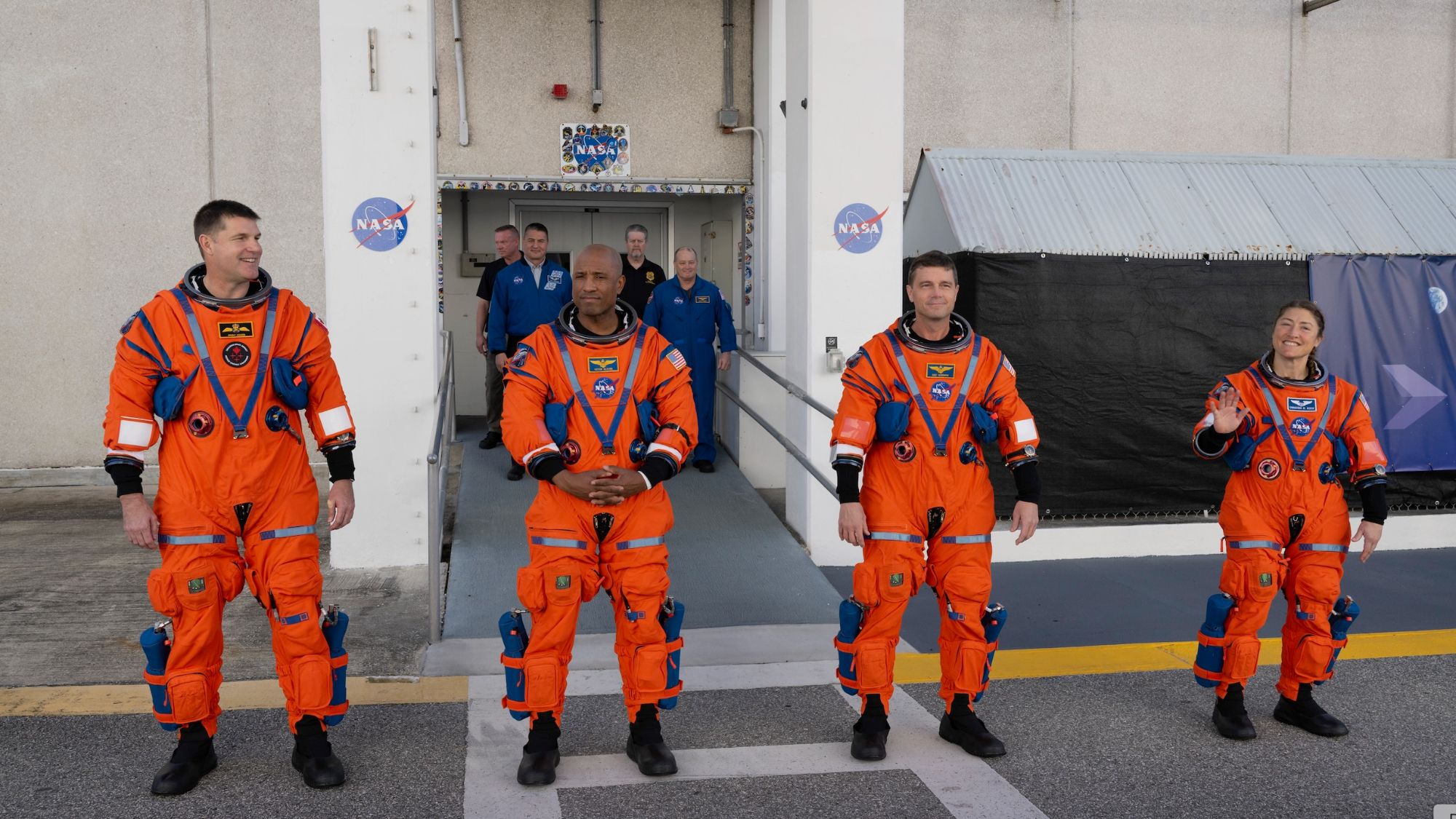
NASA's **Artemis 2** mission, the first crewed lunar orbit since Apollo 17, is navigating a tight launch window that directly impacts SpaceX's **Crew-12** flight to the ISS. With Artemis prioritizing a 10-day journey for astronauts Reid Wiseman, Victor Glover, Christina Koch, and Jeremy Hansen aboard the SLS and Orion, cold weather and wet dress rehearsal delays have shifted the earliest liftoff to February 8, 2026[1][2][4].
Wet Dress Rehearsal and Launch Constraints
The countdown for the critical wet dress rehearsal began at Kennedy Space Center, filling tanks with liquid oxygen and hydrogen while testing sound suppression systems, set to wrap around February 3[1]. This pushes Artemis possibilities to February 8, 10, or 11, narrowing options amid orbital alignments with the Moon[2][3]. Any further slips could defer to March, heightening stakes.
Coordinating Artemis and Crew-12 Priorities
**Crew-12**, led by Jessica Meir, eyes February 11 if Artemis misses its slot, or waits until the 19th post-Artemis launch to avoid overlap[2][3][6]. NASA managers emphasize seamless coordination between teams, ensuring Artemis takes precedence in this delicate orbital ballet while bolstering ISS staffing[3]. Excitement builds for potential in-space chats between crews.
About the People Mentioned
Reid Wiseman
**Reid Wiseman Overview** Gregory Reid Wiseman is an American astronaut, engineer, and naval officer born on November 11, 1975, in Baltimore, Maryland.[4] He earned a Bachelor of Science degree in computer and systems engineering from Rensselaer Polytechnic Institute and a Master of Science in Systems Engineering from Johns Hopkins University.[3] Before joining NASA, Wiseman built a distinguished military career. He was commissioned through ROTC following his 1997 graduation and reported to Pensacola, Florida, for flight training, becoming a naval aviator in 1999.[3] He flew the F-14 Tomcat for Fighter Squadron 101 and later the FA-18F Super Hornet for Strike Fighter Squadron 103.[2] Wiseman deployed twice to the Middle East for Operations Southern Watch, Enduring Freedom, and Iraqi Freedom. After attending the U.S. Naval Test Pilot School in 2004, he worked on advanced aircraft programs including the F-35 Lightning II and served as Strike Operations Officer for Carrier Air Wing Seventeen.[2] NASA selected Wiseman as an astronaut in June 2009 as part of Astronaut Group 20, and he completed training in May 2011.[5] His first spaceflight came as Flight Engineer aboard the International Space Station during Expeditions 40/41 from May to November 2014, a 165-day mission.[4] During this mission, Wiseman and his crew completed over 300 scientific experiments and set a record of 82 hours of research in a single week, while Wiseman performed two spacewalks totaling approximately 13 hours.[1][5] After his spaceflight, Wiseman served as Deputy Chief of the Astronaut Office from June 2017 and was promoted to Chief on December 18, 2020.[4] He stepped down in November 2022 to return to active flight status.[5] On April 3, 2023, NASA announced Wiseman as commander of Artemis II, marking his current role.[5] This mission represents the first crewed lunar flyby since Apollo 17 in 1972, positioning Wiseman as a key figure in humanity's return to lunar exploration.[6]
Victor Glover
**Victor J. Glover Jr.** is a United States Navy captain, test pilot, and NASA astronaut born on April 30, 1976, in Pomona, California.[2] He was selected as a member of NASA's 21st Astronaut Group in 2013 while serving as a legislative fellow on the personal staff of Senator John McCain.[1][4] Glover earned his Naval Aviator wings on December 14, 2001, following flight training in Pensacola, Florida, and Kingsville, Texas.[1] Over his military aviation career, he accumulated 3,500 flight hours in more than 40 different aircraft, completed over 400 carrier arrested landings, and flew 24 combat missions.[1] He served as an F/A-18 Hornet, Super Hornet, and EA-18G Growler pilot, and graduated from the U.S. Air Force Test Pilot School.[2] After completing Astronaut Candidate Training in 2015, Glover served in various roles including space station capsule communicator and Expedition 52 Increment Lead Crewmember.[1] His first spaceflight came in November 2020 as pilot of SpaceX's Crew-1 mission aboard the Crew Dragon spacecraft Resilience, marking the first operational crewed flight of that vehicle.[2] During this mission, he spent 168 days in space from November 16, 2020, to May 2, 2021, completed four spacewalks totaling 26 hours and 7 minutes, and served as a flight engineer for ISS Expeditions 64 and 65.[1][3] Notably, Glover became the first African American to live in residence aboard the International Space Station, not merely visit for short-term missions.[2][8] Currently, Glover holds significant relevance in NASA's deep space exploration program. In 2023, he was assigned as pilot for the Artemis II mission, a approximately 10-day crewed flight to the Moon that will test NASA's Orion spacecraft, Space Launch System rocket, and foundational human deep space exploration capabilities.[1][7] This mission represents a critical step in NASA's goal to establish a long-term lunar presence for science and exploration.
Christina Koch
Christina Hammock Koch (pronounced "Cook") is an American engineer and NASA astronaut selected in 2013 as part of the 21st astronaut class.[1][3][5] Born in Grand Rapids, Michigan, and raised in Jacksonville, North Carolina, she earned Bachelor of Science degrees in electrical engineering and physics, plus a Master of Science in electrical engineering from North Carolina State University.[3][4] Early in her career, Koch participated in NASA's Academy program in 2001, worked as an electrical engineer at Goddard Space Flight Center on instruments for missions like Juno and Van Allen probes, and gained experience in extreme environments, including a winter-over at Amundsen-Scott South Pole Station and research in Alaska and American Samoa.[1][2][5] Koch completed astronaut training in 2015, including T-38 jet piloting, Russian language, robotics, and spacewalk simulations.[1][5] Assigned to her first mission in 2018, she launched on March 14, 2019, aboard a Russian Soyuz to the International Space Station (ISS) as flight engineer for Expeditions 59, 60, and 61.[1][5] Her stay lasted a record 328 consecutive days—the longest single spaceflight by a woman and second-longest by a U.S. astronaut—covering 5,248 Earth orbits and involving over 210 experiments in biology, Earth science, physical sciences, and technology, such as protein crystal growth, 3D bioprinting, and Alpha Magnetic Spectrometer upgrades.[1][2][4] She conducted six spacewalks totaling 42 hours and 15 minutes, including the first all-female spacewalk on October 18, 2019, with Jessica Meir.[1][5] Post-mission, Koch served as Branch Chief of the Assigned Crew Branch in NASA's Astronaut Office and Assistant for Technical Integration for the Johnson Space Center Director.[1] She is currently training as Mission Specialist I for Artemis II, NASA's planned crewed lunar flyby mission, positioning her as a key figure in returning humans to the Moon and advancing Mars exploration goals.[1][3][6] Her achievements continue to inspire STEM fields, particularly for women.[2][6]
Jeremy Hansen
Jeremy Roger Hansen, born January 27, 1976, in London, Ontario, is a Canadian astronaut, colonel in the Royal Canadian Air Force, fighter pilot, and physicist.[1][3][4] Raised on a farm near Ailsa Craig and later in Ingersoll, he developed an early passion for aviation, joining the Royal Canadian Air Cadets at age 12, earning glider pilot wings at 16, and a private pilot license at 17.[1][2][3] Hansen holds a Bachelor of Science in space science (1999) and a Master of Science in physics from the Royal Military College of Canada.[1][2] He trained as a CF-18 fighter pilot, serving in squadrons at CFB Cold Lake, Alberta, including roles in NORAD operations, deployments, and as a maintenance test pilot.[4][6] Selected by the Canadian Space Agency in 2009 as one of two new astronauts, he joined NASA's 20th astronaut class, completing training in 2011 that covered ISS systems, spacewalks, robotics, T-38 flights, Russian language, and survival skills.[1][2][6] Key achievements include serving as Capcom at NASA's Mission Control, supporting ISS expeditions; participating in ESA's 2013 CAVES analog mission in Sardinian caves; and NASA's 2014 NEEMO 19 undersea mission in the Aquarius habitat.[1][3][4] He became the first Canadian to lead a NASA astronaut class, managing training for U.S. and Canadian candidates through 2020.[1][2][5] In 2023, Hansen was assigned as mission specialist for Artemis II, NASA's first crewed Orion flight test on the SLS rocket, scheduled for early 2026, making him the first Canadian to travel to the Moon and beyond low Earth orbit.[1][2][3][4] He advocates for STEM education, inspiring youth through outreach and flying historic aircraft like the Hawk One F-86 Sabre.[1][2] As of late 2025, he remains a pivotal figure in Canada's space program, preparing for this historic lunar orbit mission.[3]
About the Organizations Mentioned
NASA
The National Aeronautics and Space Administration (NASA) is the United States’ premier civil space agency, responsible for the nation’s civilian space program, aeronautics research, and aerospace technology development[1][2]. Headquartered in Washington, D.C., NASA operates ten major field centers across the country and employs nearly 18,000 civil servants, supported by an extensive network of contractors, academic institutions, and international partners[1][2]. Since its establishment in 1958, NASA has revolutionized humanity’s understanding of the cosmos, pioneered technological advancements, and shaped global space policy. ## History and Key Achievements NASA was created in response to the Soviet Union’s 1957 launch of Sputnik, with the goal of ensuring U.S. leadership in space exploration. It succeeded the National Advisory Committee for Aeronautics (NACA) and quickly became the driving force behind iconic programs such as Project Mercury (America’s first human spaceflight program), Project Gemini (which developed techniques for space rendezvous and extravehicular activity), and the Apollo program, which landed astronauts on the Moon between 1969 and 1972[1]. The agency also developed the Space Shuttle, the world’s first reusable spacecraft, and built the International Space Station (ISS), a symbol of international collaboration and scientific research[1][5]. NASA’s robotic exploration has been equally transformative, with over 1,000 uncrewed missions investigating Earth, the Moon, Mars, and beyond. The agency’s fleet of observatories—including the Hubble Space Telescope and the James Webb Space Telescope—has provided unprecedented views of the universe, from the birth of stars to the detection of exoplanets[1]. The Perseverance rover is currently searching for signs of ancient life on Mars, while New Horizons explored Pluto and the outer solar system[1]. ## Current Status and Notable Aspects Today, NASA is advancing the Artemis program, aiming to return human
SpaceX
SpaceX is a private aerospace manufacturer and space transportation company founded in 2002 by Elon Musk with the mission to revolutionize space technology and enable human life to become multiplanetary[3]. It designs, manufactures, and launches advanced rockets and spacecraft, pioneering reusable rocket technology to dramatically reduce the cost of access to space. One of SpaceX’s key achievements includes the development and operational success of the Falcon 9 and Falcon Heavy rockets, both featuring reusable first-stage boosters. This reusability has significantly lowered launch costs and increased reliability, enabling frequent commercial, scientific, and government missions. SpaceX has launched over 95 national security missions with these rockets, demonstrating maturity and trust from the U.S. Space Force and other agencies[2]. Another major milestone is the Starlink satellite constellation, with nearly 6,900 satellites currently in orbit as of 2025. Starlink aims to provide global broadband internet service, especially in underserved regions, making it one of the largest satellite constellations in history[1]. This ambitious project also serves as a revenue stream to fund SpaceX’s broader goals. Looking ahead, SpaceX is developing Starship, a next-generation fully and rapidly reusable super heavy-lift launch system designed to carry large payloads and humans to the Moon, Mars, and beyond. Elon Musk envisions Starship enabling mass transport to Mars, with the potential to launch multiple times a day, dramatically increasing total mass sent to orbit annually, far surpassing all previous space launch capabilities combined[1][2]. Pending environmental reviews, Starship’s first launch from Florida’s LC-39A is planned for late 2025[2]. Despite these advances, SpaceX remains privately held, with limited public insight into its financial health. Questions persist around the profitability of Falcon launches, Starlink operations, and future Starship missions, especially given the enormous funding required for Mars colonization[1]. Nonetheless, SpaceX continues to inspire both enthusiasm and debate in the business and technology