Asia Stocks Slide: Rate Uncertainty and Iran Tensions Drive Markets
Asia Stocks Decline Amid Rate Uncertainty and Iran Tensions
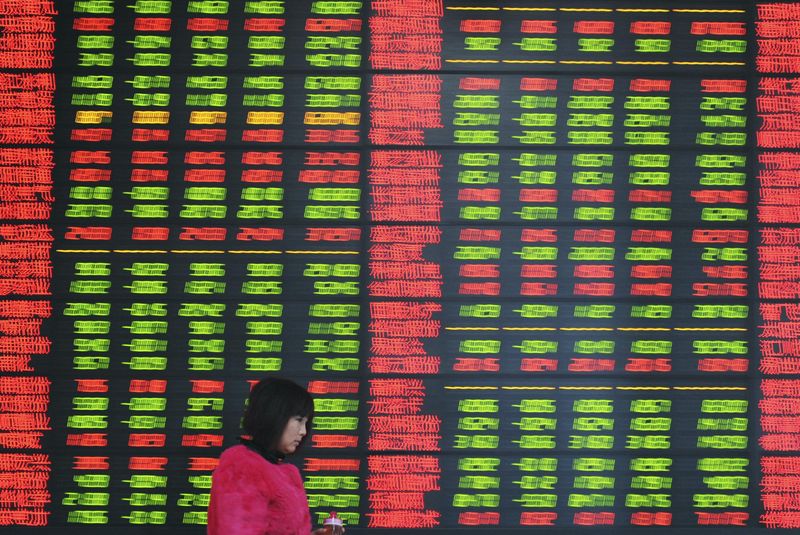
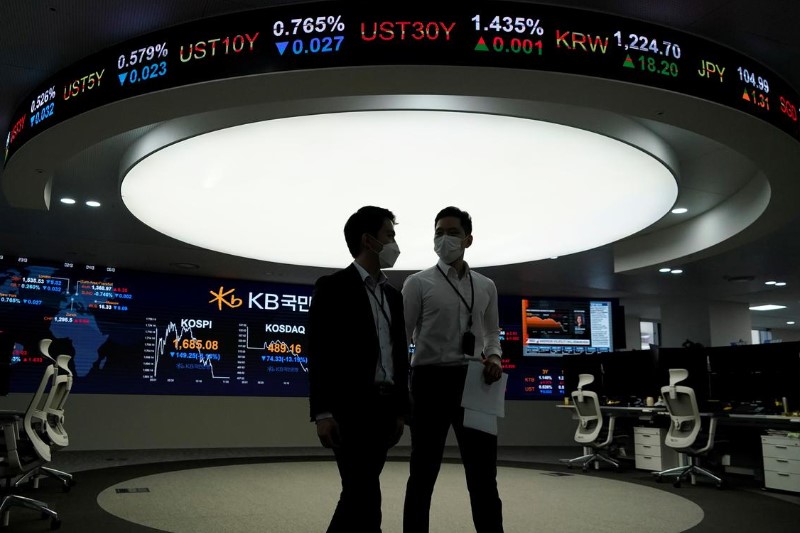
Asian stock markets tumbled on Friday, pressured by lingering uncertainties over interest rates and escalating U.S.-Iran tensions, though South Korea bucked the trend with strong gains. Investors grew cautious ahead of critical U.S. inflation data, including Core PCE figures, which could sway Federal Reserve policy expectations. Thin trading volumes, influenced by Lunar New Year holidays in China and Taiwan, amplified the downside momentum from Wall Street's selloff.
Key Market Performances and Sector Shifts
Japan's Nikkei 225 plunged 1.3 percent, dragged by losses in technology giants like SoftBank and Toyota, alongside banking and export sectors, despite easing inflation to 1.5 percent. Australia's ASX 200 dipped 0.15 percent, with tech stocks such as WiseTech and Xero leading declines, offset by gains in miners like BHP. Shanghai Composite and Hang Seng also fell sharply, around 1.26 percent and 0.59 percent respectively. Oil prices surged on geopolitical risks, while gold hovered near $5,010 amid safe-haven demand.
South Korea Outperforms Amid Regional Volatility
Contrasting the gloom, South Korea's Kospi advanced notably, fueled by robust economic growth and President Lee's 'Value Up' reforms targeting shareholder value. This resilience highlights Korea's appeal in emerging markets, even as broader Asia grapples with AI disruptions and policy shifts. Traders eye upcoming U.S. GDP data for further direction.
About the Organizations Mentioned
SoftBank
SoftBank Group Corp. is a Japanese multinational investment holding company headquartered in Tokyo, renowned for its bold bets on transformative technologies. Founded in 1981 by Masayoshi Son, SoftBank has evolved from a software distributor into one of the world’s most influential tech investors, managing over $100 billion through its Vision Fund—the largest technology-focused venture capital fund globally. The company’s portfolio spans robotics, artificial intelligence, biotechnology, logistics, e-commerce, telecommunications, and more, with high-profile stakes in Arm (semiconductors), Alibaba (e-commerce), OYO Rooms (hospitality), WeWork (coworking), and Deutsche Telekom (telecom). A defining moment in SoftBank’s history was its landmark $32 billion acquisition of Arm Holdings in 2016, cementing its role in shaping the future of computing. In 2016, Son also pledged $50 billion in U.S. investments, promising to create 50,000 jobs—a move that underscored SoftBank’s global ambitions. The company is known for its aggressive investment strategy, often backing ambitious startups and unicorns, though not all have been profitable. Today, SoftBank operates as a pure holding company with 965 subsidiaries and over 67,000 employees worldwide. Its vision centers on accelerating human progress through technology, aiming for sustainable growth over the next 300 years. The group emphasizes sustainability, earning top certifications for women’s advancement and strong environmental scores. SoftBank’s leadership, led by Son, continues to drive innovation, balancing risk and opportunity in an ever-changing global tech landscape. With its finger on the pulse of emerging technologies, SoftBank remains a pivotal force in shaping the future of business and technology.
Toyota
**Toyota Motor Corporation**, headquartered in Toyota City, Aichi, Japan, is the world's largest automobile manufacturer, producing around 10 million vehicles annually as a multinational giant specializing in cars, trucks, hybrids, and luxury vehicles under brands like Lexus.[2][1] Founded in 1937 by Kiichiro Toyoda as an independent entity spun off from Toyoda Automatic Loom Works—an innovator in weaving machinery led by Sakichi Toyoda—the company drew from early principles like *jidoka* (automation with human intelligence) that underpin its famed **Toyota Production System (TPS)**, emphasizing efficiency, quality, and waste reduction.[6][1][3] Toyota's first car, the Model AA, launched in 1936, but post-WWII challenges nearly ended it; recovery came via affordable, reliable vehicles for Japan's booming economy.[4][2] Key U.S. entry in 1957 faltered with the underpowered Toyopet, but the 1965 **Corona**—tailored for Americans—tripled sales, followed by the 1968 **Corolla**, the all-time best-selling car with over 30 million units sold globally.[5][4][2] By 1975, Toyota topped U.S. imports, surpassing Volkswagen; 1986 marked 1 million annual U.S. sales and first American-assembled Corolla.[1][5] Milestones include the 1989 Lexus LS 400 luxury debut, 1997 Prius—the first mass-produced hybrid—and 2008 overtake of GM as global sales leader.[2][4][5] Today, Toyota dominates with innovations in hybrids, electrification, and global plants from Brazil (1959) to the UK and U.S., boasting ninth-largest revenue worldwide (as of 2020 data).[2][6] Its culture of relentless improvement fuels tech leadership, from TPS to sustainable mobility, making it an enduring icon in business and automotiv
WiseTech
# WiseTech Global: Transforming Global Logistics Through Software Innovation **WiseTech Global is a leading software solutions provider that powers the world's supply chains**, serving over 17,000 logistics organizations across 193 countries[2]. Founded in 1994 by Richard White and Maree Isaacs, the company began modestly by writing code for Australian freight forwarders and has evolved into a global technology powerhouse[1]. ## Growth and Expansion The company's trajectory reflects ambitious expansion through both organic growth and strategic acquisitions. In 2014, WiseTech launched CargoWise, its third-generation integrated global logistics platform, which became transformative for the industry[1]. By 2020, all 25 of the top 25 global freight forwarders and 41 of the top 50 third-party logistics providers relied on WiseTech solutions[1]. Today, 24 of the top 25 global freight forwarders and 47 of the top 50 third-party logistics providers use the company's software[2]. ## Current Operations As of 2025, WiseTech Global generated revenue of $1.19 billion and operates with a global workforce of approximately 975 employees across 39 product development centers[3]. The company delivered 1,226 product enhancements in fiscal year 2025, demonstrating its commitment to continuous innovation[2]. Recent developments include a partnership with Hapag-Lloyd to pilot IoT container tracking technology, enhancing supply chain visibility[4]. ## Vision and Impact WiseTech's mission centers on replacing legacy systems with efficient, automated, and integrated global capabilities[2]. The company aspires to become the operating system for global trade and logistics, combining centuries of logistics expertise with intelligent software to create a borderless platform[
Xero
```html <!DOCTYPE html> <html lang="en"> <head> <meta charset="UTF-8"> <meta name="viewport" content="width=device-width, initial-scale=1.0"> <title>Xero: Revolutionizing Cloud Accounting for Small Businesses</title> <style> body { font-family: Arial, sans-serif; line-height: 1.6; max-width: 800px; margin: 0 auto; padding: 20px; } h1 { color: #2c3e50; } h2 { color: #34495e; } p { margin-bottom: 15px; } </style> </head> <body> <h1>Xero: Revolutionizing Cloud Accounting for Small Businesses</h1> <p><strong>Xero Limited</strong>, a New Zealand-based technology powerhouse, delivers cloud-based accounting software tailored for small businesses worldwide[2][5]. Founded in 2006, Xero has evolved from a disruptive startup into a global leader, boasting 4.6 million subscribers across more than 180 countries[3][5].</p> <h2>A Brief History and Innovative Foundation</h2> <p>Launched with a vision to "change the game for small business," Xero pioneered true cloud-native accounting, ditching desktop software for a SaaS model that offers real-time access on any device[3][5]. Headquartered in New Zealand with offices in Australia, the UK, US, Canada, South Africa, and Singapore, it rapidly expanded through monthly feature updates driven by customer needs[2][3].</p> <h2>Core Features and Capabilities</h2> <p>Xero streamlines finances with automated invoicing, bank reconciliations, expense tracking, payroll, projects, and inventory management—all powered by a unified ledger and over 1,00
BHP
```html <!DOCTYPE html> <html lang="en"> <head> <meta charset="UTF-8"> <meta name="viewport" content="width=device-width, initial-scale=1.0"> <title>BHP: The World's Mining Giant Powering the Future</title> <style> body { font-family: Arial, sans-serif; line-height: 1.6; max-width: 800px; margin: 0 auto; padding: 20px; } h1 { color: #2c3e50; } h2 { color: #34495e; } p { margin-bottom: 1em; } </style> </head> <body> <h1>BHP: The World's Mining Giant Powering the Future</h1> <p><strong>BHP</strong>, the world's largest mining company by market capitalization, is a global resources powerhouse producing iron ore, copper, metallurgical coal, and expanding into potash.[1]</p> <p>Operating in over 90 locations worldwide, BHP supplies essential materials for infrastructure, the energy transition, renewable energy, and sustainable farming. Its **Charter**, established in 1999, defines its purpose, strategy, and values, guiding decisions toward responsible management of high-quality assets in attractive commodities.[1]</p> <p>Formed through mergers like BHP Billiton, the company has evolved into a leader, owning icons like Escondida, the world's largest copper mine in Chile.[1] Key achievements include boosting copper production by 30% over four years, operational excellence via the BHP Operating System (BOS), and slashing unit costs—e.g., 16% at Escondida and 53% in South Australia Copper.[3]</p> <p>In FY26 half-year results (ended Dec 2025),