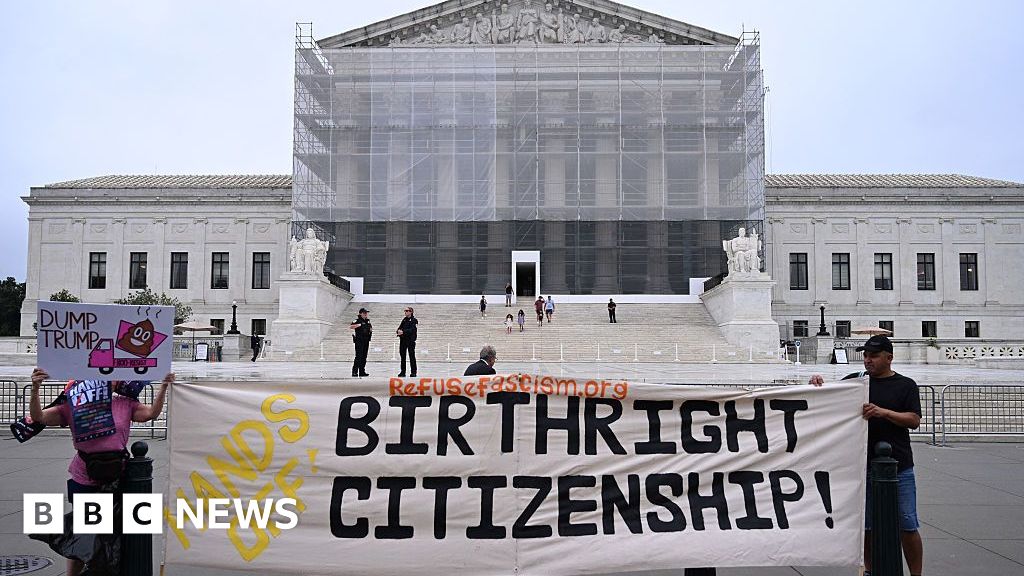
Chief Justice Roberts Affirms Constitution's Enduring Strength
Chief Justice Roberts Affirms Constitution's Enduring Strength
In his 2025 Year-End Report on the Federal Judiciary, Chief Justice John G. Roberts, Jr., declared the U.S. Constitution remains "firm and unshaken," echoing President Calvin Coolidge's words from a century ago. Released on December 31, 2025, this message arrives amid a turbulent year for the nation's courts, with major Supreme Court rulings looming on the horizon. Roberts emphasized the document's role as a sturdy pillar, guiding America toward a "more perfect Union."
Historical Context and Judicial Resolve
Roberts reflected on pivotal moments like Martin Luther King, Jr.'s vision of equality from 1776 and the Civil Rights Act of 1964, highlighting how all government branches and generations advance the Declaration's ideals. He urged the judiciary to uphold their oath impartially, deciding cases faithfully under the Constitution and laws, ensuring equal justice for rich and poor alike as the nation nears its 250th anniversary.
Implications for Upcoming Decisions
With high-stakes cases ahead, Roberts' assurance underscores judicial stability amid partisan clashes. This commitment to public service by judges and staff reinforces trust in the rule of law, offering solace in divided times and promising steadfast interpretation of foundational charters of freedom and justice.
About the Organizations Mentioned
Federal Judiciary
The **Federal Judiciary of the United States** is the judicial branch of the federal government, established by Article III of the Constitution to interpret laws, resolve disputes, and ensure constitutional compliance.[1][4][9] Comprising the Supreme Court, 13 Courts of Appeals, 94 District Courts, and specialized tribunals like the Court of Federal Claims and Federal Circuit (handling patents, trade, and contracts), it adjudicates civil and criminal cases involving federal law, interstate disputes, and constitutional issues.[1][2][3] **Historically**, the judiciary traces to 1789, when Congress created the Supreme Court with six justices—a number fixed at nine since 1869.[1][4] Lower courts evolved as Congress expanded them based on workload, adding appeals circuits and district courts. Lifetime-appointed Article III judges (by presidential nomination and Senate confirmation) ensure independence, while Article I tribunals, like administrative law judges, support executive functions with fixed terms.[1][3][6] **Key achievements** include landmark precedents shaping business and technology: Supreme Court rulings on antitrust (e.g., monopolies), intellectual property (patents via Federal Circuit), and digital rights (e.g., privacy in tech surveillance cases).[3] The judiciary pioneered efficiencies like the 1922 Judicial Conference for policymaking and the Federal Judicial Center (1967) for research and tech-driven training.[1][3][5] **Currently**, it operates robustly under the Judicial Conference, Administrative Office (managing budgets, IT, and facilities), and councils for circuit oversight.[1] With rising caseloads in cybercrime, data privacy, and e-commerce disputes, it leverages technology for virtual hearings and electronic filing, vital for business-tech sectors.[3] The system defends rights like due process and jury trials, compelling evidence via subpoenas.[2][4] Notably, its independence from state courts and executive influence fosters impartiality, though vacancies and backlogs challenge efficiency
Supreme Court
The **Supreme Court of the United States**, commonly referred to as SCOTUS, is the highest court in the U.S. federal judiciary. Established by Article III of the U.S. Constitution, it plays a pivotal role in interpreting the Constitution and federal laws, ensuring their alignment with the founding document. ## Organization and History Founded in 1789, the Supreme Court initially consisted of a Chief Justice and five Associate Justices. Over time, the number of justices has fluctuated, settling at nine in 1869[4]. The Court's primary function is to adjudicate cases involving federal law and the Constitution, with the power to review and overturn decisions from lower courts[1][6]. It also has original jurisdiction in cases involving ambassadors, consuls, and disputes between states[1]. ## Key Achievements One of the Supreme Court's most significant achievements is the establishment of judicial review through the landmark case **Marbury v. Madison** in 1803. This decision allowed the Court to invalidate laws deemed unconstitutional, setting a precedent for its role in checking the legislative and executive branches[1][2]. ## Current Status Today, the Supreme Court continues to play a crucial role in shaping U.S. law and policy. It meets annually from October to June or July, reviewing thousands of petitions and deciding around 80 cases each year[1][2]. The Court's decisions often have profound impacts on business and technology, influencing regulatory environments and legal frameworks. ## Notable Aspects - **Independence**: Justices are appointed for life, ensuring the Court's independence from political pressures. - **Influence on Business and Technology**: Supreme Court rulings can significantly impact business practices and technological innovation by clarifying legal standards and regulatory frameworks. - **Symbolism**: The Court is symbolically important, with its motto "Equal Justice Under Law" reflecting its commitment to fairness and impartiality[3].