Tariff Battle: Conservative Justices Question Trump's Trade Power

The Tariff Conundrum for Conservative Justices
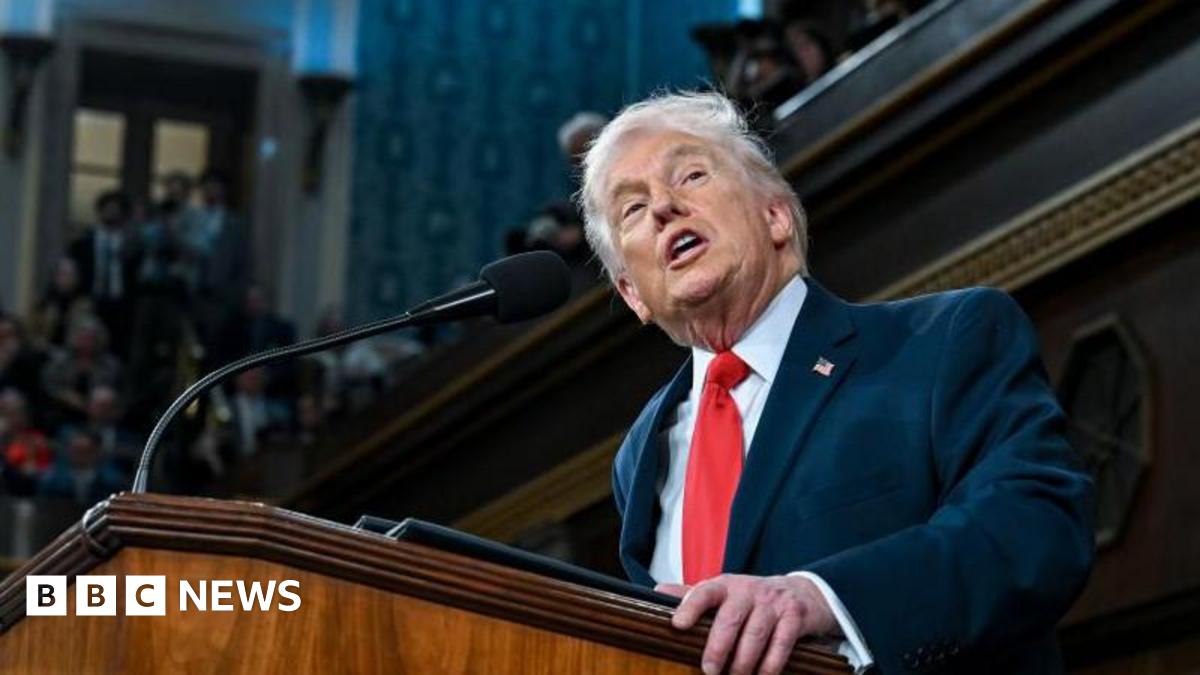
The Supreme Court’s conservative majority faces a defining test as it weighs the legality of sweeping tariffs imposed by former President Donald Trump. While these justices have often supported broad executive authority—especially on national security and foreign policy—they now confront a case that questions whether such power extends to the president’s ability to unilaterally reshape trade policy and levy import taxes on a massive scale[1][3]. The constitutional stakes are high: the challengers argue tariffs are Congress’s prerogative, not the president’s, and that Trump’s use of emergency powers law to justify them is a legal overreach[1][2].
A Clash of Principles and Precedent
During oral arguments, conservative justices signaled skepticism, probing whether the emergency statute Trump invoked truly grants the power to impose tariffs—a power never before claimed by a president[2][3]. Justice Amy Coney Barrett and Neil Gorsuch, both textualists, questioned whether the law’s language could support such a dramatic expansion of executive authority[2]. Meanwhile, lower courts have already ruled against the administration, finding the tariffs exceeded statutory limits. As the justices deliberate, they must balance their usual deference to the executive in foreign affairs against their commitment to limiting unchecked presidential power in the economic realm—a tension at the heart of their judicial philosophy[3][5].
About the People Mentioned
Donald Trump
Donald John Trump, born June 14, 1946, in Queens, New York, is an American businessman, media personality, and politician. He graduated from the University of Pennsylvania’s Wharton School in 1968 with a degree in economics. In 1971, he took over his family’s real estate business, renaming it the Trump Organization, through which he expanded into building and managing skyscrapers, hotels, casinos, and golf courses. Trump gained widespread fame as the host of the reality TV show *The Apprentice* from 2004 to 2015, which helped establish his public persona as a successful entrepreneur. Trump entered politics as a Republican and was elected the 45th president of the United States, serving from 2017 to 2021. His presidency was marked by significant policy actions including tax cuts, deregulation, the appointment of three Supreme Court justices, renegotiation of trade agreements (notably replacing NAFTA with the USMCA), and a focus on immigration control including border wall expansion. He withdrew the U.S. from international agreements such as the Paris Climate Accord and the Iran nuclear deal, and engaged in a trade war with China. His administration’s response to the COVID-19 pandemic was criticized for downplaying the virus’s severity. Trump was impeached twice by the House of Representatives—first in 2019 for abuse of power and obstruction, and again in 2021 for incitement of insurrection—but was acquitted by the Senate both times. After losing the 2020 election to Joe Biden, Trump challenged the results, culminating in the January 6, 2021, Capitol riot. He remains a central figure in American politics, having won the 2024 presidential election and returned as the 47th president in 2025, continuing to promote policies aimed at economic growth, border security, and military strength[1][2][3][4].
Amy Coney Barrett
Amy Coney Barrett, born January 28, 1972, in New Orleans, Louisiana, to a deeply Catholic family, is an American lawyer and jurist serving as an associate justice of the U.S. Supreme Court since October 27, 2020.[1][2][3][5] She is the fifth woman confirmed to the Court, nominated by President Donald Trump to replace Ruth Bader Ginsburg following her death in September 2020.[1][3][5] Barrett graduated from Rhodes College with a degree in English literature and earned her law degree from Notre Dame Law School. She began her legal career with prestigious clerkships: first for Judge Laurence Silberman on the U.S. Court of Appeals for the D.C. Circuit (1997-1998), then for Supreme Court Justice Antonin Scalia (1998-1999), whose originalist judicial philosophy she has cited as influential.[1][2][3] After brief private practice, she joined Notre Dame Law School as a professor in 2002, publishing extensively in top law reviews and earning distinction as a scholar.[2][7] In 2017, Trump nominated her to the U.S. Court of Appeals for the Seventh Circuit, where she was confirmed and served until 2020, authoring about 100 opinions on issues including gun rights, immigration, discrimination, sexual assault, and abortion, often aligning with conservative views.[1][2][5][6] Her Supreme Court nomination sparked controversy due to its proximity to the 2020 presidential election; she was confirmed 52-48 along party lines on October 26, 2020, after a four-day Senate hearing.[1][3][5] Currently, Barrett remains an active Supreme Court associate justice, contributing to a 6-3 conservative majority on cases involving constitutional interpretation, abortion rights, and other high-profile matters.[3] Married to Jesse M. Barrett since 1999, she is a mother of seven children.[2][4]
Neil Gorsuch
Neil McGill Gorsuch, born August 29, 1967, in Denver, Colorado, is an Associate Justice of the United States Supreme Court.[1][2][3] He earned a B.A. from Columbia University and a J.D. from Harvard Law School in 1991, followed by a D.Phil. in law from the University of Oxford in 2004, which informed his 2006 book *The Future of Assisted Suicide and Euthanasia*.[3][4][5] Gorsuch's early career included prestigious clerkships: for Judge David Sentelle on the U.S. Court of Appeals for the D.C. Circuit (1991-1992) and Supreme Court Justices Byron White and Anthony Kennedy (1993-1994).[1][2][4] From 1995 to 2005, he practiced law at Kellogg, Hansen, Todd, Figel & Frederick in Washington, D.C., specializing in litigation for corporate and white-collar clients.[2][3][6] In 2005-2006, he served as Principal Deputy Associate Attorney General at the U.S. Department of Justice under President George W. Bush.[1][7] In 2006, Bush nominated Gorsuch to the U.S. Court of Appeals for the Tenth Circuit, where he was unanimously confirmed and served until 2017, authoring over 200 opinions and earning a reputation as a "feeder judge" whose clerks often advanced to Supreme Court clerkships.[1][2][4] On February 1, 2017, President Donald Trump nominated him to replace the late Justice Antonin Scalia, whose seat had remained vacant after Senate Republicans blocked Merrick Garland's nomination.[1][3][6] After contentious hearings, Democrats' filibuster attempt prompted a rules change to allow confirmation by simple majority; Gorsuch was approved 54-45 on April 7 and sworn in on April 10, 2017, becoming the 101st Associate Justice.[1][2][9] Known as a constitutional originalist in the Scalia mold, Gorsuch remains a pivotal figure on the Court, contributing to major decisions on religious liberty, administrative law, and Second Amendment rights.[9] He is married to Louise with two daughters.[5][6]
About the Organizations Mentioned
Supreme Court
The **Supreme Court of the United States**, commonly referred to as SCOTUS, is the highest court in the U.S. federal judiciary. Established by Article III of the U.S. Constitution, it plays a pivotal role in interpreting the Constitution and federal laws, ensuring their alignment with the founding document. ## Organization and History Founded in 1789, the Supreme Court initially consisted of a Chief Justice and five Associate Justices. Over time, the number of justices has fluctuated, settling at nine in 1869[4]. The Court's primary function is to adjudicate cases involving federal law and the Constitution, with the power to review and overturn decisions from lower courts[1][6]. It also has original jurisdiction in cases involving ambassadors, consuls, and disputes between states[1]. ## Key Achievements One of the Supreme Court's most significant achievements is the establishment of judicial review through the landmark case **Marbury v. Madison** in 1803. This decision allowed the Court to invalidate laws deemed unconstitutional, setting a precedent for its role in checking the legislative and executive branches[1][2]. ## Current Status Today, the Supreme Court continues to play a crucial role in shaping U.S. law and policy. It meets annually from October to June or July, reviewing thousands of petitions and deciding around 80 cases each year[1][2]. The Court's decisions often have profound impacts on business and technology, influencing regulatory environments and legal frameworks. ## Notable Aspects - **Independence**: Justices are appointed for life, ensuring the Court's independence from political pressures. - **Influence on Business and Technology**: Supreme Court rulings can significantly impact business practices and technological innovation by clarifying legal standards and regulatory frameworks. - **Symbolism**: The Court is symbolically important, with its motto "Equal Justice Under Law" reflecting its commitment to fairness and impartiality[3].