Deadly Mosque Blast in Homs Sparks Investigations and Global Condemnations

Deadly Mosque Explosion Rocks Homs
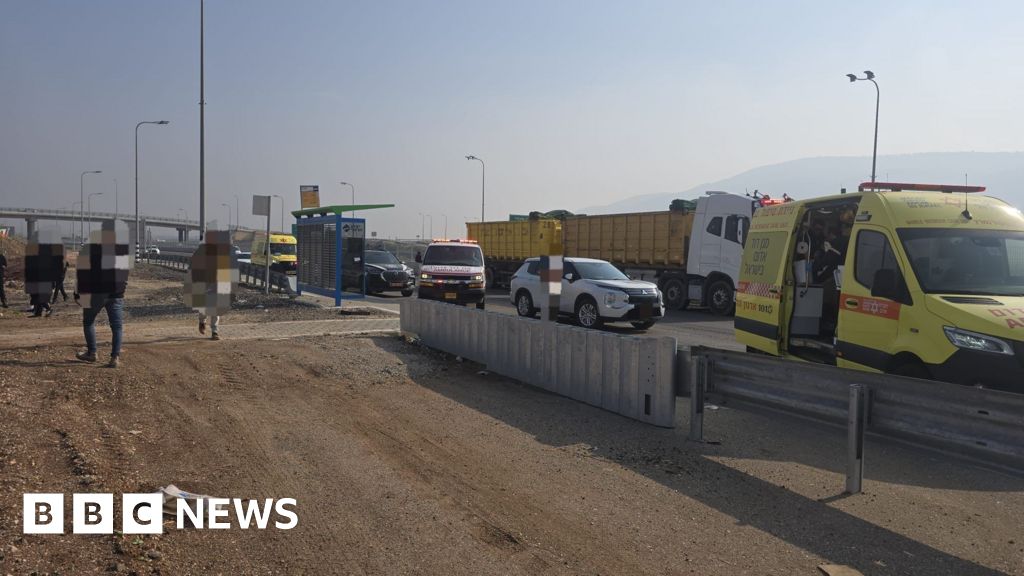
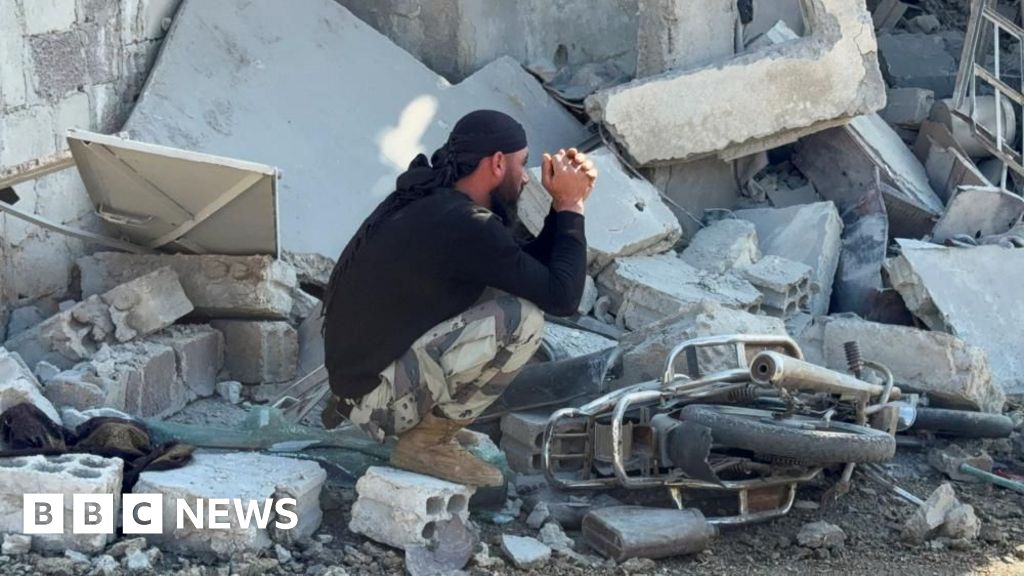
A devastating bombing at the Imam Ali ibn Abi Talib Mosque in Syria's Homs city claimed eight lives and injured 18 others on December 26, 2025, during Friday prayers. The blast tore through the Alawite-majority Wadi al-Dahab neighborhood, leaving scorched walls, shattered windows, and bloodstained carpets in its wake, as captured in harrowing images from state media.[1][2]
Claim of Responsibility and Investigation
Extremist group Saraya Ansar al-Sunnah swiftly claimed responsibility via Telegram, boasting of detonating explosives in coordination with allies and vowing escalated attacks. Formed after the Assad regime's fall, the militants had previously struck a Damascus church. Syrian officials suspect Islamic State involvement, citing a bomb-laden bag, while authorities hunt for perpetrators amid heightened sectarian tensions.[1]
Global Condemnations and Implications
The UN Secretary-General, Palestinian Presidency, and others condemned the assault on worshippers, urging justice and decrying violence against civilians and holy sites. This tragedy underscores Syria's fragile post-regime security, risking further instability in minority enclaves.[1]
About the Organizations Mentioned
Saraya Ansar al-Sunnah
**Saraya Ansar al-Sunnah** is a Sunni Islamist militant group active in Syria and Lebanon, focused on sectarian violence against Shia, Alawites, Druze, Christians, and Kurds to establish an exclusionary Islamic State.[1][2][4] Formed on February 1, 2025, by Abu Aisha al-Shami—a defector from Hay'at Tahrir al-Sham (HTS) over its perceived leniency toward minorities—the group immediately claimed attacks killing 12 Alawites in Arzah, five ex-Ba'athists in Tell Dahab, and 10 Shia in Hama.[1][3][8] It splintered from HTS and absorbed elements of Huras al-Din, criticizing the post-Assad transitional government for pardoning regime loyalists and failing to enforce strict Islamic rule.[3] Decentralized with no headquarters, it operates via Telegram channels for threats, manifestos, and "wanted lists" of targets, blending digital savvy with lone-wolf tactics.[2][3] Its **key activities** prioritize "sectarian cleansing" over regime change, issuing takfiri fatwas against minorities and HTS-led officials like President Ahmad al-Sharaa.[2][3] Notable attacks include the June 2025 Mar Elias church suicide bombing in Damascus (25 killed), the December 2025 Imam Ali Mosque bombing, a December 26 IED strike on a Homs Alawite mosque, and threats in Tripoli, Lebanon, plus Suwayda.[1][4][6] Unlike ISIS (with which it shares ideology but no allegiance), it avoids direct state clashes, favoring assassinations and sabotage.[2][4] As of late 2025, the group remains active despite Syrian security crackdowns and Coalition efforts, claiming a covert network for major operations in Homs.[4] Recruitment draws Syrians, Lebanese, and networks in Turkey, UAE, Liby
Islamic State
**The Islamic State (IS), also known as ISIS or Da'esh, is a transnational Salafi-jihadist terrorist network that evolved from al-Qaeda in Iraq (AQI) after the 2003 U.S. invasion, aiming to establish a global caliphate through violence, insurgency, and digital propaganda.**[2][3][5] Originating under Abu Musab al-Zarqawi in 2004, IS broke from al-Qaeda in 2013, rebranded as ISIS, and peaked in 2014–2015 by seizing vast territories in Iraq and Syria—roughly the size of Britain—governing 12 million people with a $1 billion+ budget, 30,000+ fighters, and brutal Shari'a enforcement, including the Yazidi genocide.[2][5] It declared a worldwide caliphate under Abu Bakr al-Baghdadi, drawing 50,000+ recruits from 100+ nations via sophisticated governance blending guerrilla tactics and state-like operations.[3][5] **Key "achievements" from IS's perspective include high-profile attacks like the 2015 Paris assaults and 2024 IS-Khorasan (ISK) strikes in Iran and Russia, which killed thousands and amplified its deadliest-in-the-world status, causing 1,805 deaths in 2024 alone across 22 countries.**[1][4] Affiliates like ISK (Afghanistan/Pakistan-focused, ~2,000 fighters) and West Africa Province expanded its reach, using ambushes, IEDs, kidnappings, and lone-wolf inspirations.[3][4][6] By 2019, U.S.-led coalitions dismantled its caliphate, killing ~60,000 fighters and reducing core forces to 1,500–3,000 in Iraq/Syria hideouts, with 8,800–13,100 globally.[1][2][3
United Nations
The United Nations (UN) is a pivotal international organization established in 1945, following the devastation of World War II, with the primary goal of maintaining global peace and security, fostering international cooperation, and promoting social progress. The UN Charter, signed by 51 founding member states, including the United States, the United Kingdom, China, and the Soviet Union, laid the foundation for this ambitious endeavor[1][3]. ## History and Structure The UN was born out of the failures of its predecessor, the League of Nations, which failed to prevent World War II. Key planning meetings, such as the Dumbarton Oaks Conference in 1944, defined the UN's structure, which includes the General Assembly, the Security Council, the Economic and Social Council, the Trusteeship Council, the International Court of Justice, and the Secretariat[1][6]. The Security Council, with five permanent members (the United States, China, France, Russia, and the United Kingdom), holds significant influence due to its veto power[2]. ## Key Achievements Over the years, the UN has played a crucial role in conflict resolution, human rights advocacy, and sustainable development. Notable achievements include the establishment of the Universal Declaration of Human Rights in 1948 and the implementation of numerous peacekeeping missions worldwide[3][4]. The UN has also been instrumental in addressing global challenges such as climate change and pandemics through its various programs and agencies. ## Current Status Today, the UN comprises 193 member states, with its most recent addition being South Sudan in 2011[5]. The organization continues to evolve, addressing emerging issues like digital governance and cybersecurity. Despite challenges, the UN remains a cornerstone of international diplomacy and cooperation. ## Notable Aspects The UN's work is not limited to politics; it also impacts business and technology through initiatives that promote sustainable development and digital inclusion. Its role in setting global standards and fostering international cooperation makes it a significant player in shaping the
Palestinian Presidency
The **Palestinian Authority (PA)**, often referred to as the Palestinian Presidency in context of its executive leadership, is a semi-autonomous governing body exercising limited civil control over parts of the Israeli-occupied West Bank and, nominally, Gaza.[1][2][4] Established in 1994 under the Oslo Accords between Israel and the Palestine Liberation Organization (PLO), it was designed as an interim administration to manage Palestinian affairs, foster self-governance, and pave the way for final peace negotiations.[1][2][4] Historically, the PA emerged from the PLO's 1993 Declaration of Principles, with Yasser Arafat elected as its first president in 1996, serving until his 2004 death.[1][2][5] Mahmoud Abbas, Fatah leader and current president since 2005, holds concurrent roles as PLO chairman, consolidating power amid factional rivalries.[1][4][7] The PA's structure, outlined in the 2002 Basic Law, features an elected president (four-year term, now exceeded), a prime minister-appointed cabinet, and the 132-seat Palestinian Legislative Council (PLC).[1][2][3] Abbas appoints the prime minister, who—as of March 2024—is Mohammad Mustafa, focusing on economic reforms.[7] Key achievements include building state-like institutions by 2011, such as security forces and administrative frameworks, and diplomatic wins like UNESCO membership and UN non-member observer state status in 2011-2012 under Abbas.[2][9] The PA manages education, health, and local governance in West Bank Areas A and B, while coordinating security with Israel.[5][7] Currently, the PA faces stagnation: no elections since 2006 (when Hamas won the PLC, leading to a Fatah-Hamas split and Gaza's de facto Hamas control), with Abbas ruling by decree.[2][5][8] Financial crises, Israel
Assad regime
The Assad regime, led by Bashar al-Assad, was a hereditary totalitarian dictatorship that ruled Syria from 1971 to 2024. It was characterized by severe human rights abuses, including arbitrary arrests, torture, extrajudicial killings, and enforced disappearances[3][8]. The regime's history began with Hafez al-Assad's coup in 1971 and continued under Bashar al-Assad from 2000 until its collapse in December 2024[4][6]. **History and Key Events** The regime faced significant challenges during the Syrian Civil War, which began in 2011. Despite initial instability, Assad maintained power with support from Russia and Iran, while the opposition remained fragmented[1][7]. The regime implemented controversial policies, such as Law 10, which allowed the seizure of property from displaced Syrians, often benefiting loyalists[1]. **Notable Aspects** - **Economic Policies**: The regime focused on rebuilding infrastructure and attracting foreign investors, though these efforts were often overshadowed by corruption and favoritism towards loyalists[1]. - **Human Rights Abuses**: The regime was notorious for its brutal suppression of dissent, leading to widespread international condemnation[3][8]. - **International Relations**: The Assad regime maintained strong alliances with Russia and Iran, which played a crucial role in its prolonged survival[1][7]. **Current Status** The Assad regime collapsed on December 8, 2024, following a major offensive by opposition forces led by Hayat Tahrir al-Sham (HTS) and supported by the Turkish-backed Syrian National Army[4][5]. Bashar al-Assad fled to Russia, marking the end of his 24-year rule[4]. The fall of the regime presents a pivotal moment for Syria, though the country remains in turmoil with ongoing displacement and humanitarian crises[5]. While not directly related to business and technology news, the Assad regime's collapse highlights the geopolitical shifts and potential economic implications for the region