Deutsche Bank Raids Spark Money Laundering Concerns
#deutsche_bank #money_laundering #aml #investigation #finance
Deutsche Bank Raids Spark Money Laundering Concerns
German prosecutors have raided Deutsche Bank's offices in Frankfurt and Berlin, intensifying scrutiny over alleged money laundering tied to past business dealings. The operation, ordered by the Main Public Prosecutor's Office for Economic Crime, targets transactions from 2013 to 2018 involving foreign companies suspected in other probes.[2][1]
Core Allegations and Bank Response
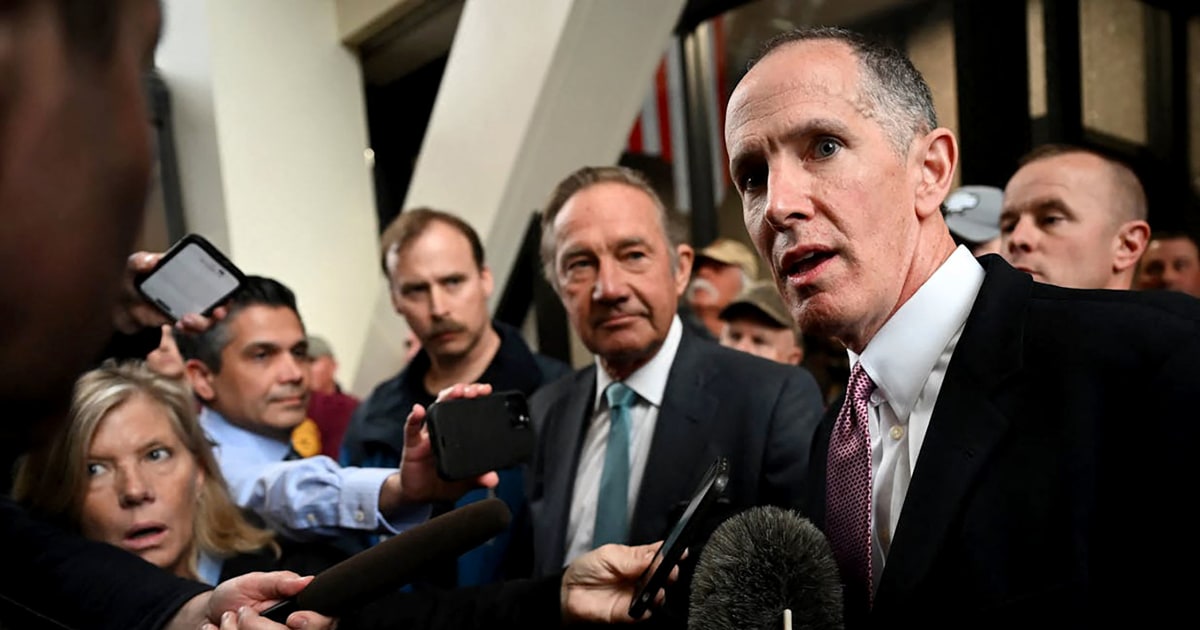
At the heart of the investigation lies Deutsche Bank's delayed filing of suspicious activity reports, potentially linked to Russian billionaire Roman Abramovich's entities, as reported by Süddeutsche Zeitung. CEO Christian Sewing confirmed the raids at the annual general meeting, emphasizing full cooperation with authorities. The bank insists the probe assesses late SAR submissions rather than confirmed laundering.[1][2]
Broader Implications for Finance
This marks another chapter in Deutsche Bank's troubled history, following 2022 settlements over Syrian payments and earlier commodities manipulation. Amid rising crypto laundering to $82 billion in 2025, such raids underscore regulators' push for stricter AML compliance across global finance.[3][2]
About the Organizations Mentioned
Deutsche Bank
**Deutsche Bank**, Germany's leading bank with deep European roots and a global network, delivers a broad spectrum of financial services including retail and private banking, corporate and transaction banking, lending, asset and wealth management, and focused investment banking to individuals, SMEs, corporations, governments, and institutional investors.[1] Founded in 1870, Deutsche Bank has evolved into a powerhouse through strategic expansions, surviving world wars, financial crises, and regulatory upheavals. Its history reflects resilience: from pioneering international finance in the late 19th century to navigating the 2008 global meltdown and recent scandals like money laundering probes, which prompted leadership changes and a pivot toward stability under CEO Christian Sewing since 2018. Key achievements include dominating Germany's banking sector, issuing influential outlooks like the 2026 Capital Markets report forecasting robust global growth amid geopolitical risks, with **artificial intelligence (AI)** as a pivotal growth engine driving investments in data centers, utilities, and supply chains.[1][2][4] The bank anticipates double-digit profit surges across regions, supported by US fiscal stimuli like the "One Big Beautiful Bill Act," Fed rate cuts, and Europe's €500bn infrastructure fund boosting Germany's projected 1.5% GDP growth in 2026.[3][4] Currently, as of early 2026, Deutsche Bank maintains a constructive equity outlook, urging active risk management in volatile AI markets while highlighting opportunities beyond traditional assets.[1][2] Its research arms, like the Chief Investment Office, project economic recovery—US consumer strength, German fiscal expansion—and warn of inflation risks from tight labor markets.[3] Notably, the bank leverages technology for forward-looking insights, positioning AI not as a bubble but a structural boom, while advocating diversified portfolios amid tariffs and policy shifts. With strong cash flows funding tech investments, Deutsche Bank blends tradition with innovation, guiding clients through uncertainty.[2][4] (298 words)
Main Public Prosecutor's Office for Economic Crime
No organization named **Main Public Prosecutor's Office for Economic Crime** appears in available records or search results. The query likely refers to one of several specialized **economic crimes prosecution units** in U.S. state attorney's offices or similar bodies, which handle white-collar fraud, financial exploitation, and related offenses. Below is a synthesized overview drawing from prominent examples, tailored for business and tech audiences tracking fraud trends in investor schemes, identity theft, and digital scams. These units prosecute complex financial crimes inflicting community harm, including **investor fraud, real estate scams, insurance fraud, sales tax violations, identity theft, money laundering, and elder financial exploitation**[1][3][5][6]. For instance, Florida's Economic Crimes Unit (Southwest region) targets multifaceted frauds like illegal financial schemes and aggressively pursues identity theft—a third-degree felony involving stolen personal data for unlawful acts—while recovering restitution for victims, including hundreds of thousands in elder abuse cases post-2015 legislative expansions[1]. Baltimore's unit focuses on employee embezzlement, public assistance fraud, and arson-for-profit, often involving trusted perpetrators like financial professionals[3]. Historically, such units evolved to counter rising white-collar crimes, with local prosecutors prioritizing deterrence through convictions in consumer fraud and workplace offenses[7]. Key achievements include dedicated elder abuse teams, public education on scams (e.g., Colorado's free presentations on ID theft trends), and collaborations with law enforcement[1][5]. Currently active across jurisdictions like Colorado's 4th Judicial District and Montgomery County, they emphasize tech-enabled crimes like computer fraud and internet scams amid growing digital threats[5][6]. Notably, these offices blend prosecution with prevention, raising awareness on Ponzi schemes, mortgage fraud, and crypto-related laundering—critical for businesses navigating regulatory risks. While federally, DOJ's Fraud Section handles corporate-scale cases (e.g., FCPA bribery), local units fill gaps in regional enforcement[2]. Readers in tec
Süddeutsche Zeitung
**Süddeutsche Zeitung (SZ)** is a leading left-liberal daily newspaper based in Munich, Germany, renowned for its high-quality journalism on politics, business, technology, and culture, serving as one of the nation's most influential publications.[1][2][3][4] Founded on October 6, 1945, as one of the first newspapers licensed by U.S. Allied forces post-World War II, the SZ emerged from the ruins of Munich's wartime presses—symbolically recasting metal from Hitler's *Mein Kampf* for its inaugural edition priced at 20 Pfennig.[1][2][3][4] Initiated by license holders August Schwingenstein, Edmund Goldschagg, and Franz Josef Schöningh—anti-Nazi journalists with clean records—it started as a thrice-weekly outlet amid paper shortages, transitioning to daily publication on September 18, 1949, under the Süddeutsche Verlag GmbH established in 1947.[1][2][4] Werner Friedmann, an early editor and later co-owner, shaped its ethos of "liberalität und Demokratie," emphasizing clear, unbiased reporting free from propaganda.[1][5] Key achievements include pioneering features like the 1946 front-page "Das Streiflicht" column for concise analysis, rapid national expansion, and diversification into book publishing via Süddeutscher Verlag in the 1950s, cementing its stature in West Germany's media landscape.[4] The SZ's investigative rigor and forthright stances on sensitive issues built a loyal readership, outpacing conservative rival *Frankfurter Allgemeine Zeitung* in liberal circles.[3][5] Financial turbulence struck in the early 2000s with advertising slumps, nearly bankrupting the paper in 2002; survival came via a €150 million infusion from Südwestdeutsche Medien, involving staff cuts from 425 to 30