Perplexity: Clarifying Roles and Louvre Heist Details

About the People Mentioned
Perplexity
**Perplexity AI** is an American software company founded in August 2022 by engineers Aravind Srinivas (CEO), Denis Yarats (CTO), Johnny Ho (Chief Strategy Officer), and Andy Konwinski, specializing in an AI-powered web search engine that delivers synthesized responses with real-time citations from internet sources.[1][2][3] The founders drew from experiences at OpenAI, Meta, Quora, and Databricks to address limitations in traditional search and early AI chatbots like ChatGPT, which often lacked verifiable sources.[1][2][3] Perplexity launched its flagship conversational "answer engine" on December 7, 2022, initially as a free public beta using OpenAI's GPT-3.5 and Microsoft Bing, later incorporating proprietary models based on Mistral-7B and LLaMA-2.[1][2][4] It pivoted from an earlier tool, Bird SQL, after Twitter's API changes in February 2023, focusing on direct answers over links.[1][2] Key achievements include rapid growth: 2 million monthly active users by March 2023, 10 million by January 2024, and 780 million queries processed monthly by 2025.[1][2][5] Funding milestones propelled valuations from $1 billion in April 2024 (after $165 million raised) to $14 billion in June 2025 ($500 million round), reaching $20 billion by September 2025.[3] Backed by investors like Jeff Bezos, Nvidia, and Shopify's Tobi Lutke, it introduced mobile apps, a Pro subscription, Chrome extension, and a publishers' revenue-sharing program in July 2024.[1][3][4] Recent events underscore ambition: In January 2025, Perplexity proposed merging with TikTok's U.S. operations ahead of a ban; in August 2025, it bid $34.5 billion for Google Chrome to address antitrust issues.[3] Today, Perplexity remains a leading AI search disruptor, blending LLMs like GPT-4, Claude, and Mistral for personalized, ad-free research, challenging Google with over 10 million users and unicorn status in under two years.[2][3][4][5] (Word count: 298)
About the Organizations Mentioned
Louvre
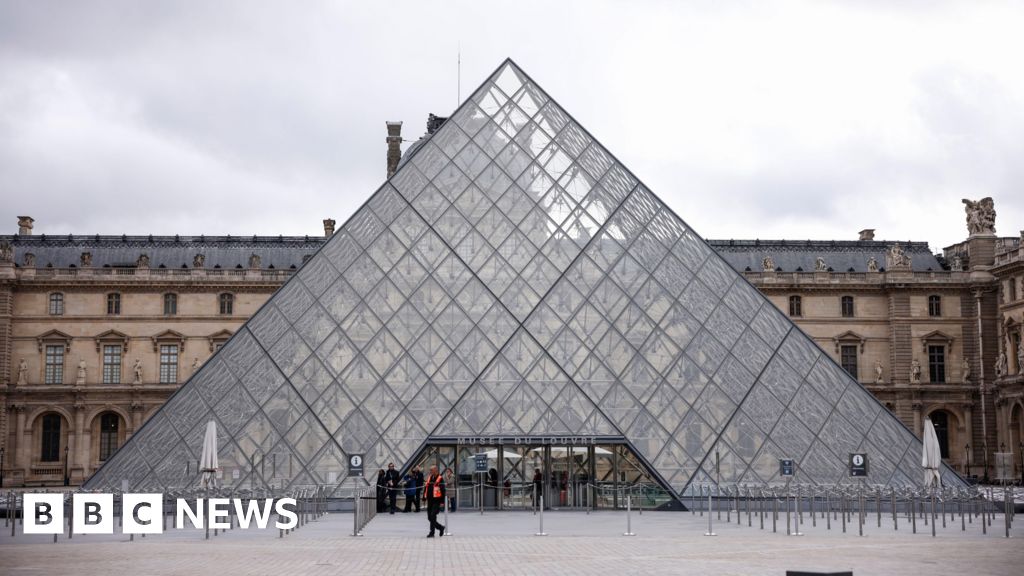
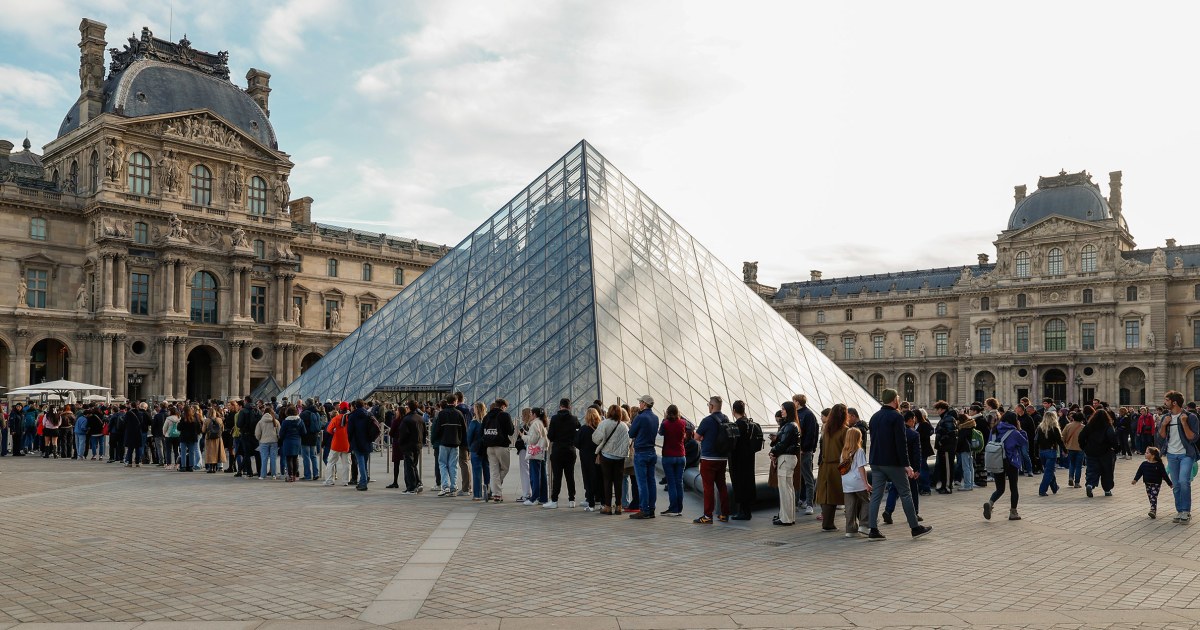
The Louvre is the world’s largest and most famous art museum, originally built as a fortress in the late 12th century to protect Paris's western edge. It evolved into a royal residence by the 14th century, with major Renaissance renovations initiated by King Francis I in 1546, who began transforming it into a palace and an art collection center. Subsequent French monarchs expanded the Louvre, including Louis XIII and Louis XIV, who added significant artworks and architectural elements such as the iconic Colonnade. When Louis XIV moved his court to Versailles in 1682, the Louvre ceased to be a royal residence and gradually became more focused on art and culture[1][2][3]. The Louvre officially became a public museum during the French Revolution in 1793, opening as the Musée Central des Arts with an initial collection largely composed of royal and confiscated church property. Under Napoleon Bonaparte, it was renamed Musée Napoléon and expanded dramatically with art acquisitions from his military campaigns, including Egyptian artifacts. The Second Empire under Napoleon III saw extensive building expansions and the addition of thousands of objects, establishing the Louvre as a premier cultural institution[1][3][4]. Today, the Louvre houses an unparalleled collection of artworks spanning nearly two millennia, including masterpieces such as the Mona Lisa, Venus de Milo, and The Wedding Feast at Cana. It occupies over 60,600 square meters and attracts around 10 million visitors annually, making it the most visited museum in the world. Architecturally, it features famous sections like the Grande Galerie, the Cour Napoléon with its glass pyramid entrance, and Napoleon III apartments. The museum’s blend of history, art, and architectural grandeur makes it a symbol of cultural heritage and an innovative institution at the intersection of history, art, and public engagement[2][5][6]. Notably, the Louvre continues to evolve, reflecting advances in museology and technolog