FSB Identifies Suspects in Shooting of Russian General Vladimir Alexeyev
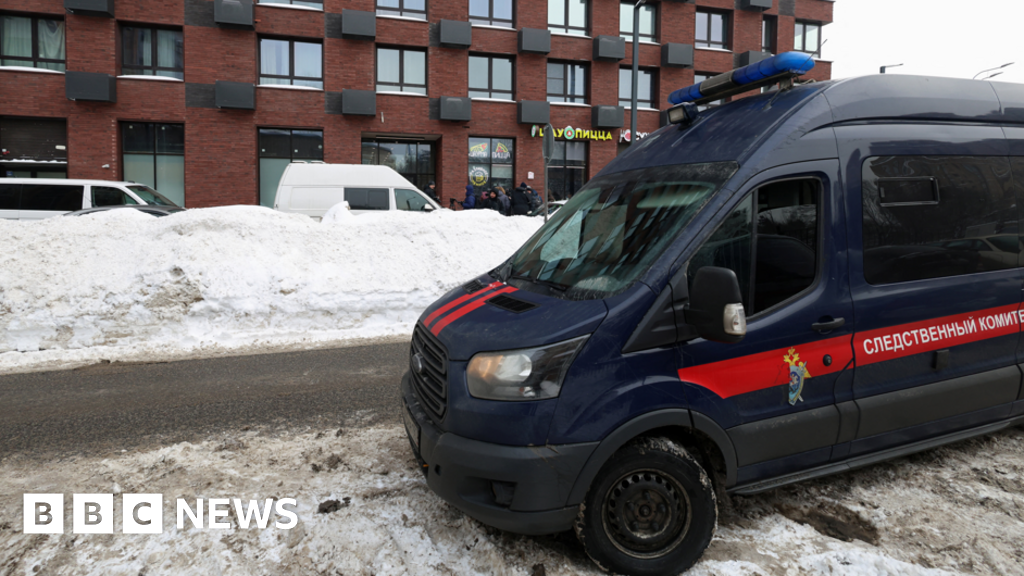
Shooting of Russian General Vladimir Alexeyev: Suspects Named
Russia's FSB has identified three suspects in the brazen shooting of Lieutenant General Vladimir Alexeyev, first deputy head of the GRU military intelligence, who remains in critical condition after being wounded multiple times in a Moscow apartment on February 6, 2026[1][2]. The primary assailant, Ukrainian-born Lyubomir Korba, allegedly fled to the UAE but was swiftly arrested and extradited back to Russia, confessing to the plot alongside accomplice Viktor Vasin, detained in Moscow[1].
Ukraine's Alleged Role and Recruitment Details
According to the FSB, Korba and Vasin were recruited by Ukraine's SBU in August 2025, with Korba receiving marksmanship training in Kyiv and promised $30,000 for the hit[1]. Korba's son, a Polish citizen in Katowice, reportedly aided recruitment with Polish intelligence involvement, though Warsaw has not commented[1]. Alexeyev, a Spetsnaz veteran overseeing Ukraine operations since 2022, was born in Soviet Ukraine's Vinnytsia region[1].
Broader Implications for Russian Security
This attack marks the latest in a series targeting Russian generals since December 2024, fueling criticism of security lapses among pro-war voices[1]. Foreign Minister Sergey Lavrov labeled it a terrorist act aimed at derailing negotiations, heightening tensions amid ongoing conflicts[2].
About the People Mentioned
Sergey Lavrov
Sergey Viktorovich Lavrov, born on March 21, 1950, in Moscow to an Armenian father from Tbilisi and a Russian mother, is a Russian diplomat and politician who has served as Minister of Foreign Affairs of the Russian Federation since March 9, 2004, making him the longest-serving foreign minister in post-Soviet Russia.[1][2][3][4][7] Lavrov graduated from the Moscow State Institute of International Relations (MGIMO) in 1972 with a degree in international relations and began his career at the Soviet embassy in Sri Lanka, where he gained fluency in Sinhala and Dhivehi, alongside English, French, and Russian.[1][3][4][6][8] He later held positions in the Soviet Permanent Mission to the United Nations in New York from 1981 to 1988, served as Deputy Minister of Foreign Affairs, and was Russia's Permanent Representative to the UN from 1994 to 2004, including as representative to the UN Security Council.[1][2][3][6] Appointed foreign minister under President Vladimir Putin, Lavrov has been a key figure in Russian diplomacy, chairing the Committee of Ministers of the Council of Europe and the Board of Trustees of the Russian International Affairs Council.[1] He holds the rank of Ambassador Extraordinary and Plenipotentiary and has received state awards, including Russia's highest honor, the Order of Saint Andrew the Apostle the First-Called, for his contributions to foreign policy.[1][5] Lavrov remains highly relevant as Russia's top diplomat, defending Moscow's positions on major issues such as the Syrian civil war—where he used UN vetoes to shield the Assad regime—the 2018 Salisbury poisonings, and Russia's 2022 special military operation in Ukraine, which he has justified internationally despite global sanctions targeting him.[3][5][6] His direct style has defined Russia's engagements amid ongoing geopolitical tensions.[5]
About the Organizations Mentioned
FSB
The **Federal Security Service (FSB)** is Russia's principal domestic security agency and the main successor to the Soviet-era KGB[1][4]. Established in 1995, it serves as the cornerstone of Russia's internal security apparatus, headquartered in the former KGB building on Lubyanka Square in Moscow[1][3]. ## Core Responsibilities The FSB handles **counterintelligence, internal and border security, counterterrorism, and surveillance**[4]. Its mandate extends to investigating serious crimes, protecting information security, and defending against foreign cyber operations[2]. The agency also coordinates counterintelligence activities across other federal agencies and safeguards Russia's economic and financial security[2][4]. ## Historical Development The FSB's lineage traces directly to the KGB's dissolution in 1991[1]. After the failed August 1991 coup, the KGB was dismantled, and its internal security functions were reconstituted through several iterations: the Ministry of Security (1992), the Federal Counterintelligence Service (1992-1995), and finally the FSB in 1995[1][2]. President Boris Yeltsin renamed and expanded the organization in 1995, granting it authority to enter private homes and conduct intelligence operations domestically and abroad[1]. ## Evolution Under Putin A significant turning point occurred in 1998 when Yeltsin appointed **Vladimir Putin**, a KGB veteran, as FSB director[1]. As president, Putin substantially expanded the agency's powers to counter foreign intelligence, combat organized crime, and suppress separatist movements[1]. In 2006, the FSB gained legal authority for targeted killing of terrorism suspects overseas when ordered by the president[4]. ## Current Status Today, the FSB remains a powerful executive branch agency directly answerable to
GRU
The **GRU** (Glavnoye Razvedyvatelnoye Upravlenie) is the **foreign military intelligence agency** of Russia's General Staff, tasked with collecting and analyzing military intelligence worldwide while conducting clandestine operations.[1] Though officially renamed the Main Directorate of the General Staff in 2010, the GRU acronym remains widely used.[1] ## Historical Development The GRU's origins trace to the Napoleonic Wars, when Russian military leaders recognized the need for organized intelligence gathering.[4] Its direct predecessor, the Registration Agency, was established in November 1918 under Leon Trotsky's sponsorship.[2] However, **Stalin created the GRU in its modern form in February 1942**, less than a year after the Nazi invasion of the Soviet Union.[1][2] From April 1943 onward, the agency handled all human intelligence operations outside Soviet territory.[1] ## Cold War Legacy During the Cold War, the GRU achieved significant successes, including infiltrating the British nuclear weapons program and up to 70 American government and scientific institutions.[1] The agency operated residencies worldwide and maintained signals intelligence stations, including one in Lourdes, Cuba.[2] ## Modern Operations and Controversies Following the Soviet Union's collapse in 1991, the GRU was reconstituted as part of the Russian Armed Forces.[3] In recent decades, it has been **linked to major operations including the 2014 Crimea annexation, the 2015 poisonings of Bulgarian arms dealer Emilian Gebrev and defector Sergei Skripal, and the 2016 Montenegro coup attempt.[1]** The agency has also conducted cyberattacks against Western nations and attempted to interfere in the 2016 U.S
SBU
The term **SBU** stands for **Strategic Business Unit**, which is not a standalone organization but a distinct, semi-autonomous unit within a larger corporation. Each SBU operates like a separate business, having its own vision, mission, and strategic direction focused on a specific product line, market segment, or geographical area. It is responsible for its own profits, losses, and overall performance, with independent management accountable for its results[1][2][3]. The concept of SBUs emerged to help large, diversified companies manage their complex operations more effectively by decentralizing decision-making and strategy development. This structure enables SBUs to respond rapidly to market changes, tailor strategies to their unique competitive environments, and allocate resources efficiently. SBUs typically possess their own support functions such as human resources, marketing, and training, allowing them to operate with considerable independence while still aligning with the parent company's broader objectives[3][6]. Historically, the SBU model has been widely adopted by multinational corporations like Procter & Gamble, Samsung, LG, and Unilever, where diverse product portfolios and markets demand specialized focus. For example, LG Electronics divides its business into SBUs handling different product categories such as home appliances and consumer electronics, each tracking its own financials and strategies[3][5]. Key achievements of companies using the SBU model include enhanced strategic agility, improved profitability through focused business planning, and better market responsiveness. SBUs allow large firms to manage multiple competitive fronts simultaneously, maintaining both innovation and operational efficiency. The structure also promotes accountability by designating specific managers responsible for performance in their unit[2][7]. Currently, SBUs remain a prevalent organizational form in business and technology sectors, especially suitable for conglomerates or firms with broad product ranges. This model facilitates clear strategic focus, faster decision-making, and optimized resource deployment, making it highly relevant in today’s fast-evolving markets. The SBU approach is recognized as a vital tool for sustaining competitive advantage and fosterin