House Clears Path to End Shutdown With Bipartisan Funding Deal
#politics #bipartisanship #shutdown #immigration #legislation

House Clears Path to End Shutdown Amid Bipartisan Drama
The House of Representatives has approved a critical funding package by a razor-thin 217-214 vote, paving the way for President Trump to sign it and end the partial government shutdown that began last Friday. Speaker Mike Johnson navigated intense GOP holdouts, flipping votes from representatives like Byron Donalds and Victoria Spartz after over 30 minutes of tension, securing bipartisan support with 21 members from each party crossing the aisle.[1][2]
Key Details of the Funding Deal
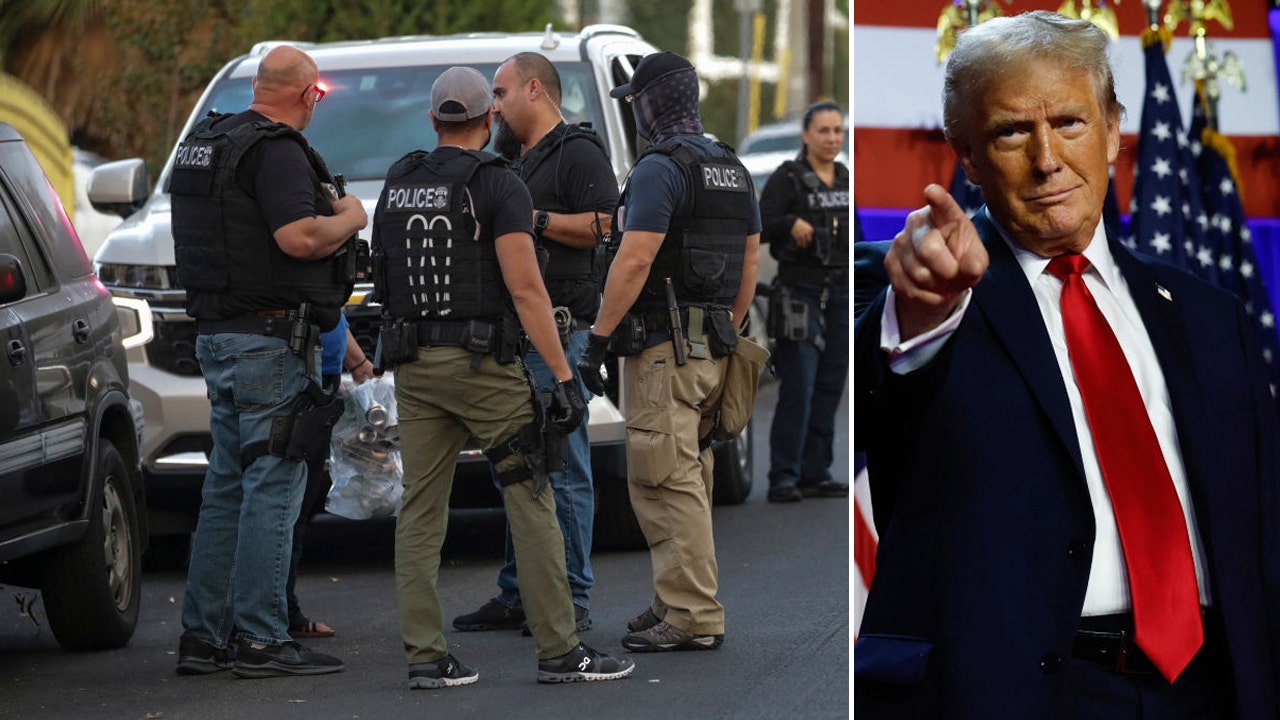
This massive bill funds most agencies through the year but provides only two weeks for the Department of Homeland Security, sparking debates over ICE reforms following a fatal shooting in Minnesota. The Senate had passed it 71-29 after overcoming amendments and Sen. Lindsey Graham's objections, averting a repeat of the 43-day standoff. Democrats hailed it as a win, demanding warrants for arrests, while Republicans push for independent probes.[3][4]
What's Next for Immigration and Stability
With Trump set to sign Tuesday, attention shifts to DHS negotiations by February 13, where failure could trigger another shutdown. Lawmakers eye compromises amid public pressure, as polling mounts on Republicans. This resolution highlights fragile unity, promising heated talks ahead on border enforcement.[1][5]
About the People Mentioned
Mike Johnson
Mike Johnson, born January 30, 1972, in Shreveport, Louisiana, is an American lawyer and Republican politician serving as the 56th Speaker of the U.S. House of Representatives since October 25, 2023. He represents Louisiana’s 4th congressional district, covering northwest and western regions of the state, including nearly 760,000 residents across approximately 16 to 20 parishes. Johnson was first elected to Congress in December 2016 by the largest margin of victory in his region in over 50 years and is currently serving his fifth term[1][2][3][4]. Before his tenure in Congress, Johnson earned a Juris Doctor from Louisiana State University’s Paul M. Hebert Law Center in 1998 and worked as an attorney, including with the conservative Christian legal group Alliance Defending Freedom. He also served in the Louisiana House of Representatives from 2015 to 2017. Johnson has been a prominent social conservative, advocating for policies such as nationwide abortion bans and opposing the expansion of medical cannabis. He chaired the Republican Study Committee from 2019 to 2021, the largest conservative caucus in Congress, and served as Vice Chairman of the House Republican Conference and Deputy Whip before becoming Speaker[1][2][4]. Johnson's rise to Speaker was notable for its speed; he attained the position faster than anyone since 1883. His speakership followed the ousting of Kevin McCarthy and has been characterized by efforts to promote conservative principles including limited government, individual freedom, fiscal responsibility, and support for military and veterans. In 2024, Johnson was reelected as Speaker for the 119th Congress. His leadership also focuses on growing the House Republican majority and advancing conservative legislative priorities[1][3][4][5]. He is married to Kelly Johnson, a licensed pastoral counselor and former teacher, and they have five children. The family resides in Bossier Parish, Louisiana[1].
Donald Trump
Donald John Trump, born June 14, 1946, in Queens, New York, is an American businessman, media personality, and politician. He graduated from the University of Pennsylvania’s Wharton School in 1968 with a degree in economics. In 1971, he took over his family’s real estate business, renaming it the Trump Organization, through which he expanded into building and managing skyscrapers, hotels, casinos, and golf courses. Trump gained widespread fame as the host of the reality TV show *The Apprentice* from 2004 to 2015, which helped establish his public persona as a successful entrepreneur. Trump entered politics as a Republican and was elected the 45th president of the United States, serving from 2017 to 2021. His presidency was marked by significant policy actions including tax cuts, deregulation, the appointment of three Supreme Court justices, renegotiation of trade agreements (notably replacing NAFTA with the USMCA), and a focus on immigration control including border wall expansion. He withdrew the U.S. from international agreements such as the Paris Climate Accord and the Iran nuclear deal, and engaged in a trade war with China. His administration’s response to the COVID-19 pandemic was criticized for downplaying the virus’s severity. Trump was impeached twice by the House of Representatives—first in 2019 for abuse of power and obstruction, and again in 2021 for incitement of insurrection—but was acquitted by the Senate both times. After losing the 2020 election to Joe Biden, Trump challenged the results, culminating in the January 6, 2021, Capitol riot. He remains a central figure in American politics, having won the 2024 presidential election and returned as the 47th president in 2025, continuing to promote policies aimed at economic growth, border security, and military strength[1][2][3][4].
Lindsey Graham
Lindsey Graham is an American politician and lawyer serving as a Republican U.S. Senator from South Carolina since 2003. He succeeded long-serving Senator Strom Thurmond and has been re-elected multiple times, most recently in 2020. Before the Senate, Graham was a member of the U.S. House of Representatives from 1995 to 2002, representing South Carolina's 3rd congressional district—the first Republican to hold that seat since Reconstruction. He also served one term in the South Carolina House of Representatives from 1992 to 1994[1][2][3][4]. Graham has a long military background, including over six years of active duty in the U.S. Air Force as a lawyer and later service in the Air Force Reserves and South Carolina Air National Guard. He retired as a colonel in 2015 after 33 years of service. His military experience has strongly influenced his political focus on national defense and veterans' issues[2][5]. Politically, Graham is known as a conservative with a reputation for being a pragmatic problem-solver and at times bipartisan collaborator. Early in his Senate career, he supported increased legal immigration and bipartisan immigration reform efforts. He opposed the Affordable Care Act and worked on attempts to repeal or replace it. After Donald Trump became president in 2017, Graham became one of his most vocal supporters, championing judicial appointments including the confirmation of Supreme Court Justice Amy Coney Barrett in 2020. He also played a prominent role during the contentious 2020 presidential election and the January 6, 2021, Capitol certification process[1][3]. Currently, Graham serves as Chairman of the Senate Budget Committee and is a member of the Judiciary, Appropriations, and Environment and Public Works Committees. He continues to focus on defense, judiciary matters, and government operations. His legislative work includes sponsoring bills related to international affairs, law enforcement, and health policy[2][4].
About the Organizations Mentioned
House of Representatives
The **United States House of Representatives** is the lower chamber of the U.S. Congress, established by the Constitution in 1789 as part of the federal legislative branch. It works alongside the Senate to draft, debate, and pass federal laws, with legislation requiring approval from both chambers before reaching the president for signature or veto[1][2][4]. The House is unique in its authority to initiate all revenue-related bills, impeach federal officials, and elect the president if no candidate gains an Electoral College majority[1][3]. Comprising 435 voting members apportioned based on state populations, the House reflects the principle of proportional representation. Members serve two-year terms, ensuring responsiveness to the electorate and frequent accountability[1][3]. Representatives must be at least 25 years old, U.S. citizens for seven years, and residents of their elected states[3]. The House also includes nonvoting delegates representing U.S. territories and the District of Columbia[3]. Leadership in the House centers on the **Speaker of the House**, who presides over sessions, manages legislative priorities, and is second in line to the presidency. The majority party controls key leadership roles, including majority and minority leaders and whips, which coordinate party strategy and legislative agendas[2][6]. The House operates largely on a majority-rule basis, enabling relatively efficient passage of legislation compared to the Senate’s more individual senator-driven procedures[6]. Historically, the House has been a critical arena for shaping national policy, reflecting the people's will directly through frequent elections and district-based representation. Its committee system facilitates detailed legislative review, and its evolving leadership roles have enhanced its influence on governance and policy[4][6]. For business and technology sectors, the House plays a vital role in passing laws affecting commerce, innovation, taxation, and regulation, thereby shaping the economic and technological landscape of the United States[1][4]. Its legislative actions on technology policy, intellectual property, cybersecurity, and digital market
Senate
The **United States Senate** includes several key committees critical to business and technology policy, notably the *Senate Committee on Small Business and Entrepreneurship* and the *Senate Committee on Commerce, Science, and Transportation*. These committees play pivotal roles in shaping legislation that impacts small businesses, innovation, technology development, and commerce nationwide. The **Senate Committee on Small Business and Entrepreneurship** advocates for small businesses by overseeing the Small Business Administration (SBA), which provides capital access, education, technical assistance, and federal contracting opportunities to small enterprises. This committee’s historical role has been to ensure the vitality of small businesses, which are essential to the American economy. Recent efforts include bipartisan reforms targeting SBA program efficiency, fraud prevention related to pandemic aid, and support for entrepreneurship in underserved communities. They also focus on programs like the Small Business Innovation Research (SBIR) and Small Business Technology Transfer (STTR), which connect federal agencies with private entrepreneurs to accelerate research and development in critical tech areas, thereby maintaining U.S. technological leadership[1][4][5][8]. The **Senate Committee on Commerce, Science, and Transportation** is one of the largest Senate committees, overseeing broad sectors including consumer protection, economic development, manufacturing, trade, science, and transportation infrastructure. It addresses emerging technologies, environmental issues like climate change, and space exploration, both government-funded and private. This committee significantly influences national business practices, product safety, competitiveness, and innovation ecosystems, affecting industries from maritime to digital technology[2][7]. Notable recent activities include Senate hearings on Big Tech antitrust and competition policies, emphasizing the need to regulate dominant technology firms to foster innovation and protect consumers and workers. This aligns with broader legislative efforts addressing artificial intelligence and technological competitiveness in 2025[6][10]. In summary, the Senate’s organizational structure and committees serve as crucial instruments in shaping U.S. business and technology landscapes. Through oversight, legislation, and reform initiatives, they support small businesses, promote innovation
Department of Homeland Security
The **Department of Homeland Security (DHS)** is a U.S. federal agency established in response to the 9/11 terrorist attacks to safeguard the nation from a wide range of threats including terrorism, natural disasters, cyberattacks, and border security challenges. Its core mission is to protect the American people, critical infrastructure, and uphold national security by coordinating efforts across government and private sectors. DHS oversees immigration enforcement, cybersecurity, emergency response, and counterterrorism initiatives. Formed in 2002, DHS consolidated 22 federal agencies to create a unified structure for domestic security. Its key components include the U.S. Customs and Border Protection, the Federal Emergency Management Agency (FEMA), and the Transportation Security Administration (TSA). Over the years, DHS has played a critical role in preventing terrorist attacks, enhancing airport security, responding to natural disasters like hurricanes and pandemics, and advancing cybersecurity protections for government and private sector networks. In recent years, DHS has shifted focus towards emerging threats such as unmanned drone attacks on infrastructure, cyber intrusions into financial and critical systems, and disruptions to supply chains. Strategic visions for 2025 and beyond emphasize technological innovation, integration of intelligence, and public-private partnerships to address these complex challenges. The agency’s budget reflects its broad mandate, with over $400 billion allocated for fiscal year 2025, underscoring its significant role in national security and emergency preparedness. Notably, DHS has faced scrutiny and calls for reform, especially regarding immigration enforcement and internal mission clarity. Recent directives have expanded immigration enforcement powers to other federal law enforcement agencies, reflecting policy shifts under different administrations focused on border security. For business and technology sectors, DHS represents a major government player driving innovation in cybersecurity, disaster response technology, and infrastructure protection, while navigating evolving threats in a complex geopolitical landscape. Its ongoing modernization efforts aim to enhance resilience and adapt to future security challenges.
Immigration and Customs Enforcement
**Immigration and Customs Enforcement (ICE)** is a federal law enforcement agency under the U.S. Department of Homeland Security (DHS). Established by the Homeland Security Act of 2002, ICE was created in response to the 9/11 attacks to enhance national security and protect public safety. The agency's primary mission is to enforce federal laws related to customs, trade, and immigration, focusing on cross-border crime and illegal immigration[1][2][3]. **History and Structure:** ICE was formed by merging the U.S. Customs Service and the Immigration and Naturalization Service. It operates with over 20,000 staff across more than 400 global offices, with an annual budget of approximately $8 billion[3]. The agency is structured into several key directorates, including **Enforcement and Removal Operations (ERO)**, which handles immigrant detention and deportation, and **Homeland Security Investigations (HSI)**, which investigates transnational crimes[1][2]. **Key Functions and Achievements:** ICE is known for its immigration enforcement efforts, particularly in interior regions of the U.S. It conducts investigations into human trafficking, terrorism, and other transnational crimes. Despite controversy over policies like family separation and detention conditions, ICE has made significant strides in combating illegal activities and protecting national security[4][6]. **Current Status and Notable Aspects:** Today, ICE continues to face challenges and controversy, particularly regarding its enforcement practices and impact on immigrant communities. The agency's actions can have profound effects on local economies and social services, as fear of ICE may deter undocumented immigrants from accessing essential services[6]. Despite these challenges, ICE remains a crucial component of U.S. immigration policy, working to balance enforcement with humanitarian concerns.