Japan and South Korea Forge a United Front Against China
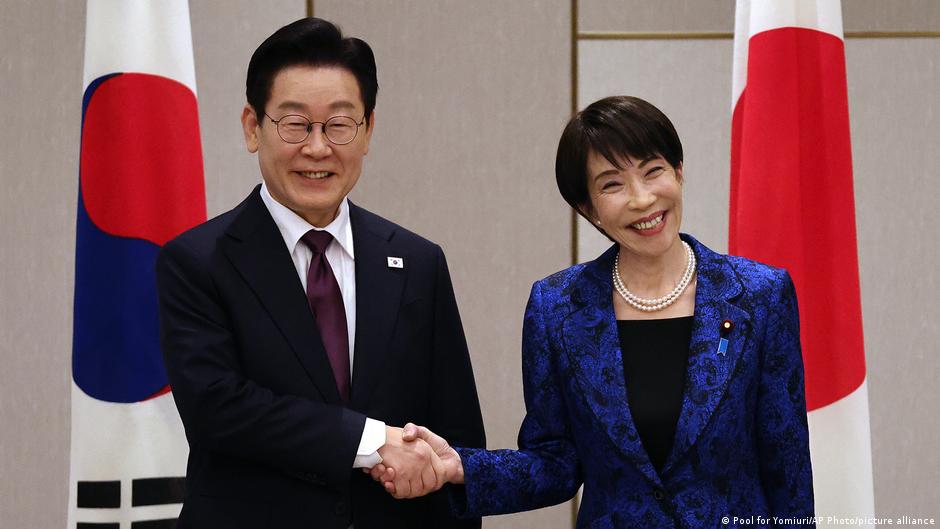
Japan and South Korea Unite Against China's Shadow
In a pivotal summit in Nara Prefecture, Japanese Prime Minister Sanae Takaichi and South Korean President Lee Jae-myung pledged to fortify bilateral ties amid escalating tensions with China. This comes as Tokyo faces a deepening diplomatic and trade rift with Beijing, prompting Japan to rally U.S. allies like South Korea as a strategic buffer. The leaders marked 60 years of normalized relations, vowing a new era of cooperation in a volatile global landscape.[1][2]
Key Drivers of Renewed Alliance
The feud between Japan and China has turned South Korea into a diplomatic focal point, sandwiched between two Asian powerhouses. Takaichi seeks to counter Beijing's isolation tactics through enhanced partnerships, while Lee engages in shuttle diplomacy to boost Seoul's influence. Discussions likely addressed export controls, Taiwan concerns, and regional security, underscoring middle-power solidarity against imperial pressures.[1][2]
Implications for Regional Stability
This alliance elevates South Korea's stature, potentially pressuring China on issues like North Korean denuclearization and past entertainment bans. Stronger Japan-South Korea bonds promise economic resilience and geopolitical balance, signaling a united front that could reshape East Asian dynamics for decades ahead.[1][2]
About the People Mentioned
Sanae Takaichi
Sanae Takaichi is a Japanese politician of the Liberal Democratic Party (LDP) who became Japan’s first female prime minister after winning the LDP leadership and being elected by the National Diet in 2025[2][3]. She was first elected to the House of Representatives in 1993 and has held multiple cabinet posts, notably Minister for Internal Affairs and Communications and Minister of State for Economic Security[5][3]. Takaichi is widely described as a conservative and a protégé of former prime minister Shinzō Abe, advocating traditionalist cultural policies, stronger defence and economic-security measures, and limits on immigration[5][3]. Her tenure as a senior minister included controversial moves such as seeking greater government influence over public broadcasting and visiting the Yasukuni Shrine while in office[5]. After several attempts at party leadership, she secured the LDP presidency in 2025 and led a minority government formed with the Japan Innovation Party amid a fractured Diet and the end of the long-standing LDP–Kōmeitō alliance[2][3]. Key challenges cited for her government include restoring public trust after LDP funding scandals, addressing Japan’s demographic decline and low growth, high public debt, inflation and wage issues, and navigating a tense regional security environment involving China and North Korea[2][3]. Analysts note her policy priorities include expansionary fiscal measures, tighter control over monetary policy levers, and strengthening the U.S.–Japan alliance and economic-security ties[2][5]. Takaichi’s rise is significant both for breaking gender barriers in Japanese national leadership and for shifting the LDP toward more conservative, security-focused policies during a period of domestic political realignment[3][5].